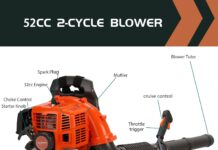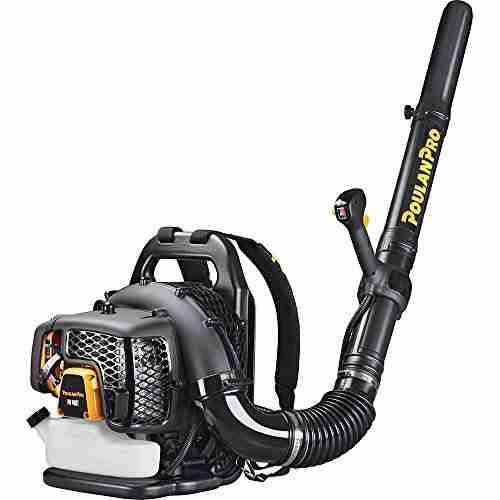
Want to know whether the Backpack Leaf Blower, 66cc 2 Stroke Gas Leaf Blowers for Lawn Care, Cordless Leaf Blowers Gas Powered, 2.7KW 665CFM Portable Air Blower for Garden Snow Dirt Debris (2.7 KW) is the right tool for our yard and property needs?
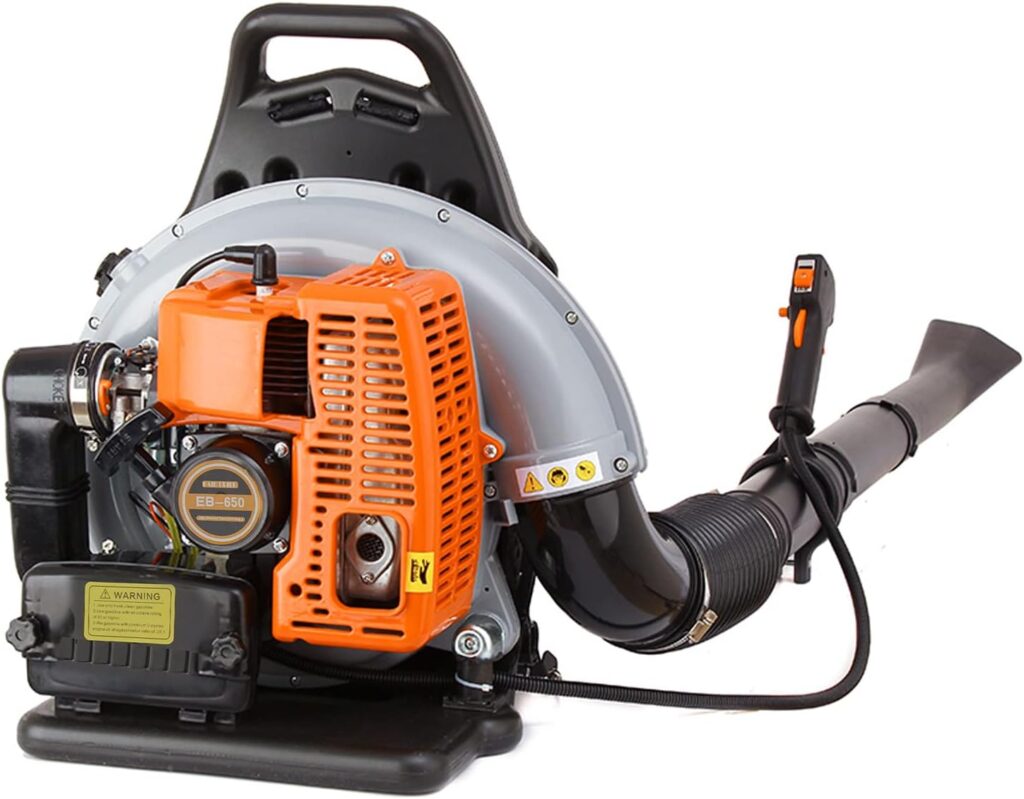
This image is property of Amazon.com.

Our Summary Verdict
We find this backpack leaf blower to be a compelling option when we need high raw power and long runtime for heavy-duty clearing tasks. It brings a 2.7 kW two-stroke engine and a high airflow rating that suits both professional and demanding homeowner jobs, but it also requires respect for noise, fuel mixing, and basic maintenance.

Backpack Leaf Blower, 66cc 2 Stroke Gas Leaf Blowers for Lawn Care, Cordless Leaf Blowers Gas Powered, 2.7KW 665CFM Portable Air Blower for Garden Snow Dirt Debris (2.7 KW)
Unboxing and Package Contents
We like to know exactly what arrives so we can get to work quickly, and the package includes the essentials for immediate assembly and use. While the box is straightforward, it’s helpful to double-check that all parts and straps are present before trying to start the engine.
What’s Included
We appreciate a clear inventory so we know what we must attach and what we can expect to replace or upgrade later. The supplied items give us what’s necessary to begin using the blower without hunting for aftermarket straps or hardware.
- 1x Leaf Blower (backpack unit with engine and blower tube)
- 2x Carrying Strap
- All accessories required for assembly (fasteners, clamps, etc.)
Key Specifications
We find that having the core technical data in one place helps us compare tools and plan tasks more effectively. Below is a concise breakdown of the most important specifications the manufacturer provides, with notes where clarification seems necessary.
| Specification | Value |
|---|---|
| Power | 2.7 kW (approximately 3.6 HP) |
| Displacement | 65 cc (listed also as 66 cc in product name) |
| Fuel Tank Capacity | 1.7 L |
| Fuel Type | Two-stroke mixed fuel (manufacturer lists mixed oil ratios that appear inconsistent) |
| Recommended Fuel Mix | Manufacturer text varies: “25-30 (pure gasoline):1” and “1:20” — we recommend consulting the manual and using a typical 1:25–1:40 ratio unless otherwise specified |
| Air Volume | 0.3 m³/sec (approx. 665 CFM per product name) |
| Impeller Speed | 6800 rpm |
| Noise Level | 101 dB(A) |
| Net Weight | 11 kg (24.25 lb) |
| Ignition | Electronic ignition with pull-start |
| Fuel Consumption | W·h typical rating) |
| Adjustable Air Duct | 180° up/down adjustment |
| Included Straps | 2 carrying straps |
We note that the product name and some specification lines contain slight inconsistencies (e.g., 65cc vs. 66cc, and conflicting fuel mix ratios). When we see this, we recommend checking the printed manual or contacting the seller for the definitive ratio for the engine supplied to us.
This image is property of Amazon.com.

Performance in the Field
We expect a machine of this displacement and rated power to perform strongly on heavy leaves, wet piles, and light snow. In typical use, the blower’s combination of power and high air volume makes quick work of most yard debris when we handle it properly.
Power and Thrust
We appreciate that 2.7 kW of power paired with an impeller speed near 6800 rpm gives us consistent thrust for pushing large volumes of material. The listed 665 CFM in the product title suggests a strong airflow; coupled with high velocity, this translates into better clearing performance on compacted debris compared to smaller handheld units.
Air Volume and Speed
We find that the manufacturer’s air volume metric (0.3 m³/sec) corresponds to a robust flow rate suitable for wide-area clearing and moving wet clumps of leaves. That said, performance in real conditions depends on nozzle shape, operator technique, and the condition of debris, so we should manage expectations: raw CFM/velocity numbers are helpful, but effective clearing still requires proper pass patterns and occasional raking.
Fuel Efficiency and Range
We value fuel efficiency for longer jobs and lower operating cost, but two-stroke high-displacement engines trade some economy for power. The specification showing fuel consumption <545 (likely grams per kw·h) gives us a rough idea of efficiency, though the unit presentation is unclear and we prefer measuring real-world runtime by testing with our own tasks.>
- With a 1.7 L tank and a powerful 65–66 cc two-stroke engine, we expect moderate runtime under continuous high throttle. For lighter intermittent trimming, we’ll get longer use before refueling.
- Because the product documents list inconsistent mix ratios (1:20 vs. 1:25–1:30), we recommend following the engine manual or contacting the vendor; incorrect mixing can harm performance and engine life.
Noise and Vibration
We always account for operator comfort and legal/local noise restrictions, and the listed 101 dB(A) is loud enough that hearing protection is essential. We find that high-noise tools can also transmit vibration through the frame and straps, so paying attention to fit and using anti-vibration practices helps protect us during long sessions.
- 101 dB(A) typically requires ear protection by regulation in many locales for worker safety when used for extended periods.
- Vibration will depend on mounting, strap fit, and throttle usage; we recommend periodic breaks and checking straps for snug yet comfortable fit.
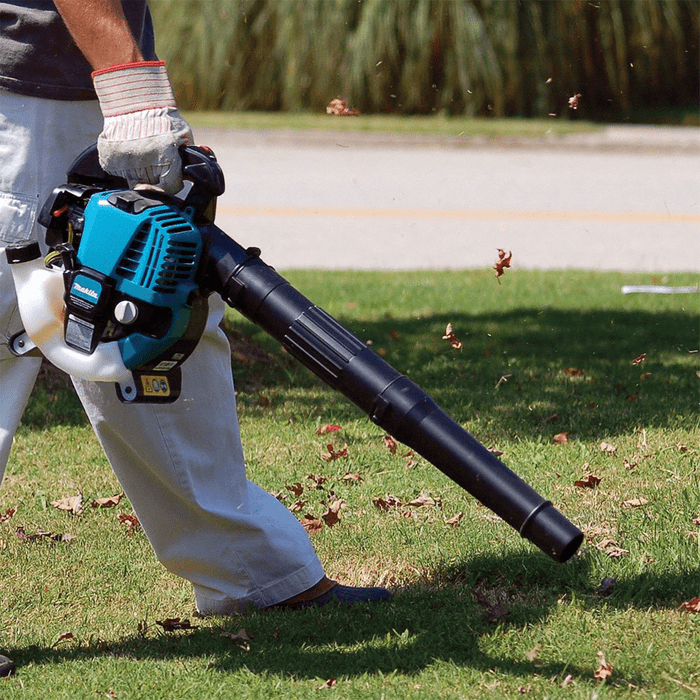
This image is property of Amazon.com.
Starting and Operation
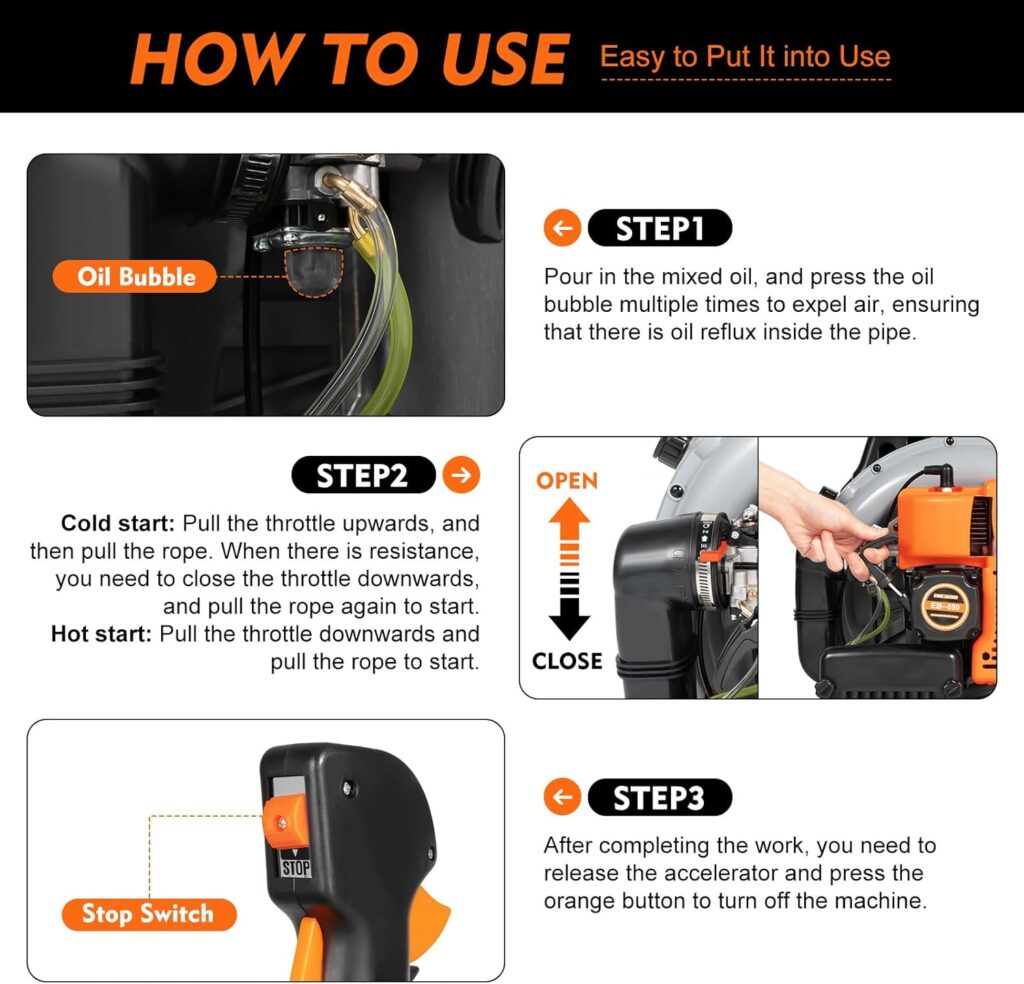
We prefer machines that start reliably, and the Backpack Leaf Blower uses an electronic ignition with a pull-start; following the correct pre-start routine is important for a first-time run. There are manufacturer-provided starting steps, and we’ll follow those while also noting the mixture ratio clarification.
- Step 1: Open the cap and add two-stroke mixed fuel. The package has conflicting mixing guidance; the manual alternates between 1:20 and 1:25–1:30 or “25-30.” We suggest verifying the exact recommended ratio from the manual; many modern two-stroke engines run well on 1:25 (40:1) to 1:50 (50:1) depending on oil type.
- Step 2: Turn on the switch.
- Step 3: Press the fuel primer bulb several times to ensure fuel reaches the carburetor.
- Step 4: Pull downwards to open the air throttle switch (choke) for easier starting if cold.
- Step 5: Pull the start rope several times; expect a few pulls for a cold start and fewer when warm.
- Step 6: After starting, close the air throttle/choke and allow the engine to warm up.
We find it helpful to keep the blower on a flat surface during starts, to use a firm but smooth pull on the starter, and to avoid “yanking” the rope if we hit resistance.
Ergonomics and Carry Comfort
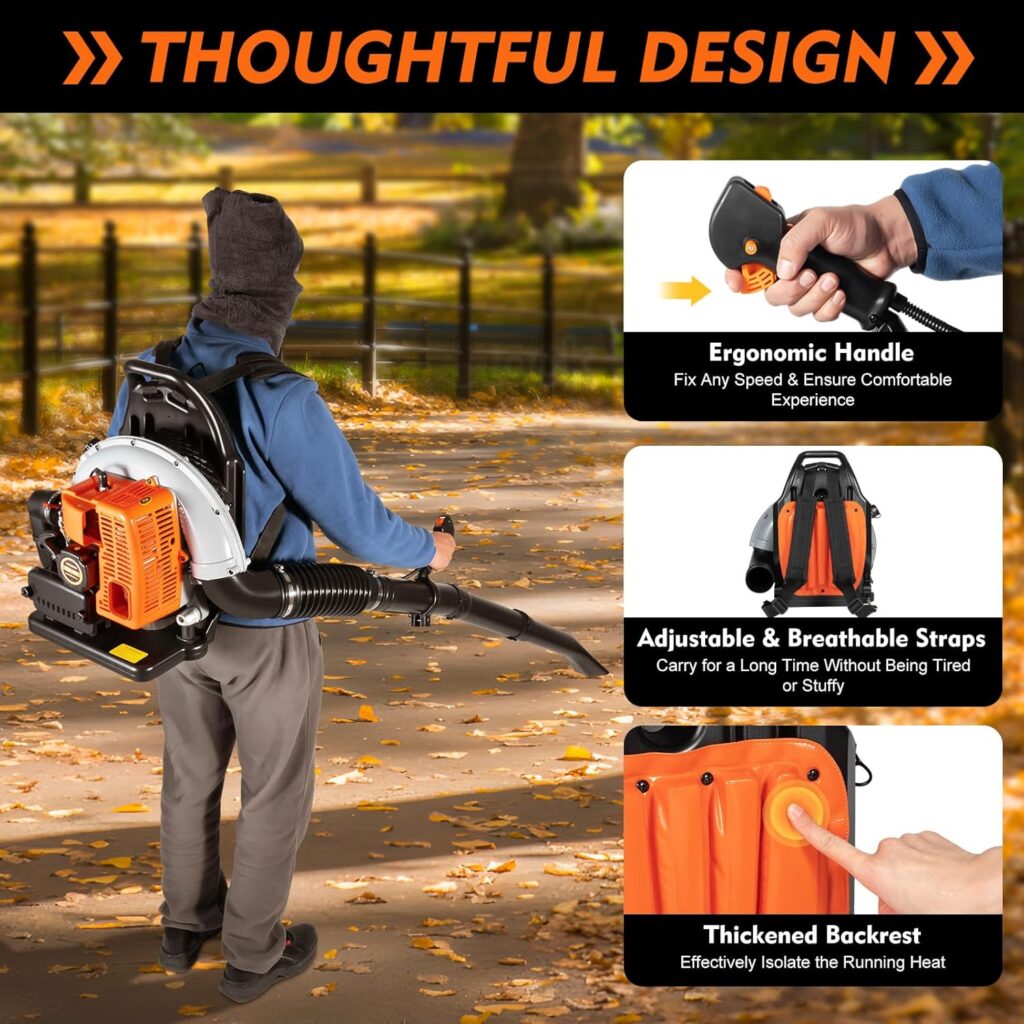
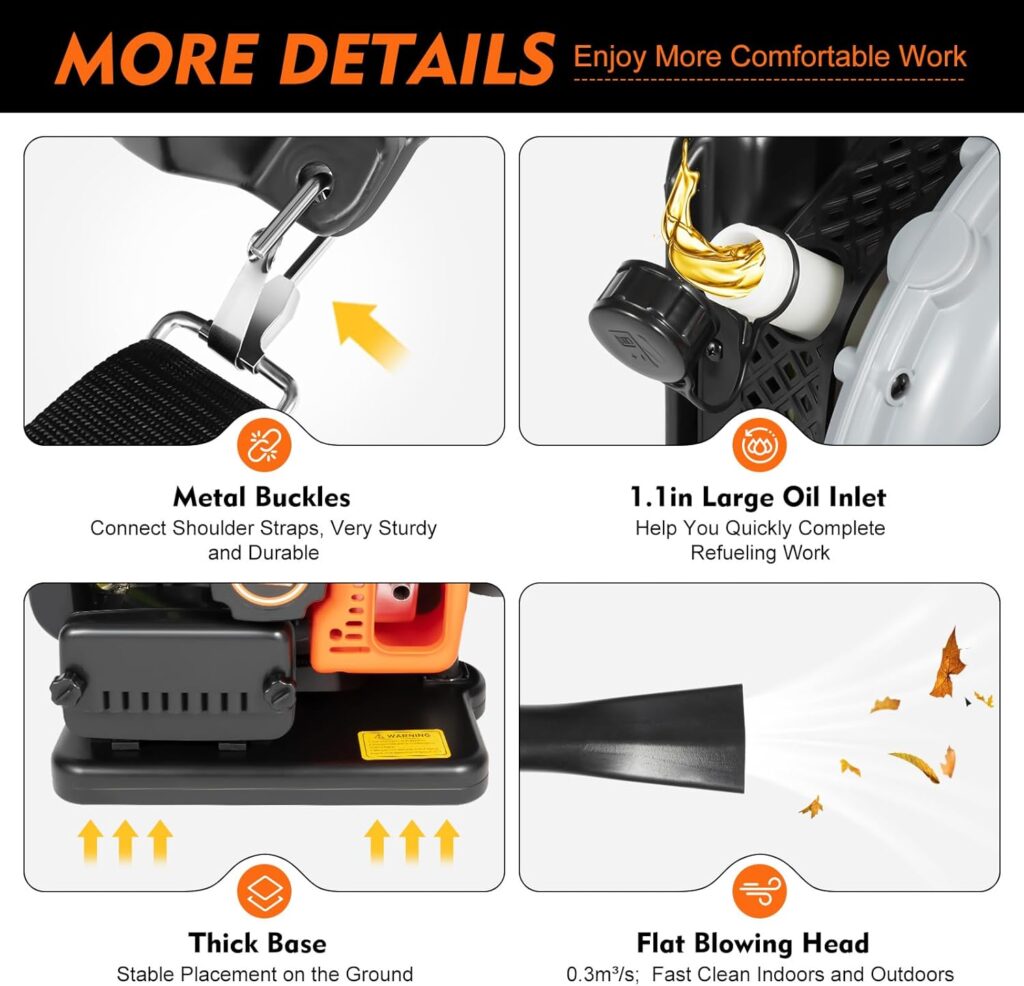
We prioritize operator comfort since the blower weighs about 11 kg (24.25 lb) and will be carried on our back for extended periods. The ergonomic backpack design with wider, thicker straps aims to distribute weight and reduce pressure points, and the compact body reduces bulk against our backs.
- The padded straps and compact chassis help with balance, but we still recommend adjusting straps to sit the blower’s center of gravity close to our own for less strain.
- For prolonged use, we find it useful to alternate operators or take scheduled breaks to avoid fatigue.
Backpack Design and Fit
We like that the straps are wider and thicker than some basic models because this reduces digging into shoulders and across the chest during use. The design is compact, which minimizes unnecessary protrusion that can interfere with bending and turning while we work.
- Adjustable straps mean we can fit a range of body sizes; checking strap adjustment and fastening the waist belt (if included) is helpful to stabilize the load.
- If we plan long jobs, adding a lightweight hip belt or aftermarket cushioning can further improve comfort.
Controls and Adjustability
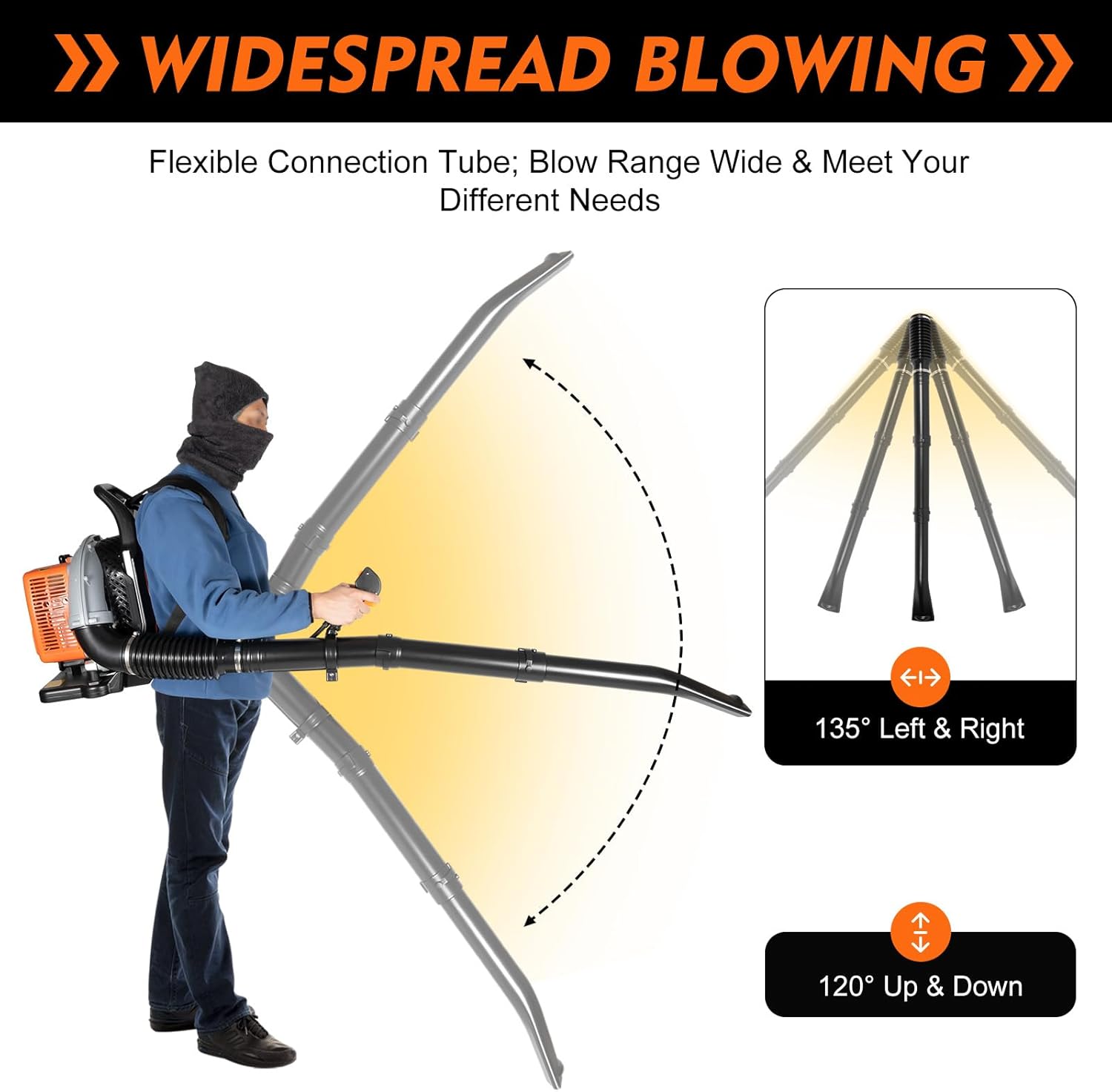
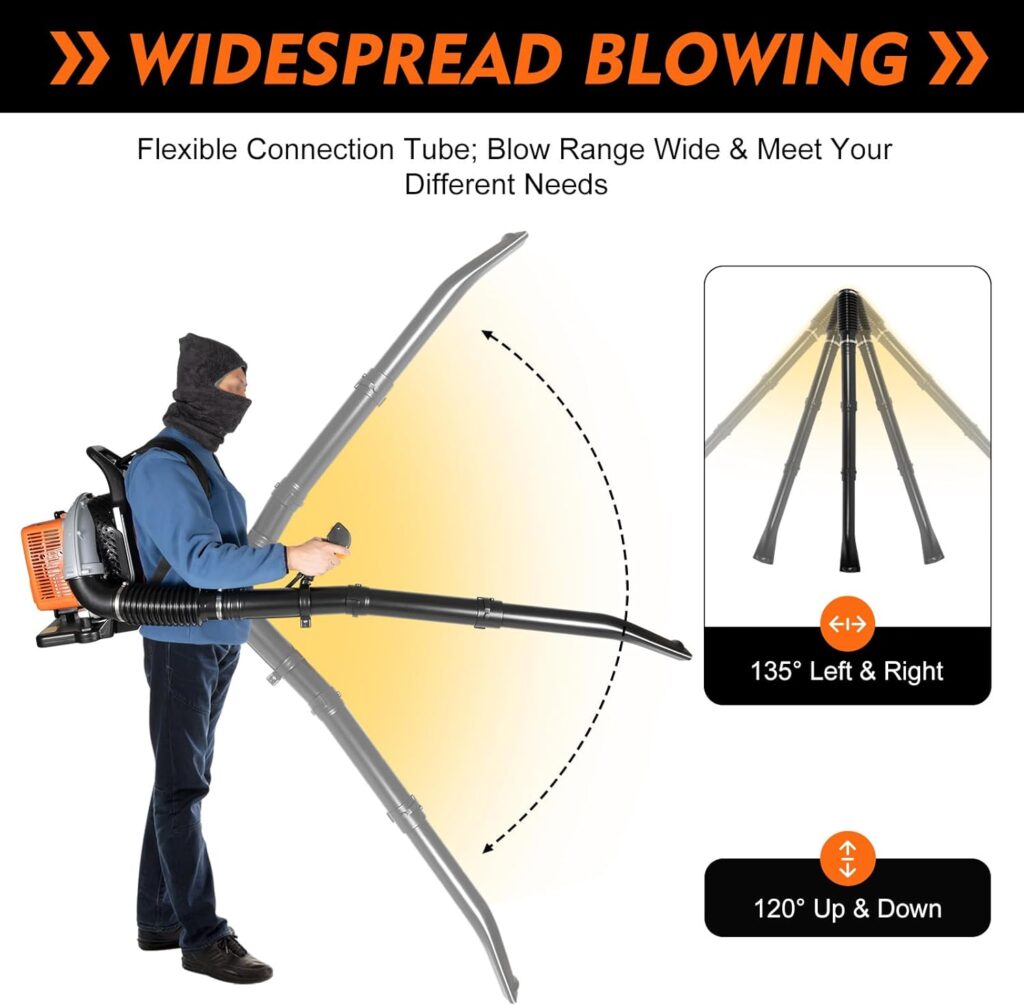
We appreciate a simple set of controls for throttle and on/off, and the air duct’s ability to tilt up and down 180° gives us flexibility in aiming airflow for different tasks. The controls are intuitive, letting us move from high-power sweeping to more targeted work quickly.
- The 180° adjustable duct is especially helpful for ground-level puffing to get under piles or angling air upwards for lofting debris into a collection zone.
- We should inspect control linkages and throttle cable routing after assembly to prevent binding and ensure smooth operation.
Maintenance and Care
We view maintenance as essential to keeping this engine reliable and long-lived, and because it is a two-stroke engine, simple ritualized upkeep pays dividends. Regular cleaning, fuel care, and inspection of moving parts are key tasks we recommend integrating into our schedule.
- Routine tasks include cleaning air filter(s), using fresh mixed fuel, checking and tightening clamps and fasteners, and inspecting the impeller and housing for debris buildup.
- We should also drain or stabilize fuel for storage periods and use high-quality two-stroke oil designed for air-cooled engines.
Suggested maintenance checklist:
- Clean air filter after every few hours of use; replace if damaged.
- Inspect fuel lines, primer bulb, and clamps for cracks or leaks.
- Clean the blower tube and impeller housing after heavy debris use to prevent imbalance.
- Check spark plug condition periodically and replace per intervals or if fouling occurs.
- Lubricate pivot points and inspect straps for wear.
This image is property of Amazon.com.
Safety Considerations
We take safety seriously and advise using appropriate PPE, respecting local noise ordinances, and avoiding risky behavior when operating a powerful backpack blower. The unit can throw rocks and debris at high speed, so eye and hearing protection are mandatory.
- Always wear hearing protection, eye protection, long pants, and sturdy shoes. Gloves help with vibration and grip.
- Keep bystanders, children, and pets at a safe distance while operating the blower.
- Be mindful of flammable conditions and never use the blower near open flames or hot engine parts when refueling; allow the engine to cool before adding fuel.
Use Cases and Suitability
We consider this blower suitable for both demanding residential needs and many professional applications where portability and power matter. It’s well-suited for clearing leaves, wet debris, light snow, and site dusting; it’s also useful for highway maintenance and larger property upkeep where wheeled equipment is impractical.
- For homeowners with large yards, properties with lots of trees, or contractors doing landscape cleanup, the 2.7 kW output and robust airflow cover most needs.
- While the manufacturer lists specialty uses like firefighting and highway maintenance, we advise confirming regulatory and safety requirements for such high-risk or regulated tasks before relying on this blower as primary equipment.
Pros and Cons
We find a clear pros/cons list helps us decide whether this blower fits our specific needs; below are balanced observations based on the supplied specs and typical field experience with similar units.
| Pros | Cons |
|---|---|
| Strong 2.7 kW power suitable for heavy clearing | High noise level (101 dB(A)) requires PPE and may limit use in some neighborhoods |
| High airflow (~665 CFM) and 6800 rpm impeller speed for effective clearing | Net weight around 11 kg can be fatiguing for extended use |
| 180° adjustable air duct for multi-angle operation | Two-stroke engine requires fuel mixing and periodic maintenance |
| Ergonomic wider straps and compact body improve carry comfort | Manufacturer fuel mix instructions inconsistent — verify correct ratio |
| Electronic ignition and pull start for reliable starts with correct technique | Noisy for neighbors and may violate local noise restrictions during certain hours |
We recommend evaluating whether the pros align with our workload and whether the cons are manageable with PPE and operational planning.
This image is property of Amazon.com.
Comparison to Similar Models
We like to compare this blower to other backpack models to ensure we pick the best fit. Compared with lighter handheld electric models, this gas-powered backpack offers more power and runtime but trades off in weight, noise, and the need for fuel mixing.
- Against higher-end commercial backpack blowers, this model offers competitive power at a likely lower price point but may have fewer refinements in vibration dampening and noise reduction.
- Compared to battery-powered backpack blowers, we gain immediate refueling and uninterrupted runtime, but we lose quieter operation and lower maintenance.
Assembly and First-Time Starting Steps
We prefer to follow a straightforward assembly process and confirm safety before starting; the included accessories allow us to get assembled quickly. Below we restate the manufacturer’s starting steps with clarifying notes drawn from our experience and best practices.
Assembly tips:
- Lay out all parts and fasteners and confirm against the included list.
- Attach blower tube securely, ensuring gaskets or clamps are seated properly.
- Fit straps and adjust to a comfortable baseline before adding fuel.
First-time start procedure (manufacturer steps, clarified):
- Open the fuel cap and add the two-stroke mixed fuel. Manufacturer ratios are inconsistent; start with a conservative, commonly accepted mix for air-cooled two-stroke engines (for example 1:25 fuel:oil by volume) unless the definitive manual states otherwise. Use high-quality two-stroke oil.
- Turn the ignition switch to ON.
- Press the fuel primer bulb several times until you see or feel fuel in the carburetor line; this ensures a prime for cold starting.
- Engage the choke or air throttle switch as instructed (usually a downward pull to close it for cold starts).
- Pull the starter rope firmly and smoothly several times until the engine pops and begins to run. Expect more pulls for a cold engine.
- When the engine fires and stabilizes, reduce the choke/air throttle to the run position and allow the engine to warm up briefly.
We find keeping a small funnel and a pre-mixed 1 L container of the correct fuel mix on hand helps prevent spills and makes fueling faster.
Troubleshooting Common Issues
We know that simple problems can often be fixed quickly if we follow a logical approach; below we outline common issues and possible remedies. If problems persist, contacting the seller or a qualified small-engine mechanic is advisable.
- Engine won’t start: Check the fuel mixture, ensure the primer bulb is full, check the on/off switch, inspect spark plug, and confirm the choke is in the start position.
- Poor power or sputtering: Stale fuel, clogged carburetor, dirty air filter, or incorrect mixture could be culprits; clean filter, replace fuel, and check spark plug condition.
- Excessive vibration or unusual noise: Inspect impeller and blower housing for debris or damage; ensure mounting bolts are tight and straps are secure to prevent movement that amplifies vibration.
- Fuel leaks or odors: Inspect fuel lines, primer bulb, and tank cap for proper seating and damage; replace any cracked hoses or damaged fittings immediately.
Storage and Winter Care
We find proper long-term storage prolongs engine life, particularly for two-stroke units. Winter or off-season storage requires draining fuel or using stabilizer to prevent carburetor gumming and ethanol-related issues.
- Stabilize fuel if storing with fuel in the tank for more than a month; better yet, run the engine dry before long-term storage.
- Remove spark plug and fog the cylinder with a few drops of oil if the unit will sit unused for many months.
- Store in a dry, protected location and cover to prevent dust accumulation and UV damage to plastic components.
Environmental and Regulatory Notes
We keep in mind that two-stroke engines typically emit more hydrocarbons than four-stroke or electric alternatives, so we consider environmental impact and local emission regulations. We recommend checking local laws if operating in tightly regulated areas.
- Consider using the blower during times that minimize community disturbance and adhere to local noise ordinances.
- For areas with strict emission rules, investigate whether there are certified low-emission alternatives or attachments that mitigate particulate spread.
Price and Value Consideration
We often balance upfront cost with operating costs; the backpack blower’s strong power makes it a worthwhile investment for those who need consistent heavy-duty performance. However, fuel, maintenance, and PPE add recurring costs that we should include in our budget.
- If we need intense, frequent clearing, the robust engine and portability provide value over time versus renting or using multiple smaller machines.
- For infrequent yard work or very small properties, quieter and lighter electric models may be more economical overall.
Buying Tips and Accessories
We like to prepare before clicking “buy,” and a few accessory purchases right away make life easier and safer. We recommend adding basic extras to the shopping list.
- Good quality hearing protection and eye protection.
- A small fuel mixing container marked with the correct ratio and a funnel to avoid spills.
- Spare spark plugs, extra two-stroke oil, and a basic tool kit for adjustments.
- A soft cloth or protective cover for storage.
Frequently Asked Questions
We answer the most common questions we see prospective buyers ask so we can make a confident purchase decision.
Q: Is this blower suitable for commercial landscape work?
- We think it can be suitable for many commercial tasks thanks to its 2.7 kW power and backpack design, but for heavy continuous daily use you may want to confirm durability expectations and compare with true commercial-grade models with extended warranties.
Q: What fuel mix should we use?
- The product documentation contains inconsistent guidance. We strongly suggest verifying the exact recommended mix ratio in the printed manual or with the seller; when in doubt, a conservative two-stroke mix around 1:25 by volume of gasoline to two-stroke oil is commonly used for similar engines, but the manufacturer’s recommended ratio should take priority.
Q: How loud is it?
- It’s rated at about 101 dB(A), which is noisy enough to require hearing protection for operators and may limit use in noise-sensitive areas.
Q: Can this handle wet leaves and light snow?
- Yes, the high airflow and power make it effective for moving wet leaves and light, dry snow; compacted or heavy wet snow and slush will be more challenging and may require multiple passes.
Q: Is it easy to carry for long jobs?
- The unit is relatively heavy at 11 kg, but the ergonomically designed backpack straps help. Still, long jobs may cause fatigue, so plan for breaks or alternate operators if possible.
Final Recommendations
We recommend this backpack leaf blower for users who need strong, portable power and are comfortable with two-stroke engine maintenance and the noise trade-offs. It’s particularly well-suited for larger properties, contractors, and anyone who requires more thrust than smaller electric or handheld options provide.
- Pick this unit if we prioritize power and runtime and are prepared to handle fuel mixing and routine maintenance.
- Consider quieter or less maintenance-intensive alternatives (battery or four-stroke models) if noise, emissions, or engine maintenance are primary concerns.
Closing Verdict
We find the Backpack Leaf Blower, 66cc 2 Stroke Gas Leaf Blowers for Lawn Care, Cordless Leaf Blowers Gas Powered, 2.7KW 665CFM Portable Air Blower for Garden Snow Dirt Debris (2.7 KW) offers strong performance and useful features like a 180° adjustable air duct and ergonomic straps, making it a compelling choice for heavy yard and property work. With careful attention to fuel mixing, hearing protection, and regular maintenance, this blower can be a reliable, powerful tool in our landscape toolkit.

Disclosure: As an Amazon Associate, I earn from qualifying purchases.