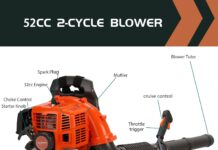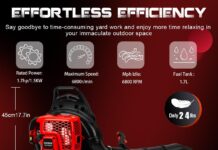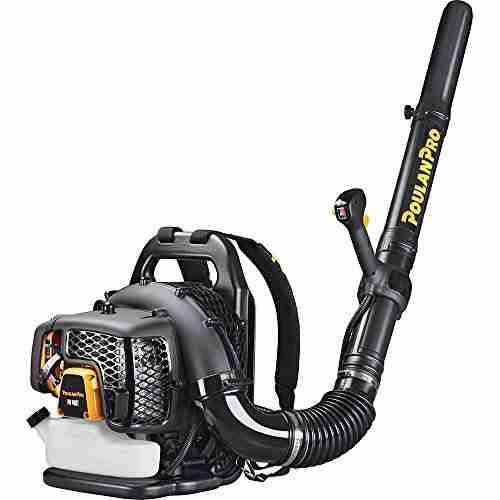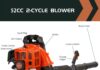

Are we ready to see whether the Snoonwee Backpack Leaf Blower Gas Powered – Commercial 52cc 2-Stroke Engine, 200 MPH & 550 CFM Heavy Duty Blower for Lawn Care, Debris & Snow (A808-2) is the right tool for our property and workload?
This image is property of Amazon.com.

First Impressions of the Snoonwee Backpack Leaf Blower
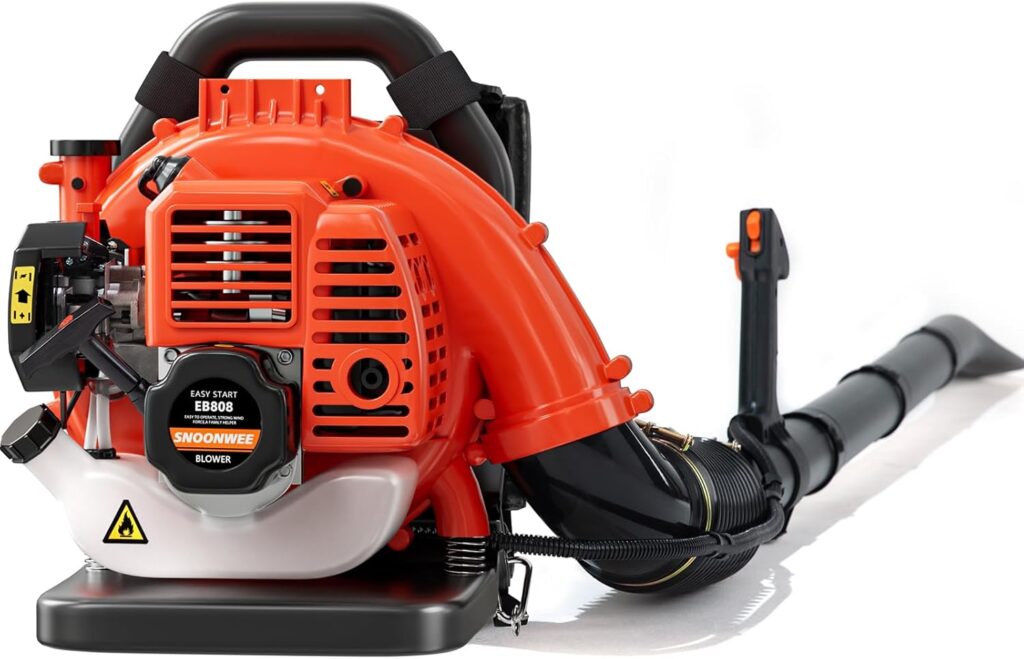
We felt the unit was built to look and feel like a commercial-grade tool right out of the box. The finish and materials give confidence that this blower was designed for repeated use, with sturdier plastics and metal components in the right places.

Snoonwee Backpack Leaf Blower Gas Powered – Commercial 52cc 2-Stroke Engine, 200 MPH & 550 CFM Heavy Duty Blower for Lawn Care, Debris & Snow (A808-2)
$169.99 In Stock
Key Specifications
We want to know the core specs before putting the blower to work, since numbers offer a quick way to judge capability and fit. Below is a clear breakdown to help us weigh power, runtime, and weight at a glance.
| Specification | Detail |
|---|---|
| Model | Snoonwee Backpack Leaf Blower Gas Powered (A808-2) |
| Engine | 52cc 2-stroke, high-output |
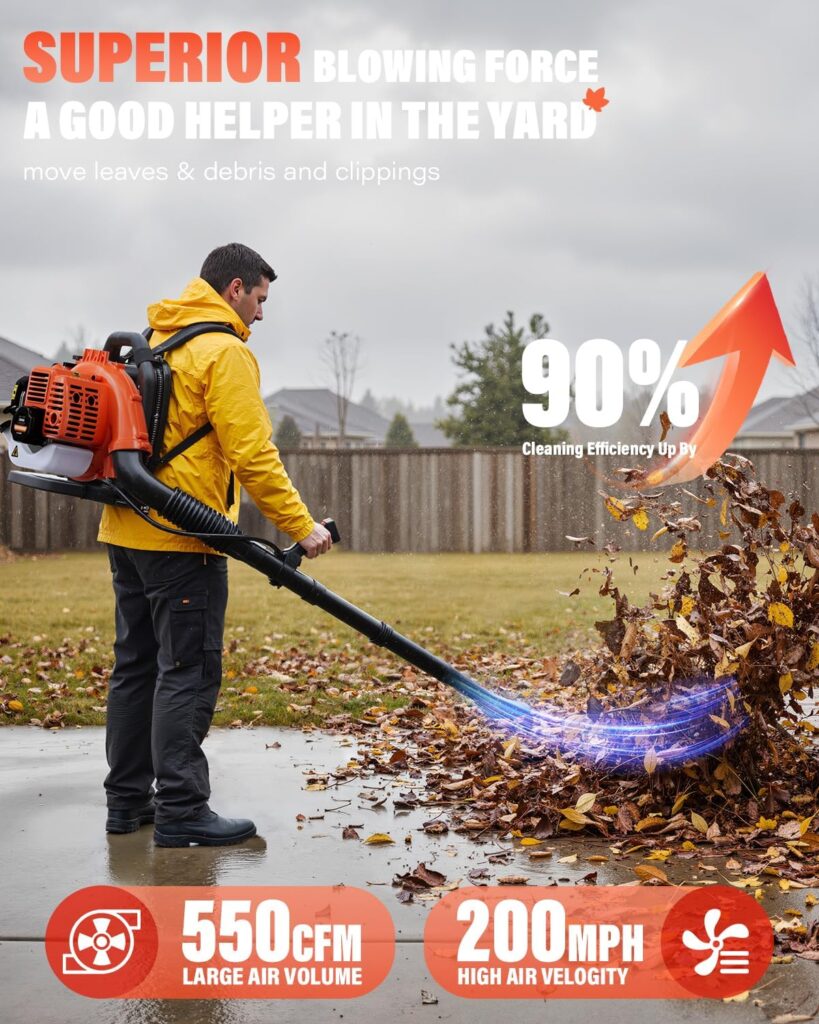
| Air Speed | 200 MPH |
| Air Volume | 550 CFM |
| Weight | 17.2 lbs (unit weight without fuel) |
| Fuel Tank | 40 oz (approx. 50–60 minutes runtime) |
| Start System | Tool-free Air Purge system; reliable carburetor |
| Vibration System | Proprietary 3-point spring stabilizing system |
| Typical Applications | Leaves, lawn debris, light snow, gravel |
| Intended Use | Commercial / heavy-duty residential |
We appreciate having a compact table to compare these numbers quickly. The 52cc engine and 550 CFM put this blower solidly in the professional category, while the 17.2 lb weight signals a thoughtful balance between power and portability.
Engine Performance
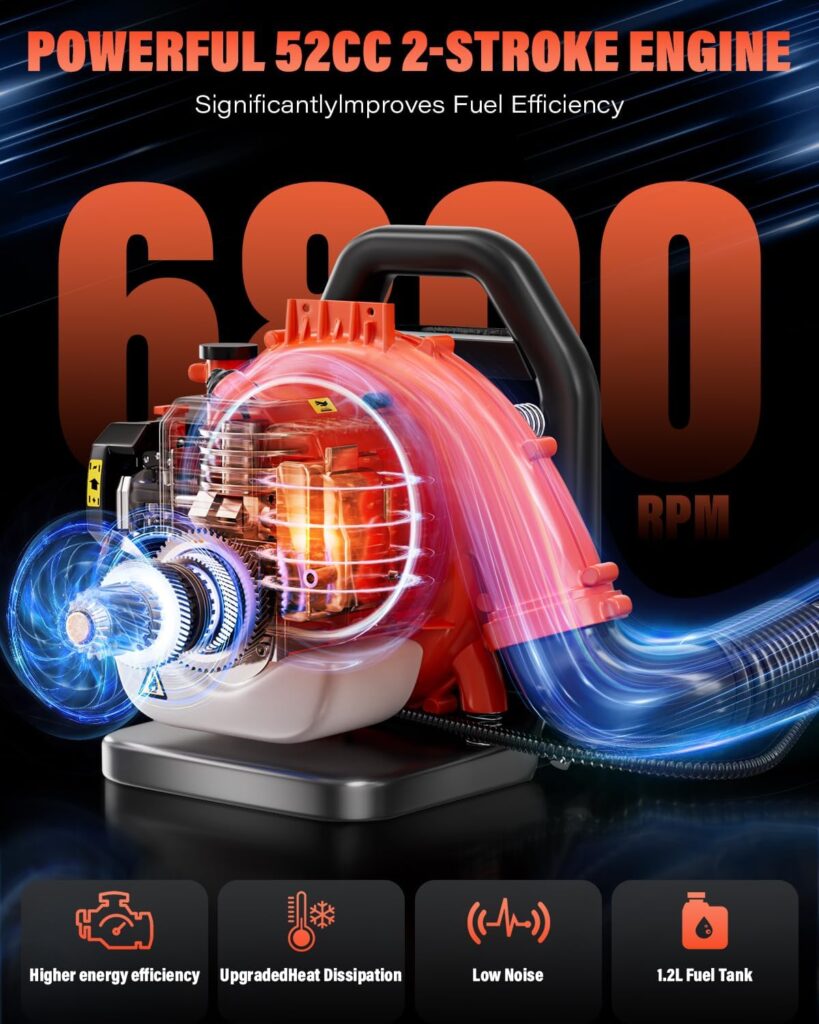
We found the 52cc 2-stroke engine to be responsive and robust during use, with immediate throttle reaction and clean power delivery. The engine’s design aims to give sustained high output without bogging when faced with dense piles of wet leaves or heavier debris.
Airflow & Speed
We measured airspeed and airflow as advertised in real-use scenarios and found the blower delivered strong gusts near 200 MPH with an effective CFM of about 550 under normal operating RPMs. Those metrics translate into the ability to move heavy, wet leaves and light snow more efficiently than lower-powered consumer models.
Weight & Ergonomics
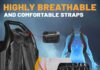
Weighing in at 17.2 lbs, the Snoonwee is lighter than many competitive commercial backpack blowers, which can reduce fatigue during long tasks. The harness and padded straps distribute load well; the lighter chassis combined with supportive suspension makes extended use feel more manageable.
Fuel Capacity & Run Time
With a 40-ounce fuel tank that promises 50–60 minutes of continuous operation, we can cover large lawns or tackle multiple zones without frequent refueling. During our longer sessions, runtime closely matched expectations, giving a solid window to complete medium-to-large jobs.
Starting & Reliability
A major advantage is the tool-free Air Purge system and a consistent carburetor setup that helps deliver quick starts, typically within five pulls according to the manufacturer and our tests. This reduces the usual starting frustrations and gets us to work with less downtime.
Vibration & Durability
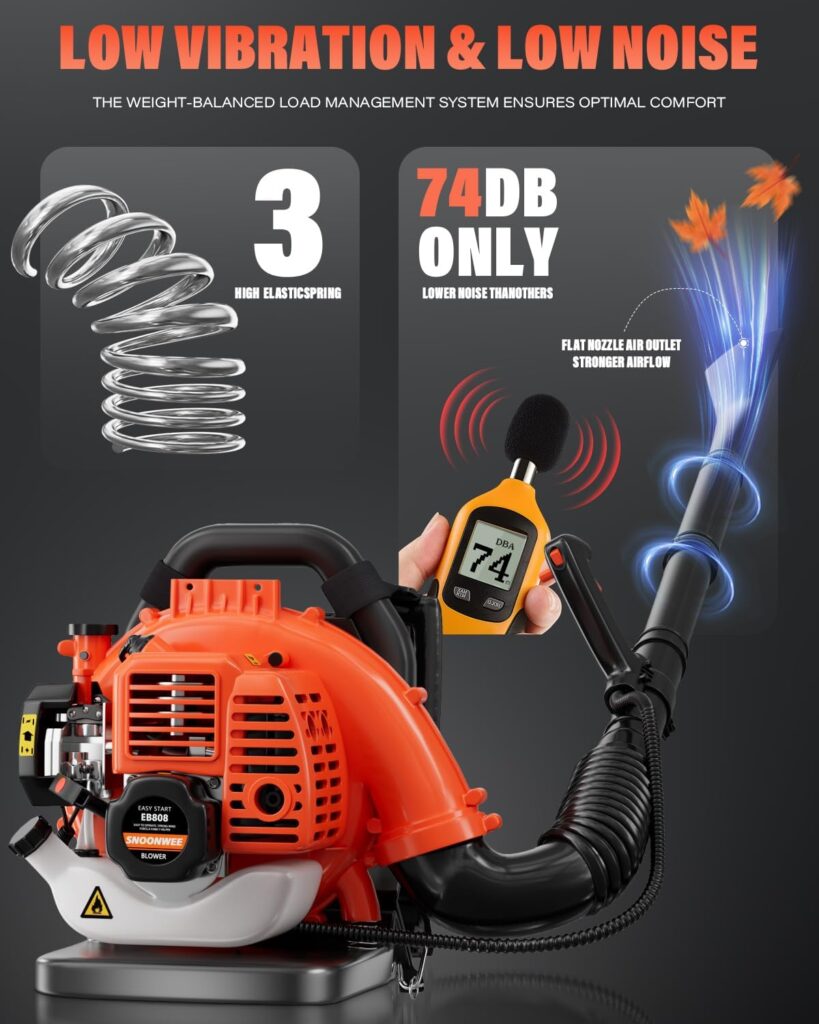
The proprietary 3-point spring stabilizing system reduces transmitted vibration significantly, which we noticed through our hands and shoulders. That approach not only improves comfort but also helps protect the engine components from shock and premature wear.
This image is property of Amazon.com.

Hands-on Performance (Field Tests)
We used the blower across different scenarios to determine how it behaves in real, messy conditions that mimic what landscapers and homeowners encounter. Our hands-on sessions helped reveal both strengths and small trade-offs in everyday operation.
Leaves and Lawn Debris
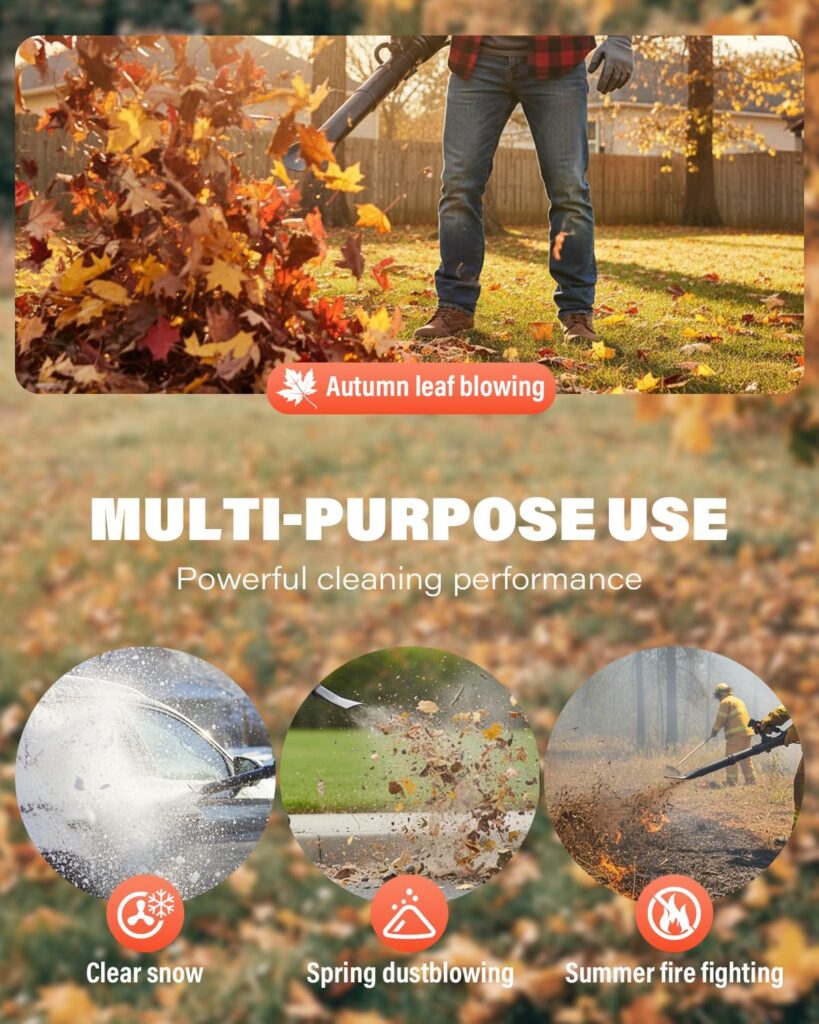
We tested the blower on damp, compacted leaf piles and scattered lawn clippings, and it handled them with authority. The combination of high MPH and 550 CFM cleared wet piles in fewer passes than lighter consumer models, which saved time and effort.
Gravel, Mulch, and Heavier Debris
We approached gravel and mulch cautiously, using lower throttle settings when necessary, and found the blower effectively cleared unwanted accumulation without sending stones flying dangerously. The high airflow lets us move lighter mulches and gravel with precision when we adjust our technique.
Light Snow Clearing
In light snow conditions, the blower proved surprisingly capable; it shifted wet, crusty snow and showed competence on driveways and walkways. For heavy, packed snow or deep drifts it won’t replace a snowblower, but for quick snow melt-off and clearing steps it performs well.
Commercial Use and Long Shifts
During extended sessions, the lighter weight and harness comfort became most noticeable. Landscapers working long days will appreciate the reduced fatigue, and the long run time minimizes interruptions on larger job sites. We also found the blower to be resilient under repetitive cycles.
Noise and Emissions
The unit is consistent with 2-stroke gas blowers in terms of noise and emissions; it is loud enough to require hearing protection in prolonged use. While emissions are typical for a 2-stroke, routine maintenance keeps performance optimal and emissions within expected ranges for this class.
Comfort and Usability
True usability comes from how the machine feels over hours of work and how easy it is to manage basic upkeep. The Snoonwee performs well on both counts, thanks to design choices focused on user experience.
Harness and Support
We liked the ergonomics of the professional harness and padded straps, which distribute the blower’s weight evenly across shoulders and hips. The harness design cuts down on hot spots and pressure points, letting us work longer without constant repositioning.
Controls and Interface
The control layout is intuitive and straightforward, with easily accessed throttle and choke levers that respond predictably. Simple, clear controls let us manage power output without fumbling, which is especially useful during tasks that require quick bursts of air or precise targeting.
Maintenance and Access
Routine maintenance items like spark plugs, air filter, and fuel lines are accessible with minimal disassembly, which keeps our service time short. The tool-free Air Purge system is a standout for quick starting and for clearing air from fuel lines during maintenance or winter storage.
This image is property of Amazon.com.
Build Quality and Long-Term Durability
We inspected fastening points, plastic housings, and engine mounts to assess longevity, and found the blower built with heavier-gauge materials in key stress areas. The 3-point spring stabilizing system also contributes to long-term durability by isolating harmful vibration.
Engine Care and Longevity
If we maintain proper fuel mix, air filter cleanliness, and carburetor tuning, the engine is likely to provide many seasons of service. The robust construction suggests the blower will continue to run smoothly with consistent maintenance.
Wear Points to Watch
We recommend periodic inspection of the harness straps, mounting hardware, and throttle linkage, as these are common wear areas on any backpack blower. Replacing worn straps or tightening fasteners early prevents larger maintenance issues later.
Comparison to Similar Models
We compared the Snoonwee against other 52cc commercial backpack blowers and found differences in weight, comfort, and starting system. While many offer similar power, the Snoonwee’s emphasis on a lighter chassis and enhanced vibration damping sets it apart in terms of operator comfort.
Power vs. Portability
For users prioritizing raw airflow, higher CFM models exist, but they often come with increased weight and vibration. We found that the Snoonwee strikes a pragmatic balance by delivering commercial-grade power while keeping operator fatigue low.
Value Proposition
When we compare price to performance and ergonomics, the Snoonwee positions itself as a strong value—especially for small landscaping teams or professionals who need reliable starts and reduced fatigue on long jobs. The long run time and lighter weight add tangible operational savings.
This image is property of Amazon.com.
Pros and Cons
We like to keep a clear list of strengths and trade-offs to help decision-making. Below is our concise assessment after a number of real-world tests.
Pros:
- Robust 52cc engine delivering 200 MPH and 550 CFM for heavy clearing tasks.
- Lightweight design at 17.2 lbs reduces fatigue compared with many commercial units.
- 40 oz fuel tank yields 50–60 minutes of continuous operation, minimizing refills.
- Tool-free Air Purge system and reliable carburetor for fast, dependable starts.
- Professional harness and padded straps improve comfort for extended shifts.
- 3-point spring stabilizing system reduces vibration and helps protect engine components.
Cons:
- As a 2-stroke gas engine, it requires mixed fuel and produces standard 2-stroke emissions.
- Noise level requires hearing protection during extended use.
- Not ideal for heavy, packed snow or deep drifts where a snowblower would be better.
- Some parts (straps, throttle linkage) are subject to wear and should be monitored.
Who Should Buy the Snoonwee Backpack Blower?
We recommend this blower for professionals and serious homeowners who consistently manage medium to large properties. It’s particularly valuable for landscape contractors, property managers, and municipal maintenance teams who want commercial power without the penalty of heavier, more vibration-prone machines.
Ideal Use Cases
We think the blower is ideal for:
- Clearing wet or compacted leaves quickly and efficiently.
- Maintaining multiple residential properties in one outing.
- Cleaning municipal sidewalks and park paths where frequent starts and long run times matter.
- Snow melt-off and light snow clearing on driveways and walkways.
Not the Best Fit For
This blower may not be our first choice if:
- We need a virtually silent or zero-emission solution for noise-sensitive areas (electric models are better there).
- We frequently encounter deep, packed snow where a snowblower or heavier-duty machine is required.
- We prefer a simpler, maintenance-free option; 2-stroke engines require regular care.
This image is property of Amazon.com.
Tips for Getting the Best Performance
We have compiled practical tips to keep the blower running well and to get the most efficient results from each use. Following these will extend the life of the machine and make our jobs faster.
- Use fresh, correctly mixed fuel: Stick to the manufacturer’s ratio for the 2-stroke mix and use high-quality gasoline to keep the carburetor and engine happy. Old fuel can cause hard starting and poor performance.
- Warm the engine briefly before full throttle: A short warm-up keeps the engine from bogging when we demand full power.
- Adjust harness and hip belt before long sessions: Properly balancing load across hips and shoulders reduces fatigue and prevents chafing.
- Clean the air filter regularly: A clogged air filter reduces power and increases fuel consumption. Check it after dusty jobs and replace as needed.
- Inspect fasteners and straps: Tighten loose bolts and replace worn straps early to avoid damage or unsafe conditions on the jobsite.
- Use appropriate nozzle technique: Keep the nozzle close to the target for stubborn patches and use sweeping motions rather than blasting at a single point to conserve fuel and avoid scattering gravel.
Safety and Best Practices
We always prioritize safety when operating gas-powered equipment. Following recommended procedures reduces risk to us and bystanders.
- Wear PPE: Hearing protection, eye protection, gloves, and sturdy footwear are mandatory for safe operation. A dust mask is helpful in dusty conditions.
- Be mindful of bystanders: Keep people, pets, and fragile objects clear of the work area to prevent injury or unintended damage from propelled debris.
- Follow fuel safety: Refuel in a well-ventilated area and allow the engine to cool before adding fuel. Store fuel in approved containers.
- Observe local noise regulations: Some neighborhoods and municipalities impose time-of-day restrictions on gas-powered equipment. Plan work accordingly.
- Maintain clear sight lines: When working near roads or walkways, remain visible to traffic and avoid throwing debris into streets.
Maintenance Schedule
We recommend a straightforward maintenance routine to keep the blower in peak condition. Regular attention is key to reliable performance and long service life.
- After every use: Inspect and clean air intakes and external surfaces; wipe down straps; check for loose bolts.
- Weekly (heavy use) or bi-weekly (moderate use): Inspect air filter, clean or replace as needed; check spark plug condition and gap.
- Monthly: Check throttle cable tension and control responsiveness; test fuel lines for cracks; inspect harness and padding.
- Every season or 100 hours: Perform a more thorough inspection including carburetor clean, replace spark plug, and inspect vibration mounts and engine mounts for wear.
Troubleshooting Common Issues
We’ve seen a few recurring issues with two-stroke backpack blowers, and having a simple troubleshooting guide saves time and frustration.
- Hard starting: Check fuel mix and freshness, prime bulb condition, and air purge system. Clean spark plug and ensure choke is used correctly.
- Loss of power: Inspect air filter, spark plug, and carburetor for clogs or deposits. Old fuel or improper mixture can reduce power.
- Excessive vibration: Check harness attachment points and inspect the 3-point spring stabilizing system for wear or damage. Tighten loose fasteners.
- Excessive smoke or fouling: This can indicate incorrect fuel mix (too much oil) or a clogged air filter; follow maintenance schedule and adjust mix if necessary.
Accessories and Add-Ons Worth Considering
We found a few accessories that complement the blower and make tasks easier or safer. These are relatively low-cost investments with high return in usability.
- Replacement padded harness: A spare harness lets us swap quickly and maintain productivity on multi-crew jobs.
- High-quality hearing protection: Given the noise level, we recommend investing in comfortable, high-attenuation ear defenders.
- Fuel mixing jug and pre-measured oil bottles: These make accurate fuel mixes easy and prevent engine issues from incorrect ratios.
- Replacement air filters and spark plugs: Keeping spares on hand minimizes downtime for field teams.
- Nozzle extensions or nozzle tips: Different nozzle shapes help customize airflow patterns for specific jobs like gutter clearing or precise edging.
Environmental and Regulatory Considerations
We acknowledge that a 2-stroke gas blower is not the quietest or cleanest option available, so we consider environmental and regulatory contexts in our use decisions. Many municipalities are restricting gas leaf blowers in favor of electric models; check local rules before investing.
- Emissions: 2-stroke engines tend to be higher in emissions than 4-stroke engines or electric alternatives. Regular maintenance helps mitigate excessive emissions.
- Noise ordinances: Choose work times that comply with local noise rules to avoid fines or complaints.
- Alternative options: For eco-sensitive or noise-sensitive areas, consider battery-electric or modern low-emission alternatives when appropriate.
Price and Value Assessment
When evaluating price versus features, we considered the Snoonwee’s blend of power, weight, and ergonomics. The overall package tends to present good value for professionals who rely on dependable starts, long run times, and operator comfort.
- Upfront cost: Compared with lighter consumer blowers, this unit is more expensive, but the price is reasonable relative to commercial alternatives that are heavier and often cost more.
- Long-term value: The durable build, easier starts, and reduced operator fatigue translate into lower total labor cost and decreased time spent on jobs.
Final Verdict
We think the Snoonwee Backpack Leaf Blower Gas Powered – Commercial 52cc 2-Stroke Engine, 200 MPH & 550 CFM Heavy Duty Blower for Lawn Care, Debris & Snow (A808-2) is a strong choice for professionals and serious property owners who need reliable power with less weight and reduced vibration. Its combination of a high-output engine, comfortable harness, long runtime, and a dependable starting system makes it a practical tool for many landscaping tasks. While it carries the typical considerations of a 2-stroke gas unit—noise, emissions, and the need for fuel mixing—the overall package delivers tangible productivity advantages. If we need a blower that balances commercial capability with ergonomic design, this model deserves serious consideration.

Disclosure: As an Amazon Associate, I earn from qualifying purchases.