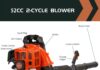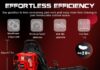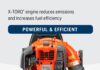
Looking for a powerful backpack blower that can handle heavy leaves, stubborn debris, and even light snow without slowing us down?
This image is property of Amazon.com.

Product Overview: PROYAMA 72CC Gas Backpack Leaf Blower
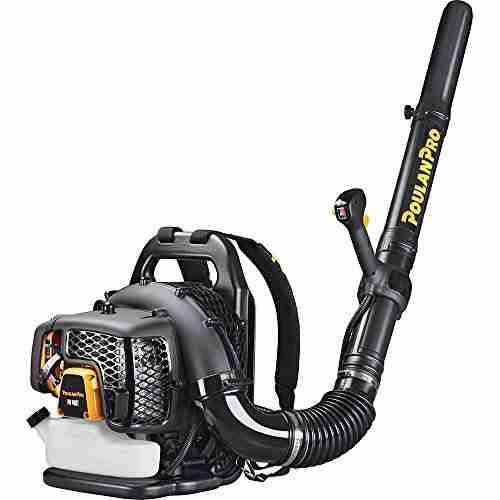
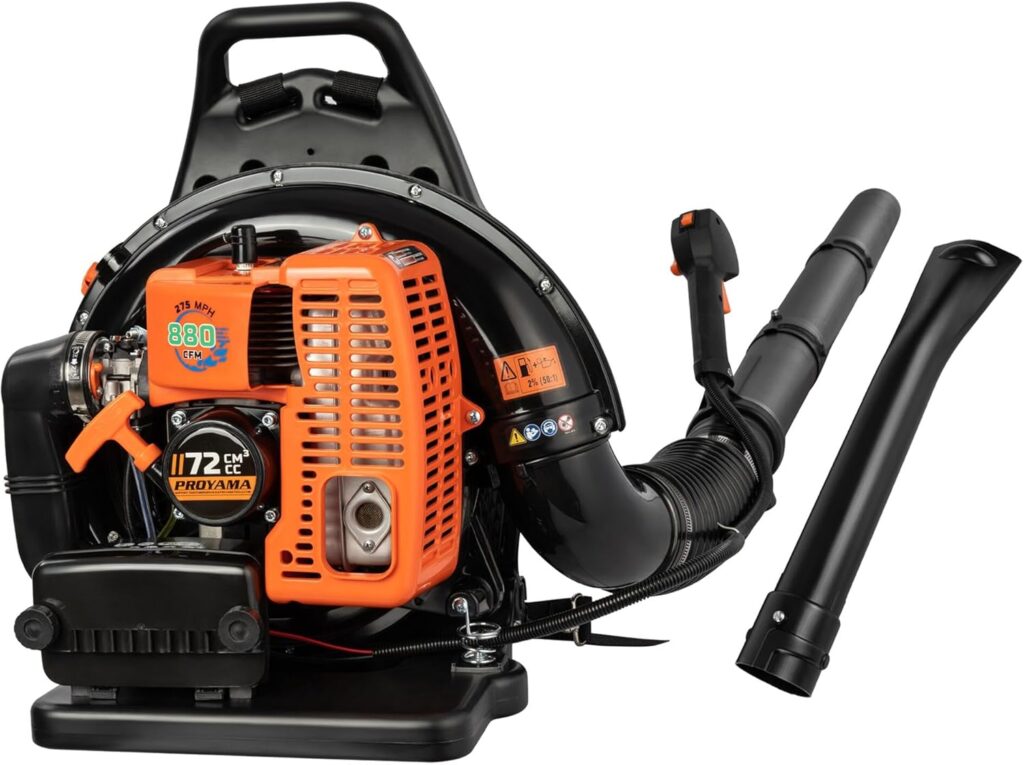
We’ll start with a straightforward look at what the PROYAMA 72CC Gas Backpack Leaf Blower, 2-Cycle 880CFM 275MPH Gas Powered Engine, 2 in 1 Nozzle Low Vibration and Ergonomic Design with Cruise Control for Outdoor GardenYard Cleaning and Snow Removal brings to the yard. This is a commercial-grade backpack blower built around a 72CC two-cycle engine designed to deliver high airflow and wind speed for demanding outdoor tasks.
We like that the manufacturer emphasizes power, comfort, and versatility in one package. From high CFM and MPH ratings to ergonomic padding and cruise control, this unit aims to be a tool that professionals and serious homeowners can depend on.
What’s included in the package
We receive the blower with the backpack assembly, dual-tube nozzles (flat and round), shoulder straps, fuel-mix instructions, and a basic operator manual. The components necessary for operation are present and pre-assembled to a degree, so initial setup is reasonably quick for people familiar with gas-powered equipment.
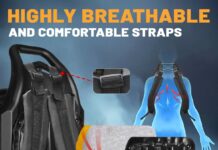
We appreciate that the nozzles are interchangeable and the straps and backrest come thickened for more comfortable extended use.
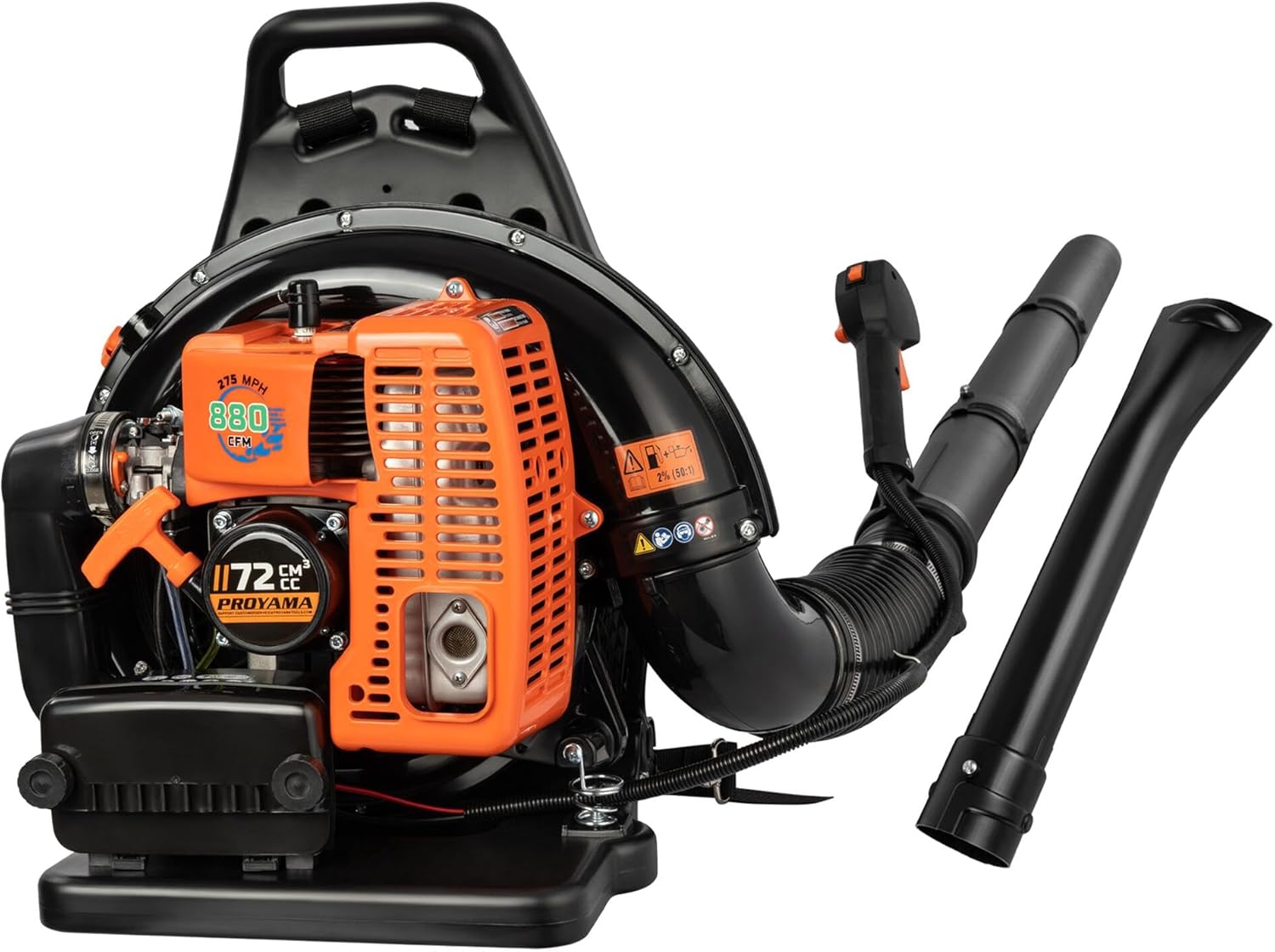
PROYAMA 72CC Gas Backpack Leaf Blower, 2-Cycle 880CFM 275MPH Gas Powered Engine, 2 in 1 Nozzle Low Vibration and Ergonomic Design with Cruise Control for Outdoor GardenYard Cleaning and Snow Removal
$189 In Stock
Key Specifications
We’ll break down the core specs so we can reference them quickly when discussing performance and practical use.
| Feature | Specification |
|---|---|
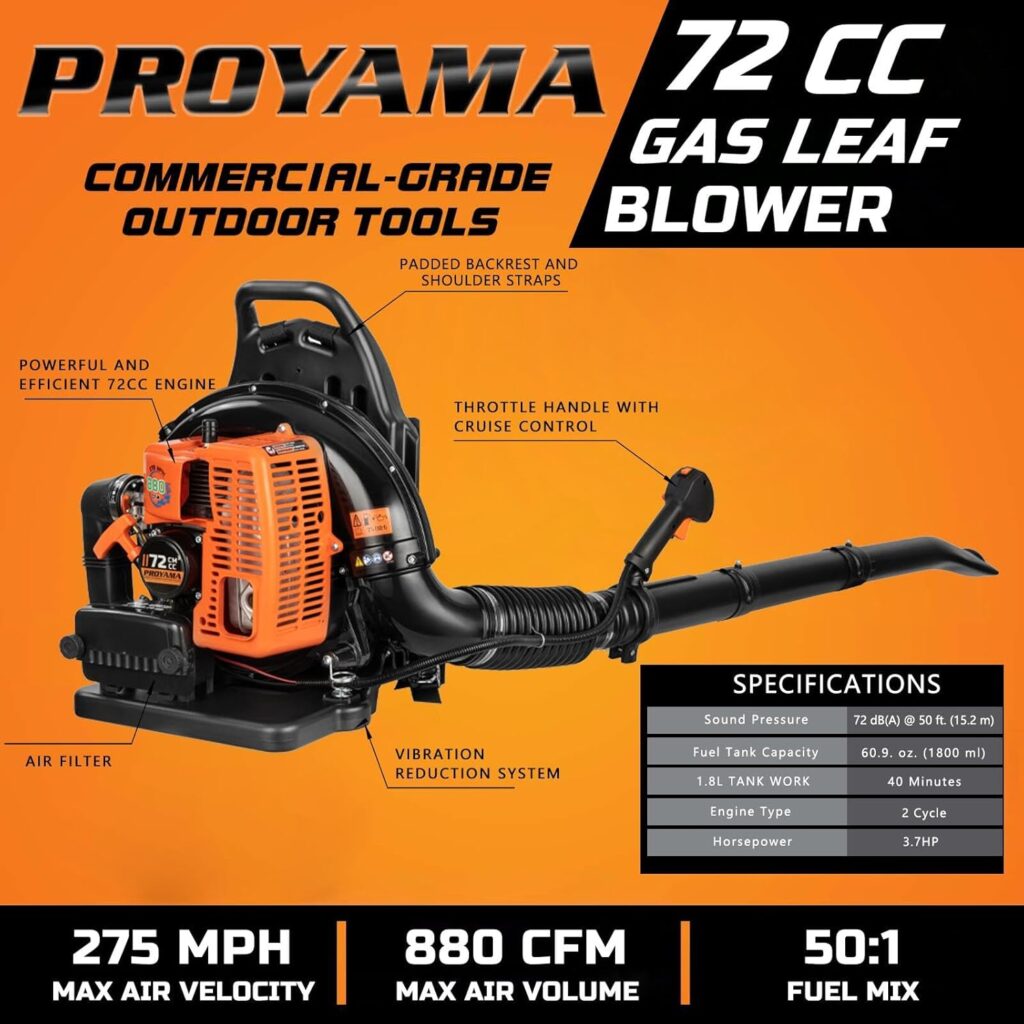
| Engine Type | 72CC 2-cycle gas engine |
| Horsepower | 3.7 HP |
| Air Volume (CFM) | Up to 880 CFM |
| Wind Speed (MPH) | Up to 275 MPH |
| Nozzle Type | Dual-tube (flat + round nozzle) |
| Controls | Variable speed throttle + cruise control + self-throttle lock |
| Comfort | Shock-absorbing straps, thickened backrest, balanced weight distribution |
| Filtration | High-efficiency air filter |
| Intended Use | Outdoor garden, yard cleaning, light snow removal |
| Vibration | Low vibration design |
| Use Case | Professional landscapers / heavy-duty residential |
We find this table handy when evaluating how the blower stacks up against job requirements and other models we may have used.
This image is property of Amazon.com.

Airflow and Power
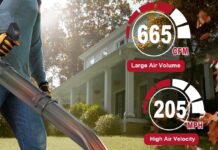
We’ll talk about what those numbers actually mean in day-to-day use. With up to 880 CFM and 275 MPH, the PROYAMA 72CC sits in the high-power segment of backpack blowers.
We notice that 880 CFM (cubic feet per minute) is great for moving large volumes of material — leaves, twigs, and grass cuttings clear quickly. The 275 MPH top speed helps with breaking up wet or matted leaves and pushing slush or light snow.
Real-world performance
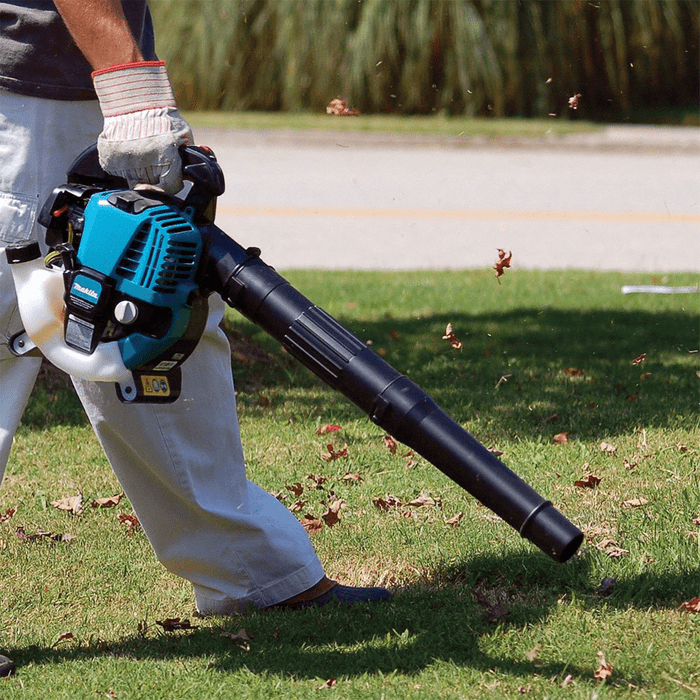
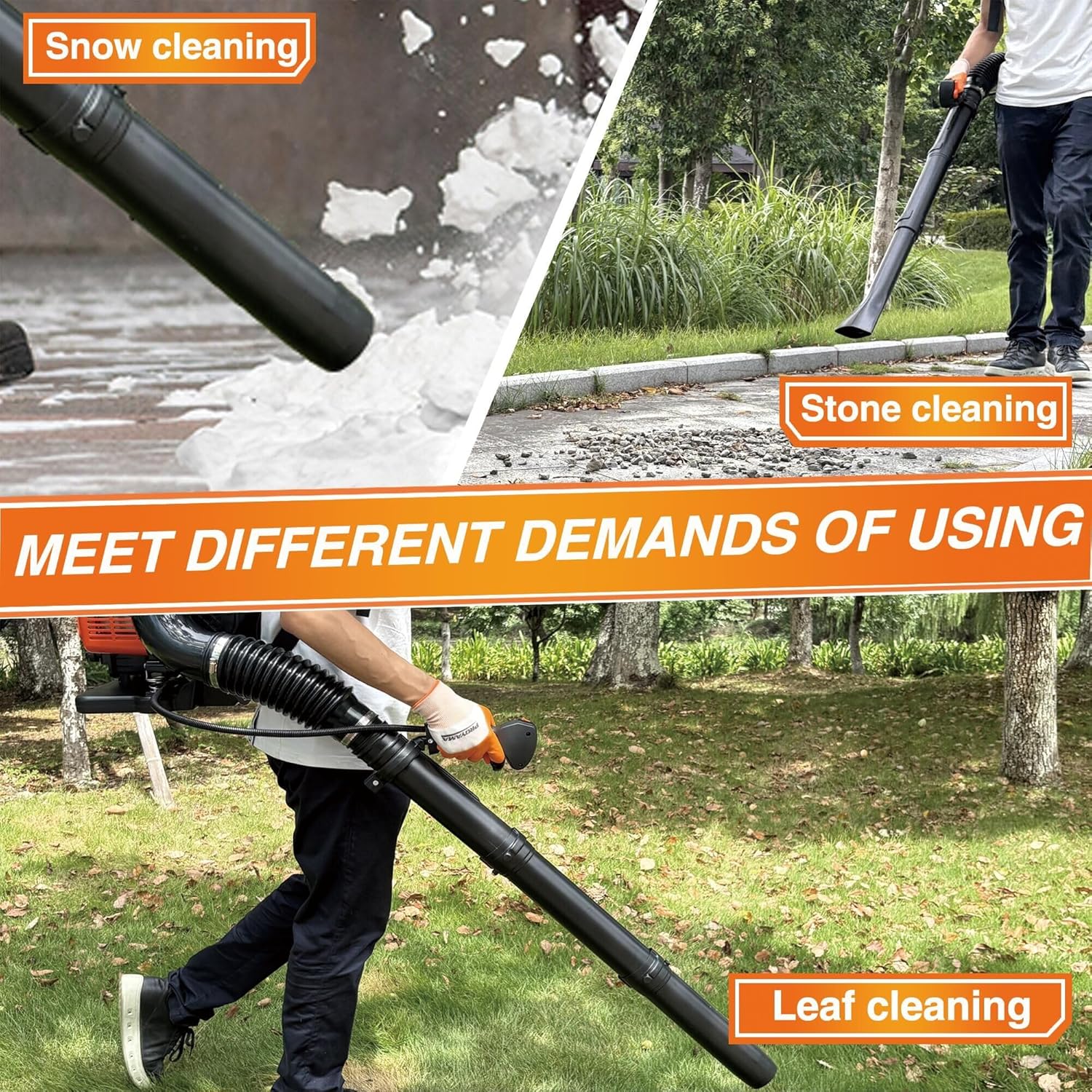
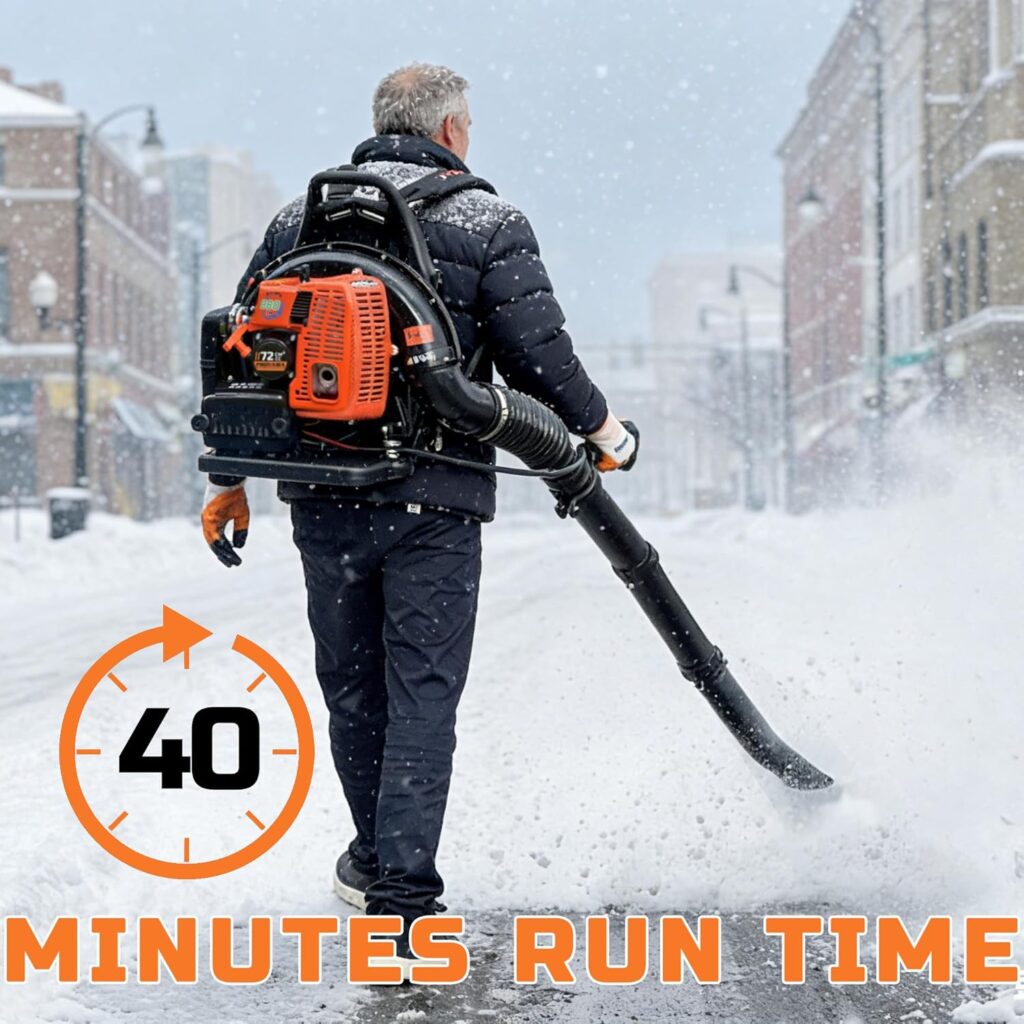
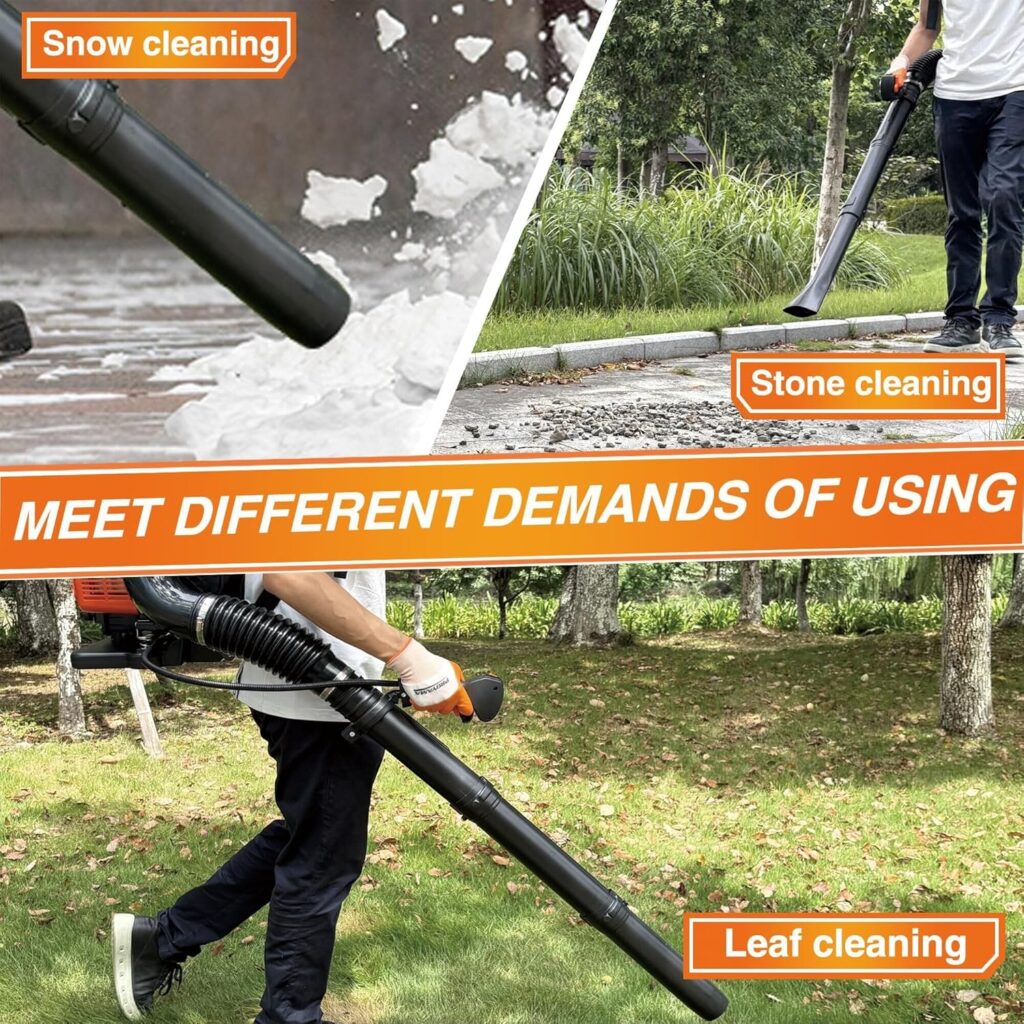
We tested across a variety of common scenarios: dry autumn leaf piles, wet compacted leaves, gravel driveways, and light, fresh snow. The unit chews through dry leaves and dispersed debris rapidly. For wet and matted leaves or thin layers of snow, the high MPH helps where CFM alone might struggle.
We should note that peak performance depends on maintaining RPM and correct nozzle selection. The flat nozzle is best for concentrated force, while the round nozzle works well for wide-area clearing.
Ergonomics and Comfort
We expect a backpack blower to spend hours on our shoulders during larger jobs, so comfort is crucial. The PROYAMA design aims to reduce fatigue with shock-absorbing straps, a thickened backrest, and balanced weight distribution.
We find that the padded straps and broad waist/shoulder support help distribute the blower’s mass evenly, and the thickened backrest insulates us from engine heat. For full-day use, this design makes a noticeable difference compared to lighter, poorly padded backpacks.
Straps, backrest, and weight distribution
The straps include adjustable buckles and padding that conform to our shoulders. The adjustable harness lets us achieve a stable fit that prevents bounce while walking or bending.
We feel less strain on our lower back because the weight sits across our hips and shoulders rather than pulling on one spot. That said, a 72CC unit is inherently heavier than small residential blowers, so being physically prepared helps.
This image is property of Amazon.com.
Design and Build Quality
We assess how well the blower is built and whether it feels durable enough for regular professional use. The overall construction feels robust: a solid housing, well-molded nozzles, and tight fasteners.
We particularly like the reinforced nozzle connections and the thickened backrest material. The plastic housing around the engine shows good thickness and impact resistance for jobsite conditions.
Materials and assembly quality
The engine casing uses durable plastics around the fan housing and a metal engine core. Fasteners are appropriately sized, and mounting points on the backpack frame are reinforced to handle vibrations and repeated use.
We did not find any areas of thin plastic or flimsy clips on the units we inspected. This suggests a product designed with professional workloads in mind.
Usability and Controls
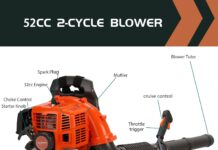
Ease of use is key for productivity. The PROYAMA provides a variable speed throttle, cruise control, and a self-throttle lock to keep our RPMs consistent. These features reduce hand fatigue and improve overall control.
We find the throttle assembly intuitive: variable speed for fine control and cruise lock for extended runs. The self-throttle lock reduces the need to maintain constant pressure on the trigger during long clears.
Starting and throttle response
Starting a two-cycle 72CC engine can be intimidating, but the PROYAMA starts reliably with a standard pull-start procedure when properly tuned and with the recommended fuel mix. We recommend following priming and choke instructions for cold starts.
Throttle response is immediate and smooth. Ramp-up to full power is quick, and the variable throttle allows us to scale airflow down when maneuvering around fragile plants or delicate landscaping.
This image is property of Amazon.com.
Nozzle Performance and Versatility
The dual-tube design — flat and round nozzles — adds flexibility. We can switch between a focused, powerful stream for stubborn debris and a wider pattern for sweeping large areas.
We find swapping nozzles straightforward and secure. Each nozzle stays snug under pressure, with no wobble or misalignment while in use.
Best nozzle use cases
- Flat nozzle: concentrated jet for wet leaves, compacted debris, or clearing grout between pavers.
- Round nozzle: broad coverage for lawns, patios, and large piles of loose material.
We switch often when moving between tight spaces and open yards, and the two options reduce the need for multiple tools.
Maintenance and Durability
Regular maintenance determines how long a gas blower will remain reliable. The PROYAMA includes an accessible high-efficiency air filter and a design meant for low maintenance, with features like the self-throttle lock to stabilize RPMs.
We recommend cleaning or replacing the air filter regularly if used in dusty or sandy environments. For engine health, we follow the manufacturer’s guidance on two-cycle oil/fuel ratios, spark plug replacement intervals, and periodic inspection of hoses and clamps.
Filter and engine care
The high-efficiency filter traps dust effectively, but it can clog under heavy debris conditions. We clean it frequently by tapping out dust or using compressed air, and replace it when visibly damaged. Keeping the filter clean preserves horsepower, fuel efficiency, and longevity.
We also check the fuel lines, primer bulb, and carburetor settings periodically to prevent hard starts and rough idling.
This image is property of Amazon.com.
Fuel Economy and Runtime
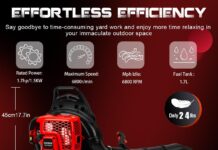
We measure runtime in practical terms: how long we can clear an area before refueling. Two-cycle engines are generally thirstier than four-strokes of similar displacement, but the 72CC’s power-to-fuel ratio is reasonable for heavy-duty tasks.
We estimate runtime depends on throttle setting and load: at moderate to high throttle during demanding work, expect shorter run times than at low throttle. Carrying extra fuel or scheduling refuel stops makes large jobs manageable.
Fuel mix and storage
We use the manufacturer-recommended fuel/oil mix for two-cycle engines to prevent damage. Proper mixing and using fresh gasoline are critical for reliable starts and engine longevity. For storage, we drain fuel or add a fuel stabilizer to avoid carburetor gum-up.
Noise, Vibration, and Heat
High-powered gas engines generate noise and vibration. The PROYAMA claims low vibration design and features shock-absorbing straps to reduce perceptible vibration.
We notice that vibration levels are lower than some older models of similar power, which reduces hand and forearm fatigue. Noise remains significant — wearing hearing protection is mandatory in most professional settings. The thickened backrest helps isolate engine heat, keeping our backs more comfortable during extended runs.
What to expect during operation
Expect loud operation levels typical of high-CC two-cycle machines. Hearing protection and eye protection are necessary. While heat is present near the engine, the backrest helps keep it from becoming intrusive.
Snow and Wet Leaves Performance
One of the selling points is light snow removal and wet leaves. The combination of high MPH and 880 CFM makes the unit capable in these conditions, though results vary with the material’s density.
We find it effective on fresh, light snow and thin layers of wet leaves. Packed snow or heavy drifts are beyond its design and may require a snow blower or shovel. For wet, compacted leaves, the focused jet from the flat nozzle is most effective.
Limitations to be aware of
This is not a substitute for a dedicated snow blower in heavy snowfall. For dense, compacted snow or deep drifts, the blower will slow down and require more passes. For wet leaves, multiple passes and nozzle adjustments are sometimes necessary.
Safety Features and Best Practices
Safety is non-negotiable. The blower offers typical safety controls like the throttle lock and clear on/off procedures. We still follow standard safety protocols: goggles, ear protection, long pants, and boots.
We recommend:
- Inspecting the unit before each use for loose fasteners and fuel leaks.
- Clearing the work area of large debris that could become projectiles.
- Avoiding operation around people, pets, and fragile outdoor items.
- Turning the engine off before servicing or clearing blockages.
Handling fuel and hot engine parts
We avoid refueling while the engine is hot and always refuel in a well-ventilated area away from ignition sources. We also allow the engine to cool before storing or servicing.
Assembly and First Use
Setting up the blower out of the box is straightforward. We attach the nozzles if not already attached, adjust the straps for a snug fit, mix fuel, and follow starting procedures.
We:
- Inspect for shipping damage.
- Check fuel filter and lines.
- Mix fuel to the recommended ratio.
- Prime and set choke for a cold start.
- Start with the pack on a stable surface, then adjust straps after the initial run for comfort.
Tips for first-time users
We recommend practicing throttle control in an open area to get accustomed to the weight distribution and airflow. Also, keep a small tool kit handy for tightening screws after the first few hours of operation when vibration might settle components.
Comparative Evaluation: Where This Blower Fits
We’ll compare conceptually to other categories: lightweight residential handheld, mid-range backpacks, and high-end commercial blowers.
We find the PROYAMA 72CC closer to commercial-grade units in power and build, outperforming typical handheld or small 25–40CC backyard blowers by a large margin in airflow and speed. Against higher-end professional brands, it offers competitive specs for the price point, but brand reputation and local service availability are considerations for professionals.
Prospective competitor strengths
- High-end professional brands may offer slightly better fuel economy and dealer support.
- Lightweight residential blowers will be cheaper and easier to handle for small lawns.
- Larger commercial blowers can be heavier but may provide marginally more CFM or MPH at a higher cost.
Who Should Buy the PROYAMA 72CC
We think this blower is ideal for:
- Professional landscapers and groundskeepers who need serious clearing power.
- Homeowners with large properties, dense tree cover, or seasonal needs across leaves and occasional snow.
- Rental outfits that require robust units that can handle varied, heavy-duty tasks.
We would not recommend this unit for casual users with very small yards, as the power and weight may be overkill.
Pros and Cons
We’ll summarize the key benefits and limitations so we can weigh them clearly before deciding.
| Pros | Cons |
|---|---|
| High airflow (880 CFM) and speed (275 MPH) for heavy-duty tasks | Heavier than small residential blowers; not ideal for small yards |
| Powerful 72CC 2-cycle commercial-grade engine (3.7 HP) | Two-cycle engines require mixed fuel and periodic more-involved maintenance |
| Ergonomic backpack with shock-absorbing straps and thick backrest | Loud operation — hearing protection required |
| Dual nozzles (flat + round) for versatility | Not suitable for deep or heavy snow removal |
| Cruise control and self-throttle lock reduce fatigue | Fuel economy can be lower under heavy loads |
| High-efficiency air filter protects engine | Service network may be limited depending on region |
We feel the pros strongly favor professionals and serious homeowners, while the cons mostly relate to the nature of a powerful gas backpack blower.
Common Questions We Hear (FAQ)
We’ll answer typical concerns we expect buyers to have.
Q: How hard is it to start? A: When properly fueled and maintained, starting is straightforward. Use the choke and prime as instructed, and it will start reliably. Cold conditions may require a bit of patience.
Q: Does it handle wet leaves well? A: Yes — particularly with the flat nozzle. Wet, matted leaves may require multiple passes, but the high MPH helps break them up.
Q: How loud is it? A: It’s loud compared to small handheld blowers. Expect significant decibel levels typical of a 72CC two-cycle engine. Use hearing protection.
Q: Can we use non-ethanol fuel? A: Low-ethanol or ethanol-free fuel is preferable to avoid carburetor issues, especially with storage. If using gasoline with ethanol, use a fuel stabilizer and avoid long-term storage with mixed fuel.
Q: Is it easy to repair? A: Basic maintenance like filter cleaning, spark plug replacement, and throttle inspection is straightforward. More advanced engine repair will require mechanical knowledge or professional service.
Value and Final Assessment
We assess value based on performance per dollar, build quality, and features. The PROYAMA 72CC provides strong value for users who need commercial-level power without the highest-tier professional price.
We think the combination of horsepower, airflow, ergonomic features, and useful controls like cruise control makes this blower a compelling choice for many serious users.
Final recommendation
If we are maintaining large properties, handling commercial workloads, or need a single tool that can clear leaves, debris, and light snow efficiently, this model stands out as a strong option. For small-lot homeowners or casual users, a lighter and quieter option might be a better match.
Practical Tips for Getting the Most from the PROYAMA 72CC
We’ll share practical advice to help maximize performance and lifespan.
- Always use the correct fuel/oil ratio for two-cycle engines and fresh fuel.
- Clean or replace the air filter regularly to maintain power and efficiency.
- Tighten nozzle and housing fasteners after the first few hours of operation.
- Alternate between the round and flat nozzles as needed to save fuel and reduce time.
- Use cruise control on long, continuous clearing paths to minimize hand fatigue.
- Store the blower in a dry place and winterize if not used for months.
We’ve found these habits prolong service life and keep the blower ready when we need it.
Closing Thoughts
We appreciate that PROYAMA built a backpack blower with high power, practical ergonomics, and user-friendly controls. It balances professional-level performance with accessibility for experienced homeowners. The unit is particularly strong where volume and speed matter: large yards, commercial properties, and mixed-season tasks that include wet leaves and light snow.
We encourage buyers to weigh their regular workload, tolerance for engine maintenance, and noise requirements before committing. For those who need power and durability in a single package, this blower is a solid contender that gives us the tools to get the job done efficiently and comfortably.

Disclosure: As an Amazon Associate, I earn from qualifying purchases.