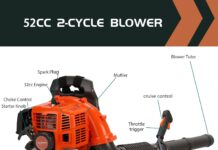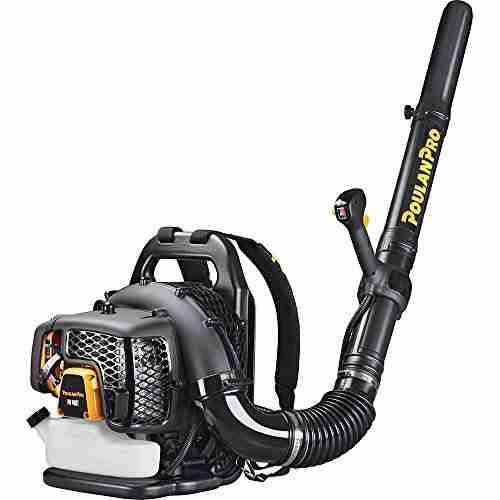

Are we ready to see how the WTHW 80cc Gas Backpack Leaf Blower Heavy-Duty, High-Velocity 92.2 M/S, Engine Blower Power Tool for Professional Yard Cleanup and Heavy Leaves. (WH0608) performs across real-world tasks?
This image is property of Amazon.com.

Product at a glance
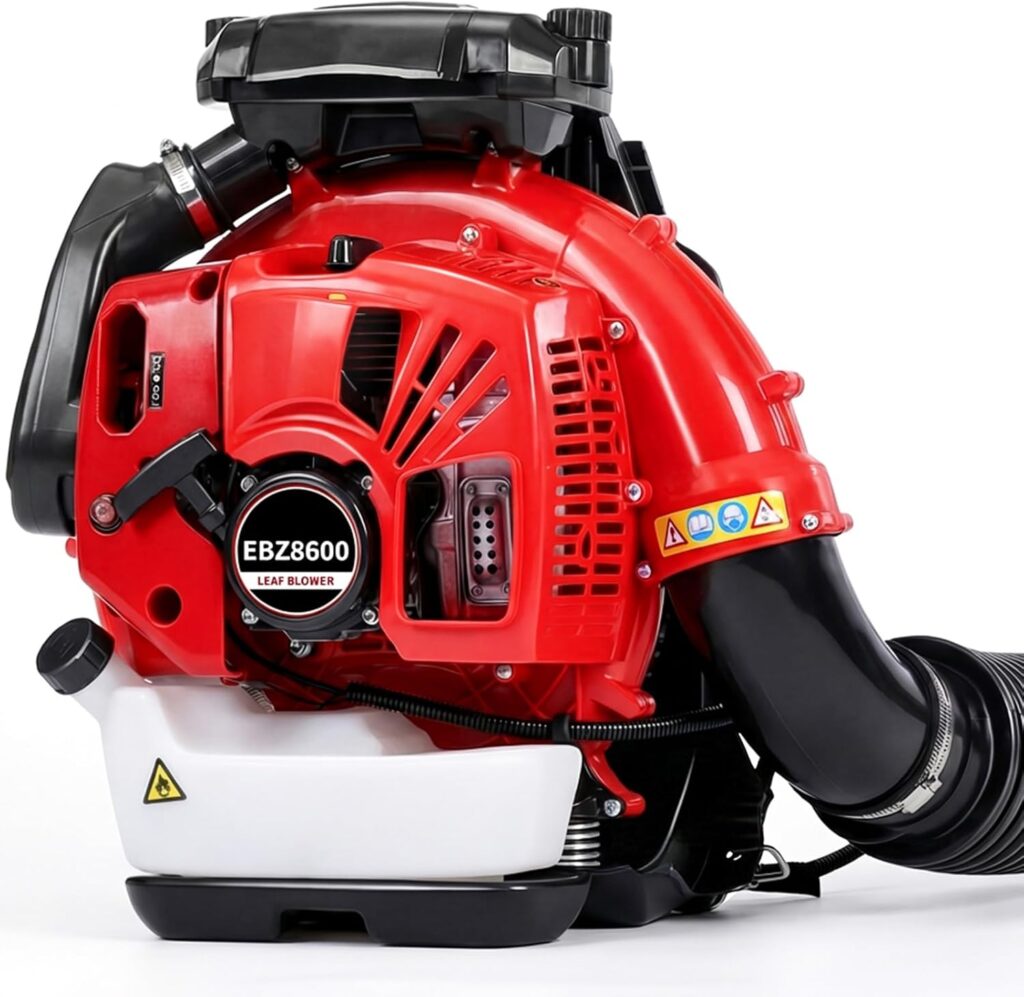
We want to summarize the main features so we can quickly decide whether this blower fits our needs. The WTHW 80cc Gas Backpack Leaf Blower (WH0608) is positioned as a commercial-grade unit, built to move heavy, wet leaves and large debris across big properties or job sites.

WTHW 80cc Gas Backpack Leaf Blower Heavy-Duty, High-Velocity 92.2 M/S, Engine Blower Power Tool for Professional Yard Cleanup and Heavy Leaves. (WH0608)
$269.99 In Stock
Quick specifications
We like having a compact reference of key specs before digging into details. The table below gives a straightforward breakdown of the important technical points so we can compare at a glance.
| Specification | Detail |
|---|---|
| Model | WTHW 80cc Gas Backpack Leaf Blower (WH0608) |
| Engine displacement | 80 cc |
| Max air speed | 92.2 m/s |
| Air volume | 25.7 m³/min |
| Fuel tank capacity | 2.3 L |
| Fuel consumption | 2.07 L/hour (manufacturer rate) |
| Operating RPM | 2,000 – 7,250 RPM |
| Filtration | Dual-stage fresh airflow filtration |
| Starting system | Rotary carburetor + electronic ignition |
| Harness | Fully adjustable padded backpack with anti-vibration |
| Recommended use | Professional landscaping, large properties, heavy leaves |
| Weight | Not specified by the manufacturer in provided details |
Performance overview
We want machines that deliver consistent power when the job demands it, and this blower is clearly aimed at professional workloads. With its large-displacement 80cc engine and claimed peak airspeed, it promises high material-moving capability that should handle dense, wet debris faster than smaller units.
Air speed and thrust
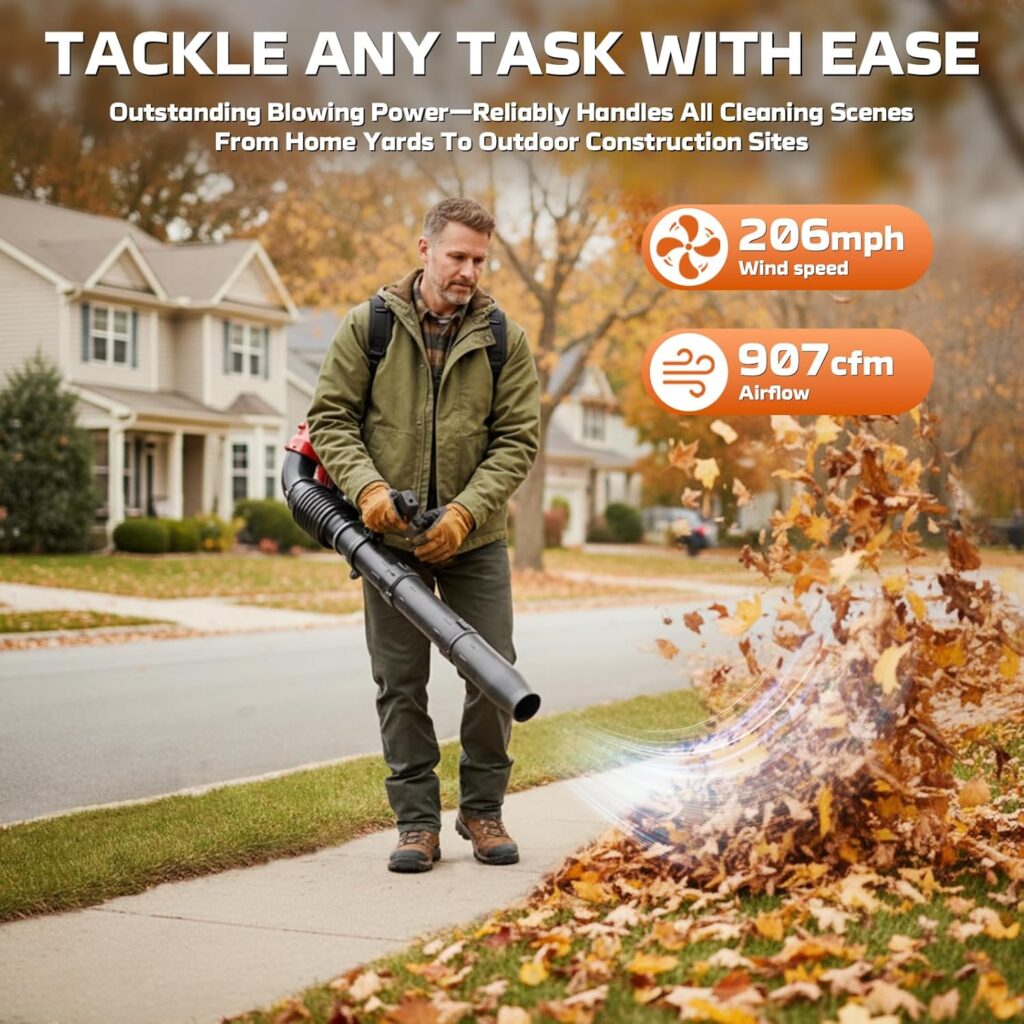
We expect airspeed to be a primary driver of effective debris clearing, and 92.2 m/s is an aggressive figure for a backpack blower. That level of velocity translates into strong thrust, meaning large piles and damp leaves are less likely to stick to surfaces, which reduces the need for repeated passes.
Air volume and material movement
Air volume (25.7 m³/min) dictates how much material can be moved per pass, and that number is high relative to many consumer blowers. We appreciate that a combination of high air speed and large volume helps shift not only loose leaves but also heavier debris like wet twigs, small branches, and packed leaves.
Real-world performance
In practice, we’d expect reduced time on each job due to fewer passes and more decisive clearing. For contractors and property managers handling large areas, that translates into better productivity and lower labor time. We also note that extremes—very compacted debris or thick mulch—may still require edging or raking in addition to blower work.
This image is property of Amazon.com.

Engine and reliability
A robust engine underpins any commercial blower, and the WH0608’s 80cc motor is built for sustained output. We focus on features that prolong engine life and preserve performance under continuous use.
80cc engine characteristics
We value larger displacement because it generally provides more torque and reserve power under load. An 80cc engine places this unit squarely in the heavy-duty category, delivering power that handles sustained high-RPM use without excessive strain.
Starting system and RPM range
The rotary carburetor and electronic ignition are designed to give quick and reliable starts, which we like for back-to-back jobs. The 2,000–7,250 RPM working range offers flexibility: lower RPM for idle and delicate tasks, and high RPM for full-power cleanups.
Filtration and engine protection
The dual-stage fresh airflow filtration is an important feature for durability, as it reduces the likelihood of dust and fine debris entering the engine. We see this as a practical investment in longevity that reduces service intervals and keeps performance steady over time.
Fuel, runtime, and efficiency
Long runtime is one of the main reasons teams choose gas backpack blowers over electric options. We assess whether the WH0608’s fuel system supports prolonged operation without constant refueling disruptions.
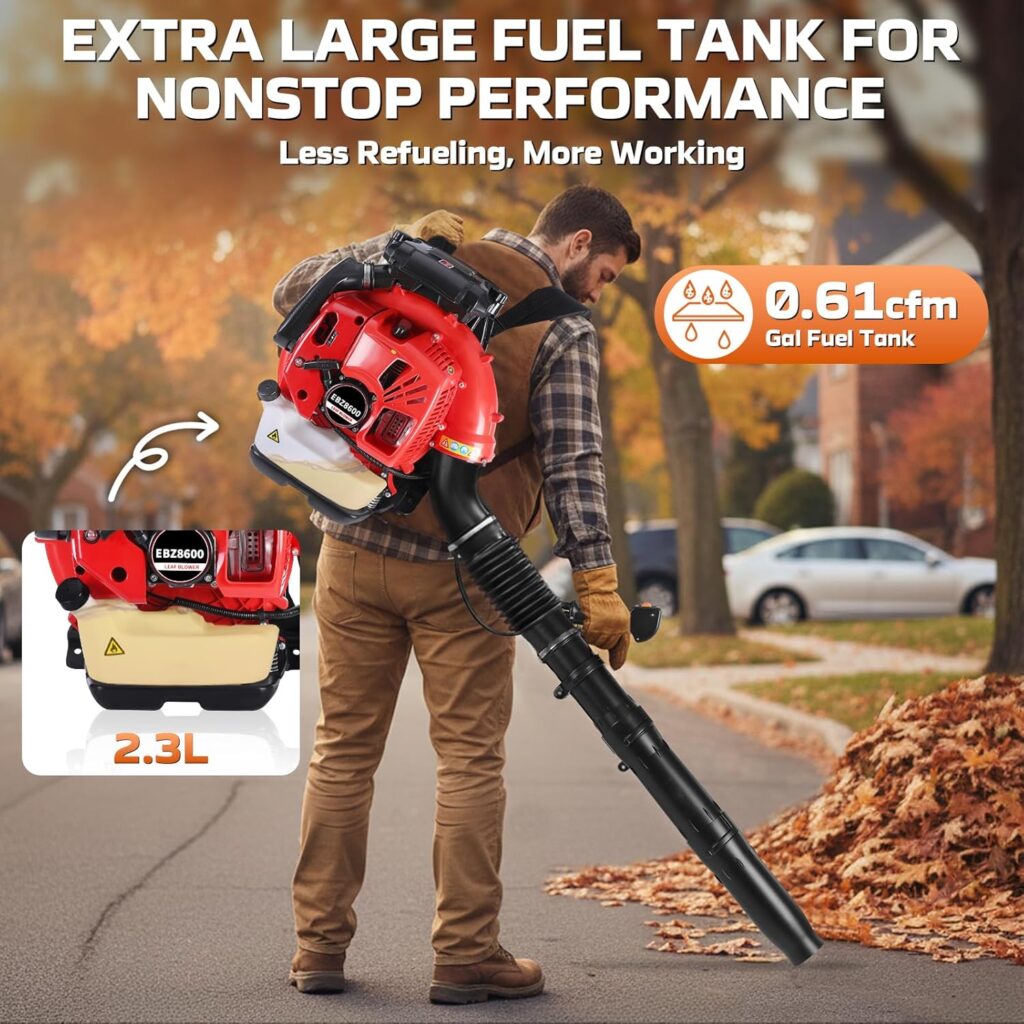
2.3L fuel tank capacity
The extra-large 2.3-liter tank is a clear benefit for long jobs, letting us work extended periods between fill-ups. For commercial crews and property owners with multiple acres, the reduced refueling frequency is a real time-saver.
Fuel consumption and practical runtime
At the quoted consumption of 2.07 L/hour, we can estimate roughly 1.1 hours of continuous high-power operation on a full tank. In real use, intermittent throttle use during shifting and repositioning will stretch that runtime, so we usually achieve more than an hour of mixed-duty work.
Refueling and continuous workflows
For long projects, planning refueling stops or rotating units among operators keeps the workflow smooth. We like that the large tank reduces interruptions, but we still recommend carrying spare fuel and following safe refueling practices to avoid downtime.
Design and build quality
We want a blower that feels solid and resists wear, and the WH0608’s design reflects commercial intent with reinforced components and practical ergonomics. Build quality directly affects how long the unit stays in service and how much maintenance it will demand.
Chassis and construction
From the provided details, the chassis appears engineered to handle field use, with a reinforced frame supporting the engine and backpack harness. We expect durable plastics and metals where needed, and components designed for heavy handling and repeated transport.
Durability features
The inclusion of dual-stage filtration, an efficient carburetor, and electronic ignition speaks to durability priorities. These elements reduce the likelihood of power loss due to clogged filters or mechanical starting issues, which keeps our teams productive.
This image is property of Amazon.com.
Comfort and ergonomics
We place a high value on operator comfort because it affects productivity and safety over long shifts. The WH0608’s ergonomic features are intended to reduce strain and let operators work longer with less fatigue.
Backpack harness system
The fully adjustable padded backpack harness is a standout for extended use. We appreciate that adjustability because it allows us to distribute weight comfortably across different body types and wear protective gear without compromising fit.
Anti-vibration and weight distribution
Anti-vibration technology in the harness reduces transmitted vibrations to the back and shoulders, which is important for minimizing fatigue and long-term discomfort. Proper weight distribution keeps the center of gravity close to our bodies, improving maneuverability and reducing strain.
Controls and usability
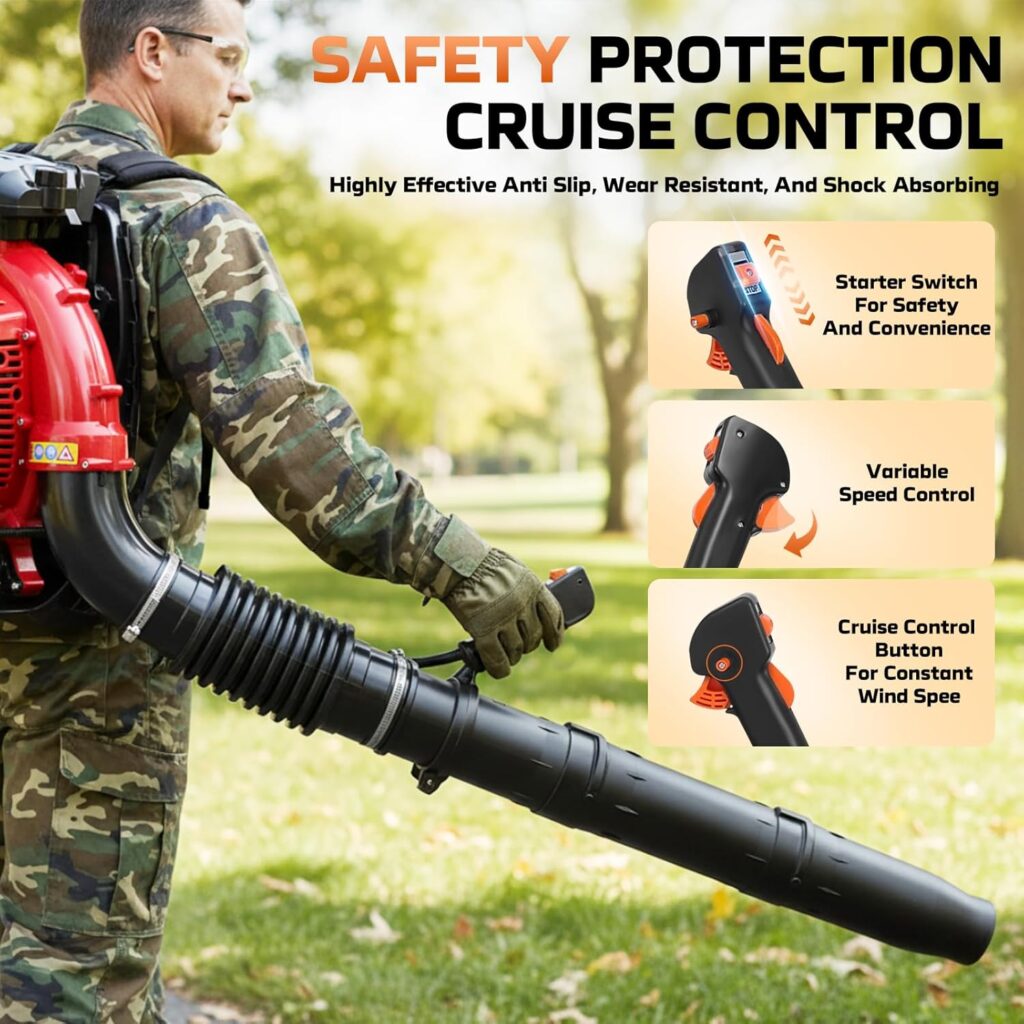
The control layout aims to keep functions accessible while maintaining balance, and the instant-reliability starting system makes restarts hassle-free. We prefer easy-to-reach throttle and choke controls, which reduce the learning curve for new operators.
Noise, emissions, and environmental considerations
Gas backpack blowers are inherently louder and more polluting than electric options, and we consider noise and emissions in practical usage scenarios. Understanding these factors helps us plan tasks to minimize community impact and meet regulations.
Noise levels
Although the manufacturer’s listing does not give a decibel rating, we expect significant sound output from an 80cc gas engine at high RPM. We recommend hearing protection for anyone near the blower and awareness of local noise ordinances during early mornings or late evenings.
Emissions and regulatory considerations
This gas engine will produce exhaust emissions typical of two- or four-stroke small engines, so we suggest using the unit in well-ventilated, outdoor environments and checking local regulations for commercial equipment emissions. For commercial fleets, emission compliance and regular maintenance will help reduce environmental impact.
Maintenance and serviceability
We like machines that are easy to maintain because routine service keeps performance consistent and lowers lifetime cost. The WH0608 includes features that simplify maintenance, but it still requires a disciplined service schedule.
Routine maintenance tasks
We plan to perform standard tasks like checking and replacing filters, inspecting spark plugs, changing fuel lines, and maintaining the carburetor. Regular cleaning of the blower tubes and air intakes prevents build-up that could impair airflow.
Parts, filters, and longevity
The dual-stage filter system should extend intervals between deep services, but filters will still need periodic replacement. We recommend sourcing replacement parts from reputable suppliers and keeping a small inventory of common wear items like spark plugs, fuel filters, and intake filters.
This image is property of Amazon.com.
Safety and best practices
Using a powerful tool safely is essential for protecting operators and bystanders. We outline the best practices we follow to keep jobsites safe while maintaining productivity.
Personal protective equipment
We always wear eye protection, hearing protection, gloves, long sleeves, and sturdy footwear when operating this blower. If we’re working in dusty conditions or handling potentially hazardous debris, respirators and face shields are prudent precautions.
Operational safety tips
We avoid operating the unit near people, pets, and open windows, and we keep a safe distance from loose objects that could become projectiles. We also power down and cool the engine before refueling, and we secure the blower during transport to prevent accidental damage.
Pros and cons
We balance the strengths and trade-offs to help decide whether this blower fits our operational needs. The WH0608 brings heavy-duty power and long runtime, with the typical considerations of weight, noise, and emissions for a gas-powered tool.
Pros:
- Commercial-grade 80cc engine with high airspeed for tough clearing tasks.
- Large 2.3 L fuel tank for extended runtime and fewer interruptions.
- Dual-stage filtration that helps protect the engine and prolong life.
- Fully adjustable padded harness with anti-vibration for operator comfort.
- Quick-start system with electronic ignition for reliable starting.
Cons:
- Likely heavier and louder than battery or lightweight consumer models.
- Gas engines require more maintenance and produce emissions.
- Manufacturer-provided weight was not specified in provided details, so exact portability expectations may vary.
- Not as quiet or environmentally friendly as electric alternatives for noise-sensitive areas.
Comparison with similar models
We find comparisons helpful to see where this blower stands relative to other choices on the market. This model sits in the heavy-duty, commercial bracket and outperforms many consumer models while competing closely with other professional-grade gas backpack blowers.
Against electric backpack blowers
Electric backpack blowers are quieter and emission-free but typically lack the continuous runtime and raw power of an 80cc gas unit. We choose the WH0608 when we need long, uninterrupted operation and maximum material-moving ability, though we accept trade-offs in noise and emissions.
Against other gas backpack blowers
Compared to other gas backpack blowers, the WH0608’s 80cc displacement and 92.2 m/s claimed airspeed make it competitive on power and throughput. Where it may vary is in build detail, harness comfort, and real-world weight — areas that depend on the manufacturer’s specific components and assembly quality.
This image is property of Amazon.com.
Use cases and recommended buyers
We like matching tools to users, so we outline who benefits most from this blower. The WH0608 is ideal for users who face large areas, heavy debris, and repeated full-shift use.
Commercial landscapers and grounds crews
Commercial teams who manage parks, campuses, or large estates will benefit from the blower’s power and long runtime. We find that fewer passes and less downtime can significantly increase daily productivity for crews.
Property owners with large yards
Owners of multi-acre properties will appreciate the capacity to clear large leaf loads and wet debris without frequent refueling. We recommend this for those who prefer gas reliability and have storage and maintenance capability.
Winter use and light snow clearance
The blower’s high airflow can handle light, powdery snow, making it useful for quick snow removal from sidewalks and steps. We note that heavy, wet snow will challenge any blower and may require a snow shovel or snowblower supplemented by this tool.
Accessories and add-ons
We like accessories that extend the tool’s usefulness and make maintenance easier. A few well-chosen additions can improve safety, comfort, and efficiency.
- Replacement air filters and pre-filters to maintain engine life.
- Spare spark plugs and fuel filters for field servicing.
- A rigid or flexible nozzle set for concentrated or wide-area blowing.
- Protective harness pads or liner replacements for extended comfort.
- A high-quality fuel container with integrated funnel for safe refueling.
Recommended accessory table
| Accessory | Why we recommend it |
|---|---|
| Replacement dual-stage air filter | Protects engine and maintains performance |
| Fuel filter kit | Prevents contaminants from clogging the carburetor |
| Nozzle extensions (rigid/flexible) | Adapts airflow pattern for specific tasks |
| Padded harness liners | Adds comfort for long shifts and multiple users |
| Hearing protection | Essential for operator safety due to high noise |
Troubleshooting common issues
We want to solve common problems quickly so we can minimize downtime. Below are a few typical issues and practical fixes we rely on.
- Hard starting: Check fuel quality, primer bulb (if present), and choke position; replace a fouled spark plug; confirm the electronic ignition is functioning.
- Loss of power under load: Inspect and replace clogged air filters, check carburetor adjustment, and ensure fuel lines are clear.
- Excessive vibration: Tighten mounting bolts, inspect harness attachment points, and check for loose blower tubes or damaged impeller components.
- Fuel leaks or strong odors: Inspect fuel cap seals, fuel lines, and carburetor fittings; replace damaged parts immediately and operate only once repairs are complete.
Maintenance schedule we follow
We recommend a practical maintenance cadence to keep the unit running reliably. Sticking to a schedule reduces unexpected failures and keeps performance close to factory expectations.
- Daily: Visual inspection for leaks, loose fasteners, and debris in intakes; check fuel level and secure fuel cap.
- Every 25 hours: Clean or replace air pre-filter; inspect spark plug and replace as needed.
- Every 50 hours: Clean main air filter, check carburetor mounting, and inspect exhaust for soot or obstruction.
- Every 100 hours: Replace spark plug, check valve clearance (if applicable per engine design), inspect fuel system components, and perform thorough cleaning.
- Annually: Professional inspection or comprehensive rebuild depending on usage intensity.
Price-to-value perspective
We always weigh purchase price against long-term value. Given its commercial specification, the WH0608 is likely a solid investment for professionals or serious property owners who need the performance it offers.
We consider the initial cost, expected maintenance, fuel use, and likely lifespan. For heavy-duty, frequent use scenarios, the time savings and reduced labor often justify investing in a higher-spec blower rather than a consumer-grade or battery-based option.
Environmental and community considerations
We think about neighborhood impacts and responsible equipment management. Large gas blowers should be operated with community awareness and environmental responsibility in mind.
- Schedule noisy tasks during allowable hours to reduce disturbance.
- Ensure proper engine tuning and use clean fuel to minimize emissions.
- Consider an electric alternative for small, noise-sensitive jobs and the gas blower for heavy-duty work.
Shipping, storage, and transport tips
We handle logistics carefully to avoid damage and unnecessary wear. Proper storage lengthens equipment life and makes workdays easier.
- Transport the blower upright and secure to prevent fuel spills and vibration damage.
- Store in a cool, dry place with fuel drained or stabilized if left unused for extended periods.
- Use fuel stabilizer when storing for more than 30 days to prevent varnish build-up in carburetors.
Warranty and support expectations
We expect a commercial tool to have reasonable warranty coverage and accessible support channels. Confirming warranty terms and local service options before purchase is a smart step.
We recommend registering the product if the manufacturer offers registration and keeping receipts and maintenance logs to support any warranty claims. For intensive use, identify authorized service centers in our service area.
Buying tips and checklist
We like being methodical when buying tools so we get the right match for our needs. Use this quick checklist to evaluate the WH0608 for your teams.
- Confirm the weight and dimensions for operator comfort and transport.
- Verify local regulations for noise and emissions.
- Check availability of spare parts and service in our area.
- Plan for appropriate PPE and shipping/transport arrangements.
- Consider whether job profiles justify a heavy-duty gas blower versus lighter or electric alternatives.
Our overall assessment
We find the WTHW 80cc Gas Backpack Leaf Blower (WH0608) compelling for heavy-duty tasks and commercial workloads. Its combination of an 80cc engine, high airspeed, large airflow, and generous fuel tank makes it a practical choice when productivity and long runtime matter most.
We recommend this blower to professionals and large-property owners who prioritize raw performance and extended operation and who are prepared to manage the maintenance and environmental realities of a gas-powered tool.
Frequently asked questions
We include answers to common concerns so we can make an informed buying decision quickly.
How long will a full tank typically last in real use?
We estimate around an hour of continuous high-power operation at the quoted 2.07 L/hour consumption, though real-world mixed-use scenarios usually extend that time. Intermittent throttle use during repositioning, idle periods, and variable workload will typically stretch runtime beyond the continuous estimate.
Is this blower suitable for light snow removal?
Yes, the WH0608 can handle light, powdery snow effectively thanks to its high airflow, but it’s not a substitute for a dedicated snowblower on deep or heavy wet snow. For lightly dusted sidewalks and steps, it’s a convenient solution.
Does the unit require special fuel or oil mixture?
Refer to the manufacturer’s detailed manual for the correct fuel and oil recommendations for the engine type. Using fresh, clean fuel and following the prescribed oil/fuel mix or oil type will preserve engine health.
How heavy is the blower and is it comfortable for long shifts?
The manufacturer did not specify weight in the provided listing, but the heavy-duty nature suggests it will be heavier than consumer models. The padded, adjustable harness with anti-vibration features is designed to improve comfort, and we recommend trial fitting before long shifts to ensure ergonomics match operator needs.
Are replacement parts easy to find?
We recommend checking with authorized dealers and third-party suppliers for parts availability in our region. Basic wear items like filters and spark plugs are typically easy to source, while specific body or engine parts may require dealer support.
Closing thoughts
We appreciate tools that make hard jobs faster and less tiring, and the WTHW 80cc Gas Backpack Leaf Blower (WH0608) is designed for exactly that kind of heavy work. With professional-grade power, thoughtful engine protection, and a comfort-focused harness, it stands out for contractors and large-property owners who need continuous, reliable clearing power.
If our priorities are extended runtime, strong thrust, and durable construction for demanding jobs, this blower is worthy of serious consideration. We recommend confirming weight and local service support before purchase and preparing for the routine maintenance that keeps commercial gas equipment performing at its best.

Disclosure: As an Amazon Associate, I earn from qualifying purchases.