Looking for a commercial-grade backpack blower that can handle wet leaves, yard debris, and even light snow without slowing us down?
This image is property of Amazon.com.

Quick Verdict
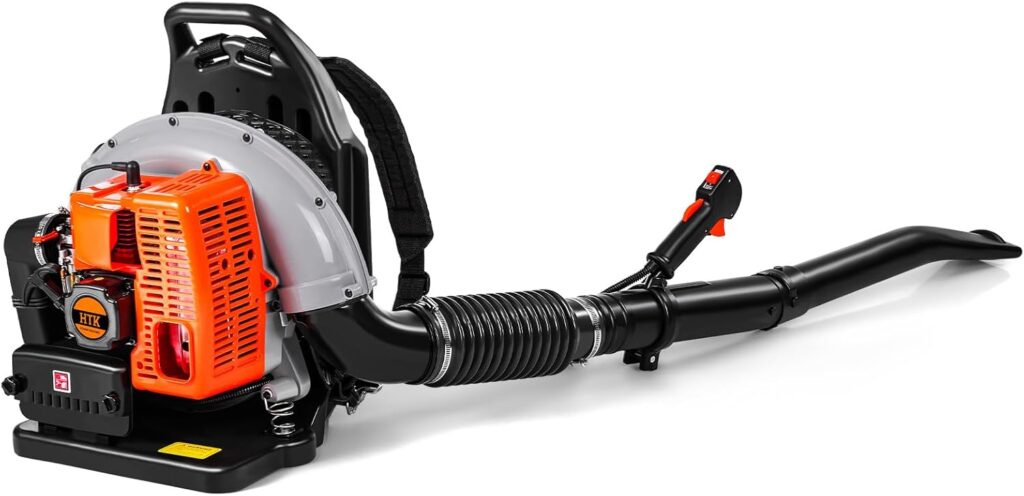
We find the HTK Backpack Blower, 63CC Gas Powered Leaf Blower with 665 CFM & 205 MPH for Commercial Lawn Care, Yard Debris & Snow Removal to be a powerful, workhorse tool for anyone who needs serious clearing capability. It combines a large-displacement 63CC engine with a comfortable harness and practical features like cruise control and an air purge starting assist, giving us professional-level performance at a price that makes sense for contractors and demanding homeowners.

HTK Backpack Blower, 63CC Gas Powered Leaf Blower with 665 CFM & 205 MPH for Commercial Lawn Care, Yard Debris & Snow Removal
$169.99 In Stock
Key Specifications
Below we summarize the headline specs so we can quickly get a feel for what this unit offers. These figures are useful for comparing to other models and for planning our jobs.
| Specification | Detail |
|---|---|
| Model | HTK Backpack Blower, 63CC Gas Powered Leaf Blower |
| Engine | 63CC, 2-stroke, commercial-grade |
| Maximum Air Volume | 665 CFM |
| Maximum Air Speed | 205 MPH |
| Fuel Tank Capacity | 1.7 L (approx. 0.45 gallons) |
| Starting | Air purge system (primer) + recoil starter |
| Harness | Fully padded backpack with adjustable straps |
| Vibration | Low-vibration technology claimed |
| Controls | Throttle, cruise control, kill switch |
| Primary Uses | Commercial lawn care, yard debris, snow removal |
We like having this in one compact snapshot because it helps us match the blower’s capabilities to the specific tasks we plan to tackle. The 665 CFM and 205 MPH numbers tell us the blower is meant for heavy clearing rather than light yard tidying.
This image is property of Amazon.com.

What’s in the Box?
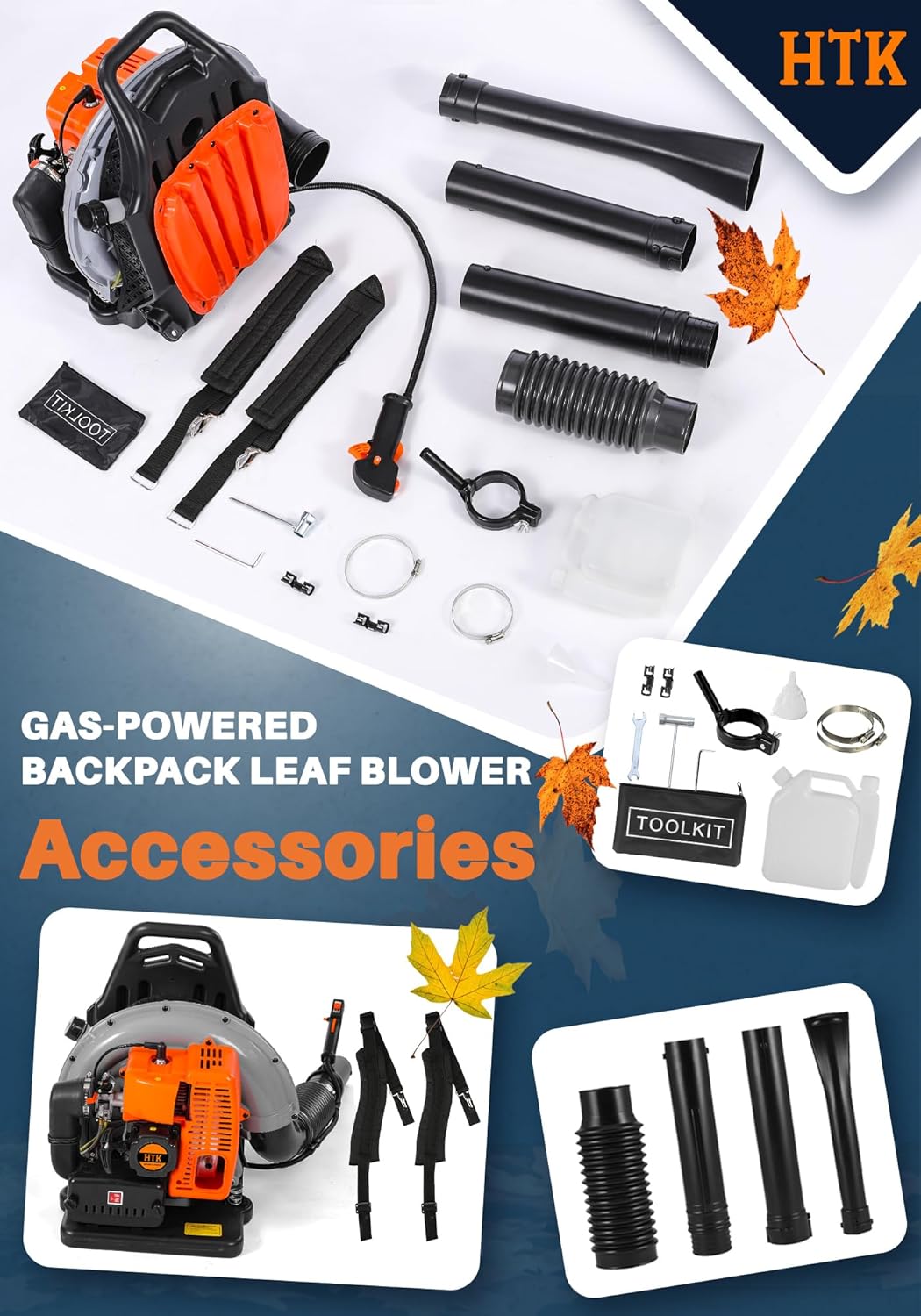
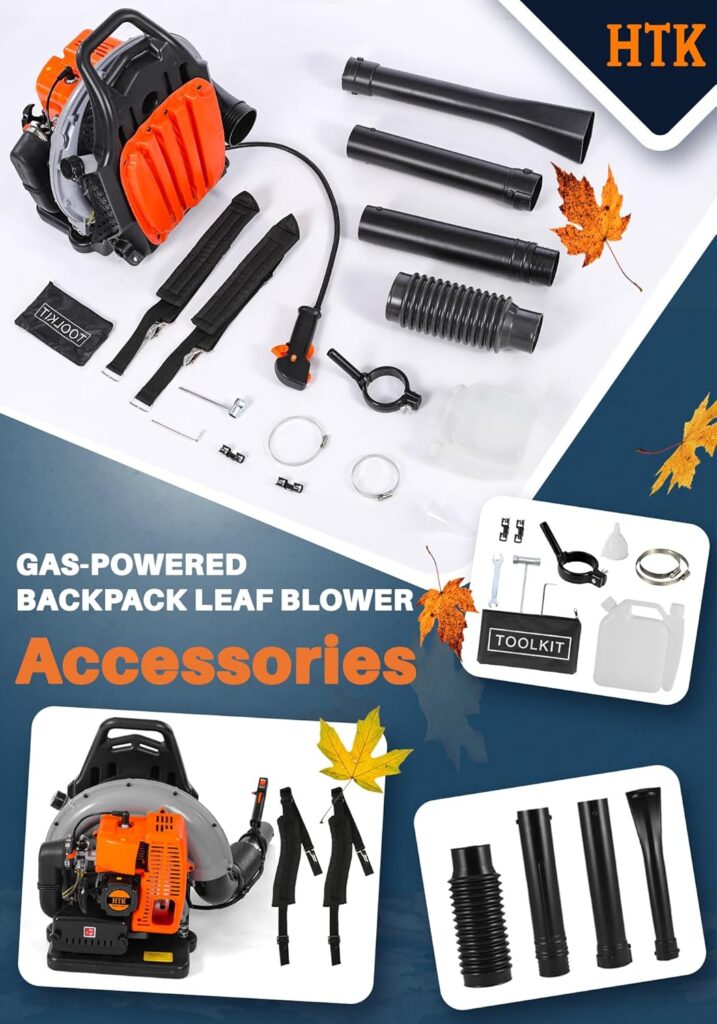
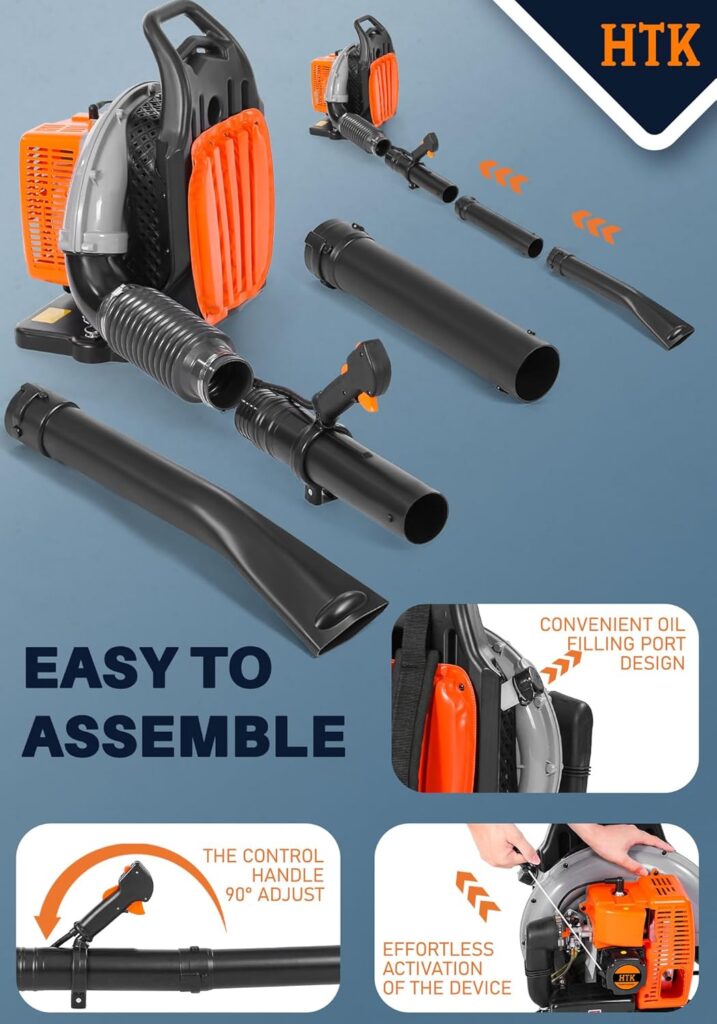
We receive the main backpack blower assembly, the flexible blower tube, the padded backpack harness, and basic tool kit and instruction manual in most packages. There are usually spare parts or attachments included depending on the retailer or promotion.
We recommend checking the contents immediately after unboxing to ensure hoses, clamps, and fasteners are present so we can assemble and start without delays.
Design & Build Quality
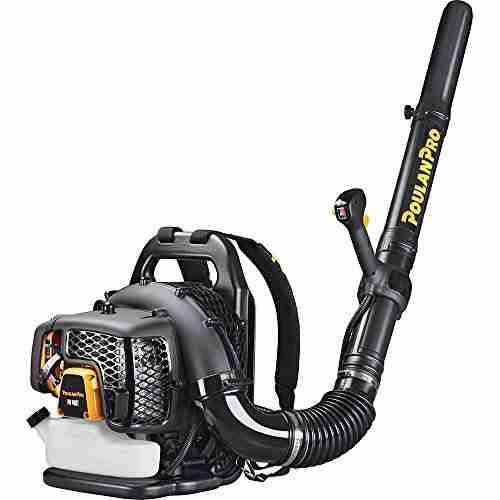
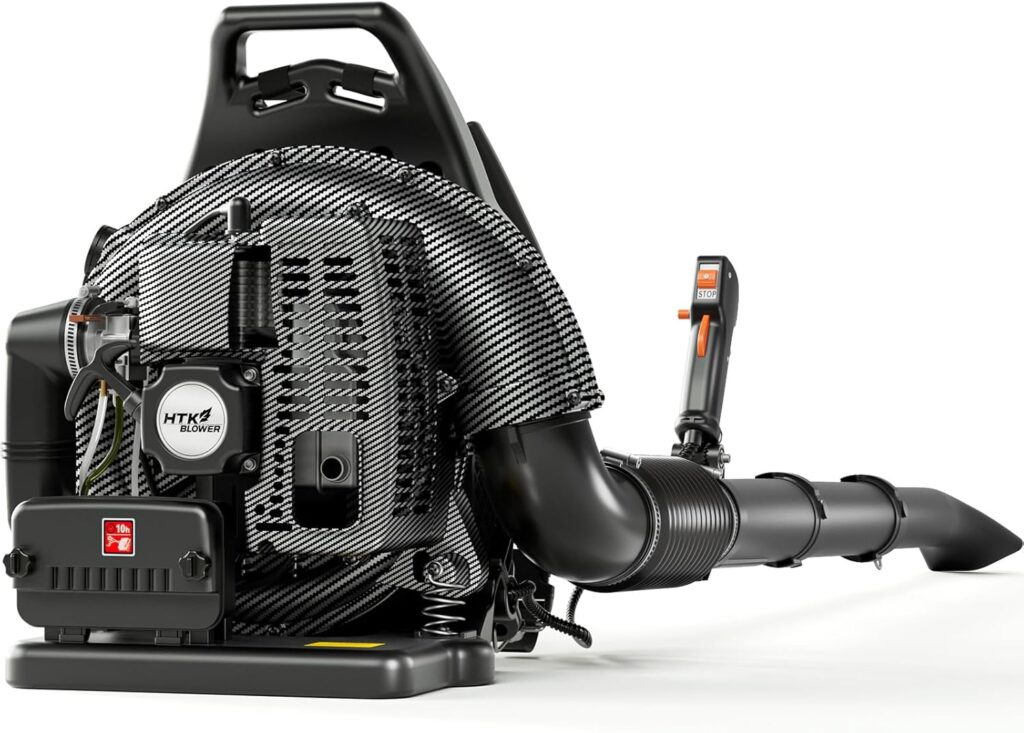
The HTK Backpack Blower looks and feels like it was built to withstand regular commercial use, with a robust plastic housing for the engine and a reinforced frame on the backpack. We notice that the materials and finish are consistent with other commercial-grade blowers, and seams, fasteners, and access panels align properly, which suggests decent quality control.
Overall, the unit strikes a balance between durability and serviceability — the engine sits in a protected compartment while still allowing reasonable access for routine maintenance. The blower tube and connections are straightforward, and the harness shows attention to load distribution to protect our backs during extended use.
Frame and Housing
We appreciate the reinforced frame that supports the engine and helps distribute weight across the backpack assembly. The housing is molded to resist abrasion and exposure to dirt and light impact.
The air inlet and cooling pathways are designed to reduce clogging, which helps the blower maintain performance in dusty or debris-heavy environments.
Harness and Comfort
We find the fully padded backpack harness to be one of the standout comfort features, with wide straps and a lumbar-support panel that reduce fatigue when we use the blower for long shifts. The adjustable straps let us fine-tune the fit for different body types, which is especially useful on a crew where several people might share the same tool.
The harness buckles and attachment points feel sturdy, and the padding breathes reasonably well, although in hot conditions we still notice heat buildup like we would on any backpack blower.
This image is property of Amazon.com.
Engine & Power
This blower is driven by a commercial-grade 63CC two-stroke engine designed to deliver high peak power for heavy clearing tasks. That size of displacement places the unit firmly in the light commercial to commercial bracket, offering more torque and airflow than typical residential units.
We find that the engine responds well under load and revs up quickly. The combination of displacement and tuned intake provides strong, consistent thrust for a wide variety of debris.
63CC 2-Stroke Gas Engine
The 63CC two-stroke powerplant gives us a high power-to-weight ratio, which is useful in a backpack configuration where we balance power against carried mass. Two-stroke engines are lighter for the power they provide, but they require proper fuel-oil mixture for reliable operation.
We recommend using high-quality two-stroke oil and the correct fuel mix ratio per the manual to keep the engine running smoothly and to extend service intervals.
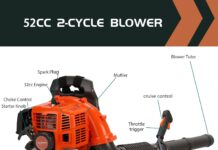
Throttle and Cruise Control
The throttle response is intuitive, with a responsive trigger that lets us modulate speed accurately for precision work around plantings and hardscapes. The included cruise control is especially valuable for large, repetitive clearing jobs because it eliminates trigger fatigue and helps maintain a consistent airflow.
We find cruise control helps when we need to sustain a particular airspeed across a lawn or parking lot for several minutes at a time without tiring our hands.
Airflow Performance
With 665 CFM and a top air speed of 205 MPH, this blower is engineered to move substantial volumes of air while also providing focused velocity when needed. Those performance numbers mean we can clear large leaf piles, wet leaves, and light snow more efficiently than with a smaller residential unit.
In practical use, the combination of volume and speed allows us to move debris in fewer passes, cutting our time on large properties and improving productivity.
665 CFM — What That Means
665 CFM (cubic feet per minute) represents the volume of air the blower moves, which is critical for sweeping broad areas and shifting loose material. Higher CFM is advantageous when we need to clear wide swaths or move light, fluffy materials that require more mass-moving capability.
When working across open turf areas or larger parking lots, that elevated CFM lets us accomplish the job in fewer passes, which translates into real time savings for our crews.
205 MPH Velocity — Practical Effect
The 205 MPH top speed gives us the focused blast needed to break through compacted or wet debris and to move heavier detritus like small twigs and gravel. High velocity helps produce targetable force that’s helpful when we want to push material out of corners, crevices, and around obstacles.
When combined with the high volume, the result is flexible performance: we get both broad, sweeping air movement and pinpoint force when we need it.
This image is property of Amazon.com.
Starting, Controls, and Ease of Use
Starting a commercial unit should be reliable and predictable, and this HTK blower addresses that with an air purge system and a recoil starter. The air purge (primer) helps eliminate air from the carburetor and fuel lines, which reduces the number of hard pulls and improves first-pull success rates.
Controls are logically placed on the handheld tube, with easy-to-reach throttle and cruise settings so we can maintain focus on the work rather than fumbling for switches.
Air Purge System
The air purge system primes the carburetor, which simplifies cold starts and reduces the frustration of multiple recoil pulls. We find this particularly helpful in cooler temperatures or after periods of storage when the engine might be more reluctant to start.
This feature saves time during the workday and lowers the learning curve for new operators who might struggle with conventional pull-starts.
Cruise Control and Throttle Trigger
The cruise control locks the throttle at a set level so we can sustain a steady blast without keeping the trigger depressed, which reduces hand fatigue on long jobs. The trigger itself is ergonomically shaped and provides predictable modulation for fine work near plants, fences, or vehicles.
Using the cruise while maintaining situational awareness lets us keep a steady workflow without wearing out our forearms.
Fuel Capacity and Runtime
The 1.7L fuel tank is suitably large for a backpack unit of this class, providing extended runtime so we can work larger properties before pausing to refuel. In real-world conditions, runtime will vary with throttle usage and load, but we expect multiple hours of effective work under moderate conditions.
Large capacity helps crews maintain momentum throughout the day and reduces downtime from frequent refuels.
1.7L Fuel Tank in Practice
With a 1.7L tank, we can typically clear sizeable areas before stopping, which is beneficial for contractors servicing multiple sites in a single trip. The tank fills relatively easily, and the fuel cap design minimizes spills when we top off on uneven ground.
We still recommend carrying spare premixed fuel in approved containers for back-to-back jobs so we aren’t left standing idle.
Fuel Mixture and Refueling
Because the blower uses a two-stroke engine, we must mix gasoline and two-stroke oil at the recommended ratio for reliable performance and to prevent internal damage. Mixing fresh fuel in a clean, well-marked container helps keep performance consistent and avoids issues from improperly mixed fuel.
We suggest preparing batches of premixed fuel for the day and storing them in shaded, well-ventilated areas to preserve fuel quality.
This image is property of Amazon.com.
Comfort, Vibration, and Noise
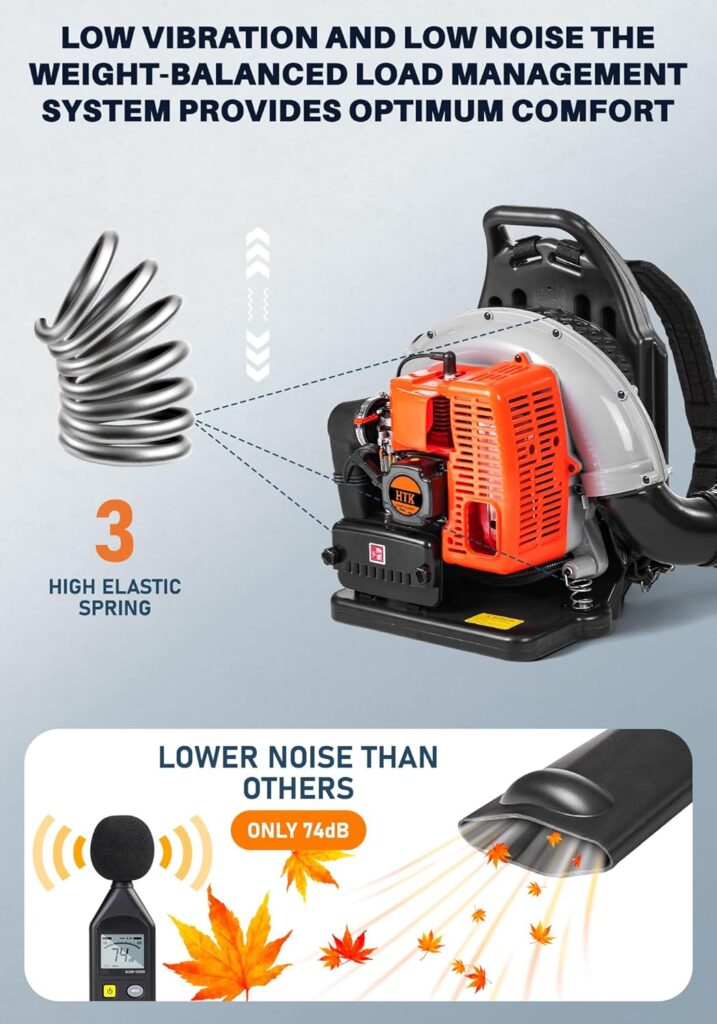
Comfort is a major factor for backpack blowers, and this HTK unit’s padded harness and low-vibration claims make it suited for extended use. We notice vibration levels are lower than some economy models, which reduces operator fatigue and helps prevent numbness in the hands and arms over long shifts.
Noise is typical of a 63CC two-stroke engine: loud enough that hearing protection is required, but comparable to other units in this power class.
Low-Vibration Technology
The manufacturer’s low-vibration measures — such as dampened engine mounts and balanced fan assemblies — reduce the felt vibrations transmitted to the harness and handles. This makes for a smoother experience when we have to keep the blower running for long intervals.
Lower vibration also helps preserve operator comfort and reduces cumulative strain over a workweek.
Noise Levels and Hearing Protection
We find the blower to be noisy under full throttle, which is to be expected from a commercial two-stroke engine, and we always recommend hearing protection when operating it. Ear protection is essential both for safety and for preventing fatigue in prolonged operations.
Using ear defenders or muffs significantly improves operator comfort and safety during the typical day.
Handling in Different Conditions
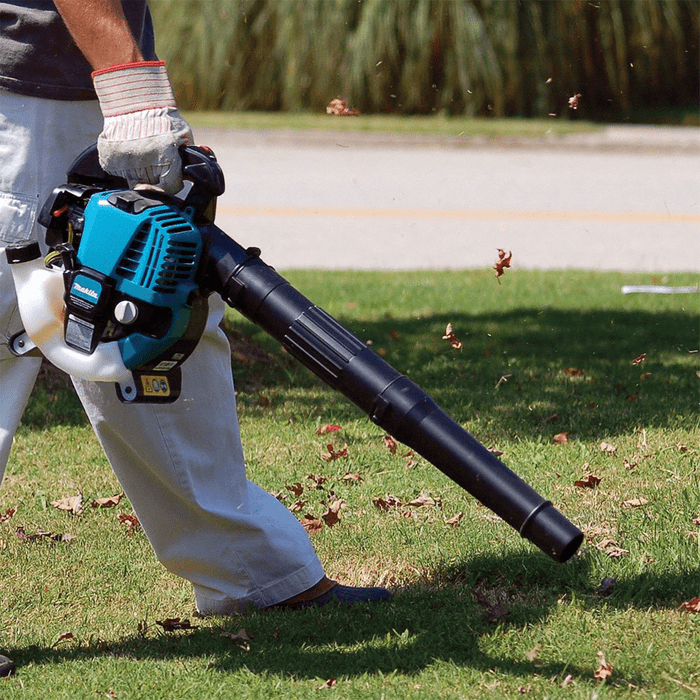
One of this model’s strengths is that it handles a range of material types, from dry leaves and grass clippings to damp or matted leaves and light snow. The combination of volume and speed means we can push through heavier, wetter material that would bog down smaller blowers.
However, for very dense, packed snow or large accumulations, we should choose a purpose-built snow blower, as the backpack blower is best suited for drifting snow and clearing walkways.
Wet Leaves and Yard Debris
When faced with wet leaves or soggy clumps, the HTK blower’s airflow and thrust help us dislodge and move the debris where lighter units would falter. We use shorter, forceful bursts or sustained cruise-control settings depending on the material’s resistance.
We do need to be mindful of working on inclines or uneven surfaces, as wet debris can be heavier and require more passes.
Snow Removal Capability
For seasonal snow cleanup, this blower excels at clearing light, loose snow and blowing drifts off sidewalks and stairs. The high airspeed allows us to quickly create clear paths without resorting to shoveling for every area.
We should not expect it to replace a snow thrower for deep or compacted snow, but it’s a great tool for preventing accumulation and handling light winter maintenance.
Maintenance and Serviceability
Routine maintenance is straightforward: we clean or replace the air filter, check and adjust the spark plug, inspect the fuel filter and lines, and regularly clean the cooling fins and intake screens. Because the engine is designed for commercial duty, accessing common service points is practical and convenient.
Following a regular maintenance schedule helps keep us productive and extends the life of the blower.
Routine Maintenance Tasks
We recommend that we clean the air filter after intensive dusty jobs, replace the spark plug annually or per hours of operation, and check the carburetor and fuel lines for deposits or leaks. Also, inspecting harness straps, buckles, and tube connections for wear ensures safe handling.
Keeping a small service kit with common spares — extra spark plug, replacement air filter, and fuel filter — helps us avoid downtime when out in the field.
Access to Parts and Service
Replacement parts for common items like air filters, spark plugs, and throttle cables are widely available, and many local small-engine shops can service the unit if needed. Having access to parts and service centers makes it easier for us to keep the blower in top working order.
We advise verifying warranty terms and local service networks when buying so we’re prepared if a more complex repair is necessary.
Safety Features and Tips
The blower includes essential safety features like a kill switch and protective housing that prevents debris ingestion into the engine intake. Safe operation means we use the unit with hearing and eye protection and keep bystanders and pets at a safe distance while working.
We also follow recommended startup, shutdown, and refueling procedures to minimize fire and injury risk.
Built-in Safety Elements
The kill switch and secure throttle control reduce the risk of runaway engine situations, while shielding around the intake and blower tube helps prevent loose debris from contacting the operator. The harness also stabilizes the unit to reduce accidental dropping or swinging.
Combined, these features make the blower safer for routine professional use when operators follow standard safety practices.
Safe Operating Practices
We insist on wearing eye protection, hearing protection, and gloves while using the blower to guard against flying debris and engine noise. We also clear the work area of fragile items and advise people to stand well clear of blowing paths.
Shutting off the engine before refueling, filling on cool ground, and storing premixed fuel properly are part of our responsible operation routine.
Pros and Cons
We want to be transparent about where this blower shines and where it may not be the best fit. The pros outweigh the cons for many users, but it’s important to match tool to use case.
| Pros | Cons |
|---|---|
| High power and airflow (665 CFM, 205 MPH) | Heavier than smaller residential models |
| Commercial-grade 63CC engine | Two-stroke engine requires pre-mixed fuel |
| Comfortable padded harness and low-vibration tech | Loud — hearing protection necessary |
| Air purge starting system and cruise control | Not a replacement for heavy snow throwers |
| Large fuel tank for extended runtime | Slightly more maintenance than electric units |
We find that for professionals and serious homeowners with large properties, the benefits justify the trade-offs, but for occasional light yard work an electric or smaller gas unit might be more convenient.
Comparison with Competitors
When compared to other commercial backpack blowers, the HTK model offers competitive air volume and speed for its class, while distinguishing itself with a comfortable harness and practical starting features. Its spec sheet puts it near other 60–65CC two-stroke blowers from established brands, but at a potentially lower price point.
Against lighter residential models, the difference in power and runtime is pronounced, and that gap translates into time saved on large jobs.
Versus Professional Backpack Brands
Against well-known pro brands, the HTK stack-up is favorable in power and features, though some premium brands may offer slightly better ergonomics, quieter operation, or longer service networks. For budget-conscious commercial users, the HTK can provide nearly equivalent performance at a more accessible cost.
We recommend evaluating warranty coverage and local service options when comparing competing professional blowers.
Versus Lighter Residential Models
Compared with residential handheld blowers and battery models, the HTK is heavier and louder but far more capable for heavy-duty tasks. Where a battery blower might be handier for quick tidying, this backpack blower is what we choose when we need real clearing power and runtime without stopping.
If our work routinely involves large properties, wet leaves, or contractor schedules, the HTK is the pragmatic choice.
Best Use Cases and Who Should Buy It
We recommend this blower primarily for commercial landscape professionals, municipal crews, property managers, and homeowners with large acres or frequent heavy debris. It’s also great for seasonal businesses that need reliable performance through the fall leaf season and into light winter.
If we have smaller yards or only occasional cleanups, a less powerful, quieter, and lighter model might be more convenient and cost effective.
Commercial Lawn Care Professionals
For crews that must clear many properties in a day, the HTK’s airflow and cruise control reduce operator fatigue and make large jobs faster. The fuel capacity and proven two-stroke torque mean fewer stops and consistent performance across different debris types.
Contractors will appreciate the productivity gains and the lower per-job labor time compared to smaller equipment.
Homeowners with Large Properties
We see great value for homeowners who maintain several acres, driveways, or long pathways and prefer gas power for unlimited runtime. The blower lets us tackle seasonal leaves and light snow with efficiency, allowing us to keep our properties looking professional without hiring out every time.
That said, we should be comfortable handling the weight and noise of a commercial blower before choosing this model.
Storage and Transportation
Storing the blower in a dry, ventilated area away from direct sunlight and sources of ignition preserves fuel quality and prolongs the lifespan of gaskets, hoses, and the harness. Transporting it in a truck bed or trailer with the unit secured prevents stress on the harness and reduces the chance of accidental damage.
We recommend draining fuel for long-term storage or using a fuel stabilizer to avoid gum buildup in the carburetor.
Warranty, Support, and Value
Warranty coverage and after-sales support are critical for commercial equipment, and while specifics vary by retailer and region, we recommend confirming the HTK warranty terms at purchase. Considering the features and performance, the blower generally represents good value for professionals and heavy-use homeowners.
We advise registering the product and retaining proof of purchase to streamline warranty claims if necessary.
Buying Tips and Accessories to Consider
When we purchase, we double-check included items and whether the package includes spare spark plugs or a carrier case. Accessories that improve usability include a spare fuel container, ear protection, a maintenance kit (extra air filter and spark plug), and a shoulder strap for additional load distribution if needed.
We also recommend buying premixed fuel or investing in a reliable two-stroke mixing container and measuring tools to keep our fuel ratios correct.
Final Thoughts
We find the HTK Backpack Blower, 63CC Gas Powered Leaf Blower with 665 CFM & 205 MPH for Commercial Lawn Care, Yard Debris & Snow Removal to be a powerful, comfortable, and efficient choice for heavy-duty yard work and commercial tasks. Its combination of airflow, speed, padded harness, and practical features like air purge starting and cruise control make it a solid performer that can significantly shorten job times.
If our priorities are high clearing power, extended runtime, and operator comfort during long shifts, this blower is a strong contender. If we need something lightweight for occasional use or prefer quieter electric operation, we should compare other models — but for demanding jobs, this HTK unit earns our recommendation.

Disclosure: As an Amazon Associate, I earn from qualifying purchases.