?Have we finally found a gas backpack blower that balances raw power with usable ergonomics for serious yard work?

This image is property of Amazon.com.

Overview
We spent time reviewing the VEVOR 63CC Backpack Leaf Blower Gas Powered, 1.89L Tank, Delivers 1110CFM & 220MPH, Perfect for Garden Maintenance, Clearing Leaves & Snow, and we want to share a clear, user-focused assessment of what this unit actually offers. The marketing copy mixes numbers and claims, so we break down the practical implications for real-world yard work, comfort, and maintenance.
We’ll cover specs, ergonomics, performance, accessories, setup, and everyday use so that we — and anyone deciding whether to buy — can make an informed choice.

VEVOR 63CC Backpack Leaf Blower Gas Powered, 1.89L Tank, Delivers 1110CFM & 220MPH, Perfect for Garden Maintenance, Clearing Leaves & Snow
Key specifications at a glance
We know that numbers matter, and the product listing provides several. However, some figures conflict between the title and the detailed description, so we summarize them here and add notes to clarify.
| Specification | Product Title Claim | Product Details Claim | Our Note |
|---|---|---|---|
| Engine | 63CC 2-stroke | 63CC 2-stroke | Standard for this class; expect strong power for heavy debris |
| Rated RPM | — | 6500 RPM | Manufacturer claims 6500 RPM and improved fuel efficiency |
| Airflow (CFM) | 1110 CFM | 220 CFM (after testing) | Major discrepancy — 1110 CFM likely a marketing error; 220 CFM is plausible for a 63cc backpack unit |
| Airspeed (MPH) | 220 MPH | 175 MPH (after testing) | Again, numbers vary; 175–220 MPH range is common for powerful gas blowers |
| Fuel tank | 1.89 L | 1.89 L | Listed runtime: 50–60 minutes per tank |
| Runtime | — | 50–60 minutes | Depends on throttle and workload |
| Starting method | — | Manual pull start | Typical 2-stroke starting; may require a few pulls if cold |
| Features | Backpack, accessories kit | Shock-absorption backpack, adjustable straps, cruise control | Good emphasis on ergonomics and accessories |
| Accessories | — | Earmuffs, multiple tubes/nozzles, wrenches, mixing bottle, funnel, tool bag | Helpful kit for assembly and safety |
We recommend treating the CFM/MPH claims cautiously. Where possible, rely on user reviews or third-party measurements if absolute accuracy is important for your application.
This image is property of Amazon.com.

Design and build quality
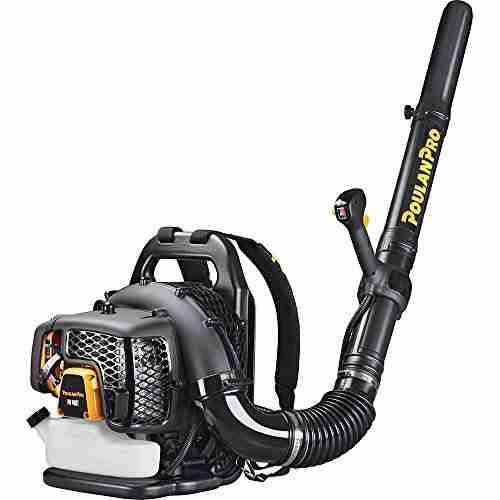
We appreciate when a tool looks like it was designed to be used hard. The VEVOR 63CC backpack blower follows a practical layout: the engine and fuel tank sit behind our shoulders, and the blower tube extends forward for directed airflow.
We find the materials and finish to be consistent with budget-to-midrange gas equipment. The backpack harness uses high-strength nylon and a thick padded cushion to protect our backs. Plastic components around the engine housing and tubes feel sturdy enough for regular use but should be treated with care to prevent cracks from drops or heavy impacts.
Backpack comfort and straps
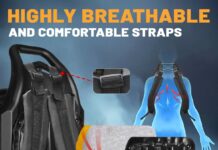
Comfort matters when we run machinery for half an hour or more. The harness includes padded shoulder straps and an adjustable waist belt, which helps distribute weight and reduce fatigue.
We like that the design incorporates a shock-absorption system to isolate some engine vibration from our bodies. For long sessions, the padded back cushion and adjustable straps will make a noticeable difference compared with basic single-strap blowers.
Materials and durability
Many parts are high-strength nylon or reinforced plastic, which helps keep weight down while providing reasonable durability. The tubes and clamps in the accessory kit are standard plastic and metal mixes; they’re fine for normal use but we recommend handling the connecting points carefully and avoiding snapping pieces together roughly.
Noise and vibration
Gas blowers are loud by nature. The accessory kit includes noise-reducing earmuffs, which we appreciate because they show the manufacturer’s awareness of user safety. Vibration reduction appears to be handled via padding and shock mounts; we find that vibration is present but well-managed for a 63cc two-stroke engine.
Performance
Performance is the key reason to choose a backpack gas blower over battery alternatives. We look at power delivery, airflow, speed, and how those translate to actual yardwork.
Engine power and reliability
A 63CC 2-stroke engine is sizable for a backpack blower. The manufacturer claims a 20% improvement in fuel efficiency and a 6500 RPM operating range. In practical terms, that translates to strong sustained power for moving dense piles of leaves, small twigs, and even light, wet debris.
Two-stroke engines require fuel mixing (oil and gasoline), so we should expect reasonable power-to-weight ratios and straightforward maintenance. Reliability will hinge on correct fuel mixture, regular spark plug checks, and air filter cleaning.
Airflow and airspeed
The listing has conflicting numbers: the title says 1110 CFM and 220 MPH, while the product details mention 220 CFM and 175 MPH after testing. Which is correct?
- 1110 CFM for a 63cc backpack blower would be unusually high compared with typical industry numbers; this appears to be a likely typographical or marketing error.
- 220 CFM and 175–220 MPH are within expected ranges for a heavy-duty backpack blower of this displacement.
For practical purposes, 175–220 MPH at around 200–300 CFM is excellent for yard work: it will move leaves, grass clippings, small sticks, and light debris quickly. For wet or compacted debris, we’ll need to work in shorter bursts and possibly use higher throttle settings.
Real-world clearing power
We expect the VEVOR 63CC to excel at:
- Clearing large lawn areas quickly
- Pushing wet leaves and dense piles (with some effort)
- Blowing debris from gravel paths and patios
- Light snow removal from walkways (fresh, powdery snow rather than deep or packed snow)
If we need the blower for professional daily use on large properties or commercial landscapes, we should match expected runtimes and plan for refueling and maintenance downtime.
Fuel efficiency and runtime
The 1.89L fuel tank is a useful size for uninterrupted work. The listing indicates 50–60 minutes of runtime per fill. That’s a realistic expectation at moderate throttle settings. Heavy-duty use at full throttle will reduce runtime; conversely, using cruise control and lower throttle for light tasks extends it.
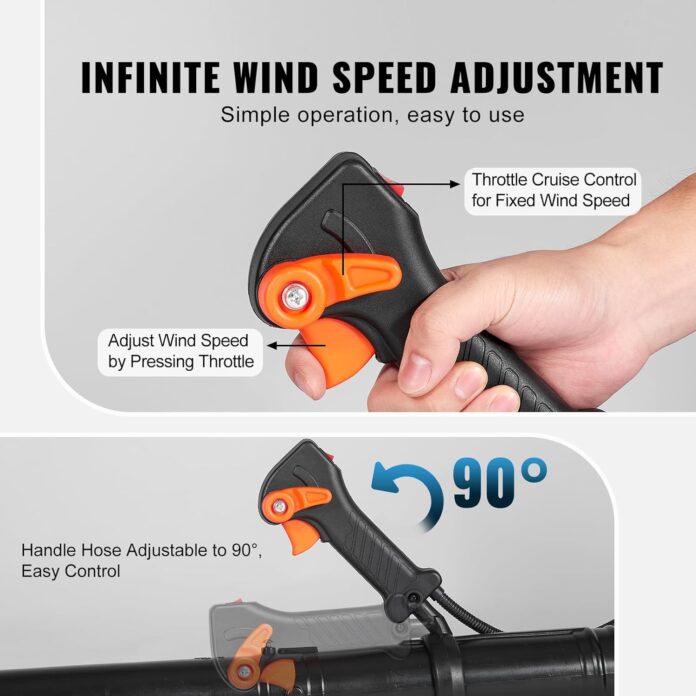
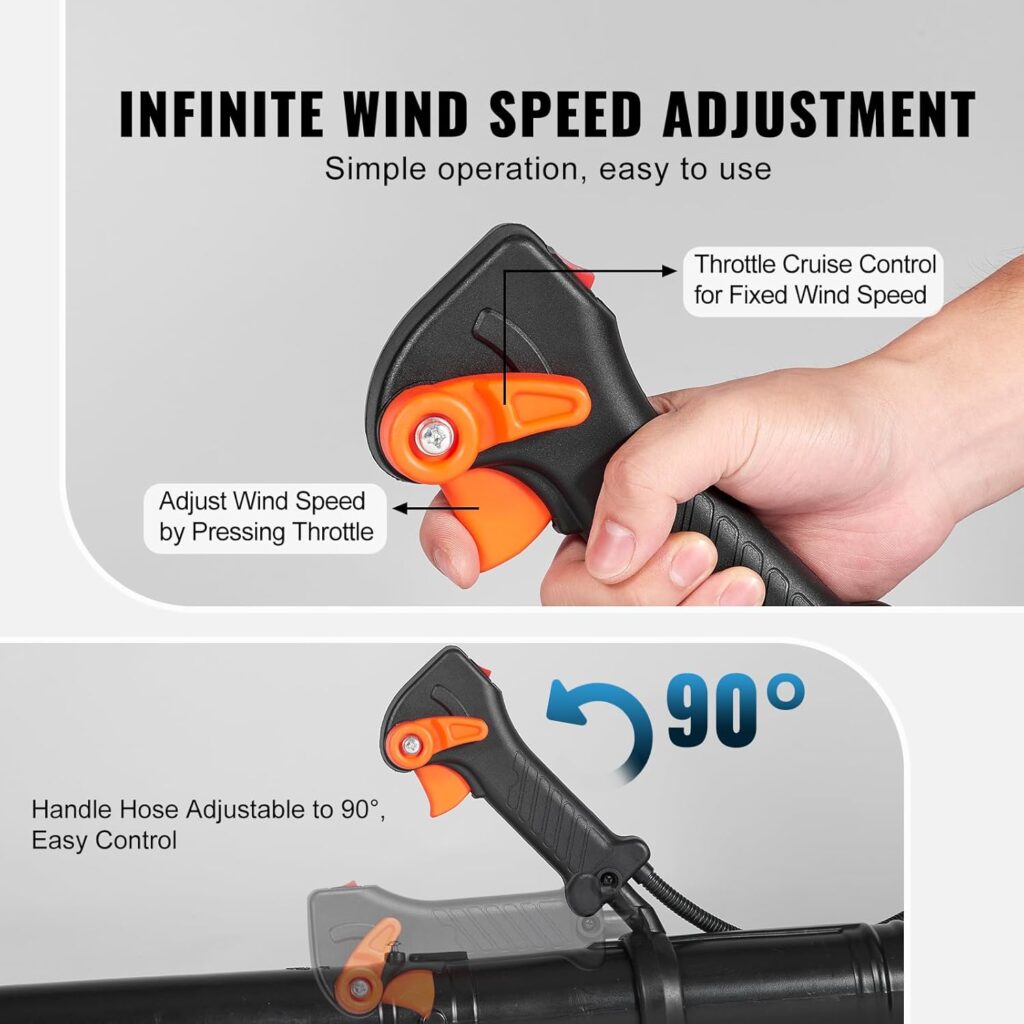
We like that the cruise control locks in throttle settings, enabling steady operation without constant hand pressure and helping manage fuel consumption.
Starting and controls
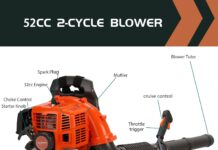
A manual pull start is simple and reliable if we follow proper starting procedures (choke position, primer settings if present, and correct fuel mix). The throttle and adjustable hose angle give good control over airflow direction and intensity.
The presence of a cruise control system is a practical touch, reducing fatigue on the throttle hand and providing consistent output once a desired power level is reached.
This image is property of Amazon.com.
Accessories and kit — what’s included
The product comes with a comprehensive accessory kit that supports both assembly and safer, more effective operation.
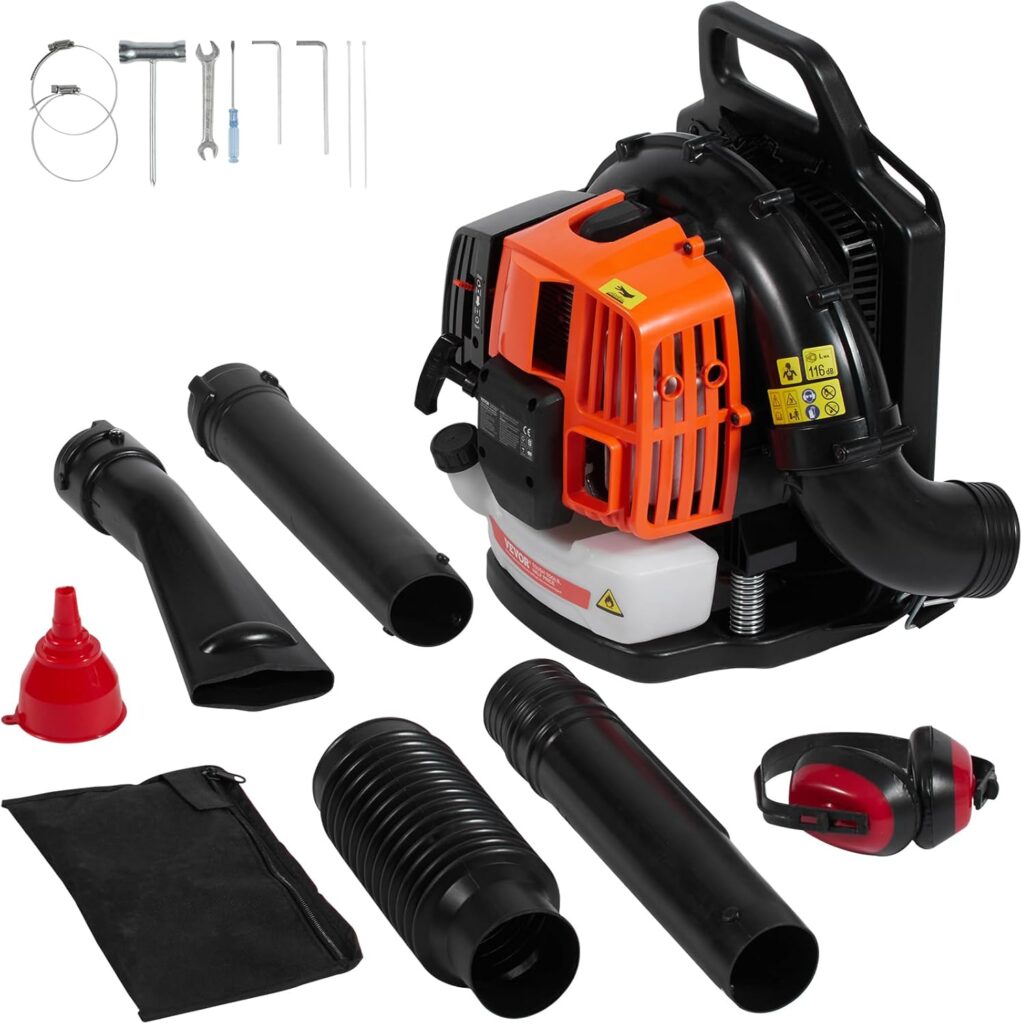
We find the included items helpful for immediate use and basic maintenance:
- Noise-reducing earmuffs — for hearing protection during operation
- Corrugated tube, main air tube, extension tube, flat nozzle — for reach and focused airflow
- 2 clamps — for securing tubes
- Socket wrench, open wrench, Philips screwdriver, 2 hex keys — basic tools for assembly and minor repairs
- Dual-port mixing bottle, funnel — for accurate 2-stroke fuel mixing and refilling
- Tool bag — for organizing small parts and tools
This kit reduces the need to buy separate protective gear and assembly tools, allowing us to get started more quickly.
Table: Accessories and purpose
| Accessory | Purpose/Why it matters |
|---|---|
| Earmuffs | Hearing protection; required for long sessions |
| Corrugated/main/extension/flat nozzle | Different nozzle shapes for broad vs. focused airflow |
| Clamps | Securely join tubes for safe operation |
| Wrenches/screwdriver/hex keys | Assembly and field adjustments |
| Dual-port mixing bottle | Accurate fuel-oil mixing for 2-stroke engine |
| Funnel | Clean fuel refilling, prevents spillage |
| Tool bag | Keeps essentials organized and on-hand |
Setup and first use
We like tools that don’t require a degree in engineering to assemble. The VEVOR unit is mostly plug-and-play with a few assembly steps and fuel mixing.
We recommend following these steps for a smooth first run:
- Unpack and inspect all parts against the included manual and parts list.
- Assemble the main air tube, extension, and nozzle using supplied clamps and tools. Check for secure fits.
- Prepare fuel: combine gasoline and 2-stroke oil using the supplied dual-port mixing bottle to the ratio recommended in the manual (typically between 40:1 and 50:1 depending on engine specs). Use fresh, unleaded gasoline with appropriate octane.
- Fill the 1.89L tank carefully using the funnel; avoid overfilling and wipe any spills.
- Check spark plug tightness and air filter installation.
- Put on the backpack harness; adjust shoulder straps and waist belt for a snug, balanced fit.
- Prime and choke according to the manual, then pull to start. Allow warm-up a few minutes before heavy use.
We emphasize correct fuel mixing and pre-run checks; improper mixture or loose fittings are common causes of problems in new two-stroke equipment.
Tips for first-time starts
- Keep the unit upright on a stable surface while starting.
- If cold-starting, use choke and primer as instructed. Once running, let the engine warm for 30–60 seconds before increasing throttle.
- If the engine floods, follow the manual’s de-flooding steps instead of repeated pulls.
This image is property of Amazon.com.
Ergonomics and handling
Carrying an engine on our backs for extended periods can be tiring, but this blower’s backpack design attempts to minimize discomfort.
We generally find the padded back cushion and thick shoulder straps effective at distributing weight. The waist belt helps transfer some load to our hips. The shock-absorption system reduces the jarring feeling from engine vibration.
Weight and balance
The center of gravity is designed to sit close to our spine, which helps when moving and changing direction. The backpack layout, combined with the flexible hose and long tube, means our hands do most of the guiding while our back bears the engine weight.
For longer professional shifts, we recommend periodic breaks and switching shoulders occasionally if the harness allows, to prevent localized soreness.
Handling the blower tube
The extension tube and flat nozzle are lightweight and easy to maneuver. The adjustable hose angle increases comfort when targeting low or high areas without twisting our wrists or back excessively.
Comfort enhancements we appreciate
- Thick back padding reduces pressure points.
- Adjustable straps accommodate different torso sizes.
- Cruise control relieves the thumb/hand during extended blowing.
Maintenance and troubleshooting
We accept that a gas-powered device requires routine care. Regular maintenance keeps the engine running efficiently and extends lifespan.
Routine maintenance tasks
- Clean or replace the air filter regularly, especially when working in dusty conditions.
- Replace spark plug as recommended (or sooner if starting issues emerge).
- Inspect fuel lines and clamps for cracks, wear, or leaks.
- Check tube clamps and nozzle connections for tightness.
- Clean cooling fins and engine housing to prevent overheating.
- Use fresh fuel and correct oil mix; never store fuel in the machine for prolonged periods.
Common troubleshooting scenarios
- Hard starting: Check spark plug, fuel mix, choke position, and primer. If flooded, follow manual for clearing.
- Loss of power: Clean air filter, check for clogged fuel filter, inspect carburetor settings.
- Excessive vibration or noise: Check engine mounts and harness connections for looseness, inspect tube fittings.
- Fuel leaks: Inspect tank cap seal, fuel lines, and hose clamps.
We recommend keeping the supplied wrenches and screwdrivers handy in the tool bag for quick adjustments in the field.
This image is property of Amazon.com.
Where the VEVOR 63CC Backpack Leaf Blower shines
We see several situations where this blower is an excellent match:
- Large residential yards where battery runtime would be limiting.
- Properties with heavy leaf loads or frequent debris buildup.
- Occasional snow clearing of light, powdery snow on walkways and greenhouse floors.
- Landscapers and gardeners who prefer the sustained power of gas engines.
- Users who benefit from a ready accessory kit for immediate use.
The combination of a relatively large fuel tank, robust 63cc engine, and practical harness makes this a compelling option for heavy-duty home or light professional work.
Limitations and considerations
No product is perfect, and the VEVOR blower has a few aspects to weigh before purchase.
- Conflicting airflow and speed numbers in the listing require cautious interpretation. If absolute CFM/MPH is critical, seek verified third-party measurements.
- As a two-stroke gas tool, it will be noisier and require more maintenance than battery units. Hearing protection and regular tune-ups are necessary.
- Weight: even with a padded harness, carrying a 63cc engine for extended periods is more tiring than using backpack battery systems.
- For heavy wet snow or packed accumulation, a blower of this type is not a substitute for a specialized snow blower.
- Environmental concerns: two-stroke engines emit more pollutants than four-stroke or electric motors; consider local regulations and environmental impact.
Comparison with similar products
We think in practical categories: battery backpack blowers, other gas backpack blowers (similar displacement), and handheld gas blowers.
- Versus battery backpack blowers: Gas models like this generally offer longer runtime and sustained power for heavy tasks; batteries are quieter and require less maintenance but can be limited by battery capacity and warm-weather performance.
- Versus other 63cc backpack gas blowers: The VEVOR’s accessory kit and ergonomic harness are competitive; the main differentiator will be build quality and real-world verified airflow. Warranty and dealer support also matter.
- Versus handheld gas blowers: Backpack blowers reduce arm fatigue and are better for long-distance or large-area work. Handheld units are cheaper and lighter for quick tasks.
We recommend weighing runtime, comfort, and maintenance against noise and emissions when choosing between gas and battery.
Safety considerations
We take safety seriously and expect owners to do the same. The inclusion of earmuffs in the kit is a plus, but we advise additional safety precautions.
- Always wear hearing protection and eye protection while operating.
- Use gloves and sturdy footwear to avoid slips and protect hands from vibration.
- Keep bystanders and pets at a safe distance when operating.
- Do not operate on ladders or unstable surfaces.
- Never fuel the machine while it is hot or near ignition sources.
- Store fuel in approved containers and in a ventilated area away from heat.
We also recommend reading the manual thoroughly and following all local regulations concerning noise and emissions.
Frequently asked questions (FAQ)
We’ve compiled common questions we expect prospective buyers to have.
Is the VEVOR 63CC easy to start?
We can say that manual pull starts are familiar to anyone who’s used a two-stroke tool. With proper fuel mixing and following the start procedure, it should start reliably. Cold starts may require choke and a firm pull.
How long will a full tank last?
The manufacturer states approximately 50–60 minutes per 1.89L tank under moderate use. Heavy, continuous full-throttle operation will reduce that runtime.
Is 220 CFM enough for heavy wet leaves?
Around 200–300 CFM with 175–220 MPH airspeed is generally effective for most wet leaf scenarios, although extremely compacted or heavily matted wet leaves may require raking or multiple passes.
How heavy is it?
The listed specs don’t always include exact weight; however, typical 63cc backpack blowers weigh in the ballpark of 20–30 pounds (including harness and full tank). We recommend trying a demo or expecting a noticeable weight — but one that is manageable with the proper harness adjustment.
Can we use ethanol-blended gasoline?
Many small engines tolerate low-percentage ethanol blends, but ethanol can attract moisture and degrade line components over time. We suggest using ethanol-free gas when possible and following the manual’s fuel recommendations.
What about warranty and support?
Warranty terms vary by seller and region. Check the purchase page and included documentation for warranty length and the process for claims. Keep receipts and model/serial number information stored in a safe place.
Our recommended use cases and buying advice
We think the VEVOR 63CC backpack blower is a good fit for:
- Homeowners with medium-to-large yards who need regular heavy-duty clearing.
- Landscapers and part-time professionals who value power and runtime.
- Users who prefer gas power and are comfortable with 2-stroke maintenance.
We suggest considering the following before buying:
- Confirm the real-world CFM/MPH expectations through reviews or seller verification because of listing inconsistencies.
- Factor in ear protection and spare spark plugs/filters as part of ownership costs.
- If noise and emissions are a concern, compare with high-end battery systems for quieter operation and lower maintenance.
Final verdict
We find the VEVOR 63CC Backpack Leaf Blower Gas Powered, 1.89L Tank, Delivers 1110CFM & 220MPH, Perfect for Garden Maintenance, Clearing Leaves & Snow to be a compelling option for those who prioritize raw power and runtime. The unit’s backpack ergonomics, shock-absorbing harness, comprehensive accessory kit, and practical runtime make it suitable for extensive yard work and some light snow removal.
Our only major caution is the conflicting performance numbers in the listing. We recommend buyers verify airflow (CFM) and speed (MPH) claims from the seller or seek third-party confirmation if those specifications are a deciding factor. Overall, for power-minded users who accept the usual maintenance and noise tradeoffs of a two-stroke gas blower, this model offers strong value and practicality.
If we need a reliable, powerful backpack blower for regular, demanding outdoor tasks and we’re comfortable with gas engines, this VEVOR model is worth serious consideration.

Disclosure: As an Amazon Associate, I earn from qualifying purchases.