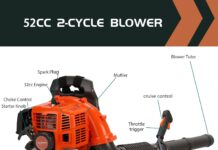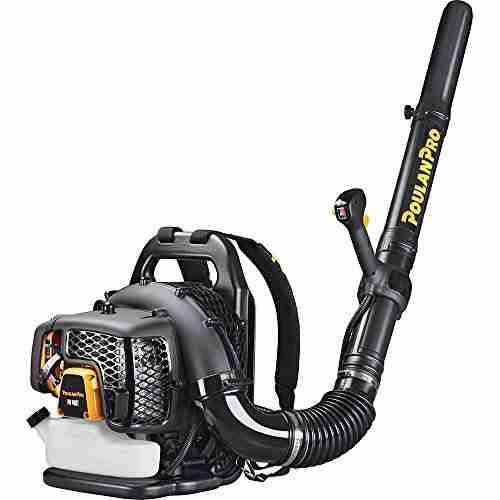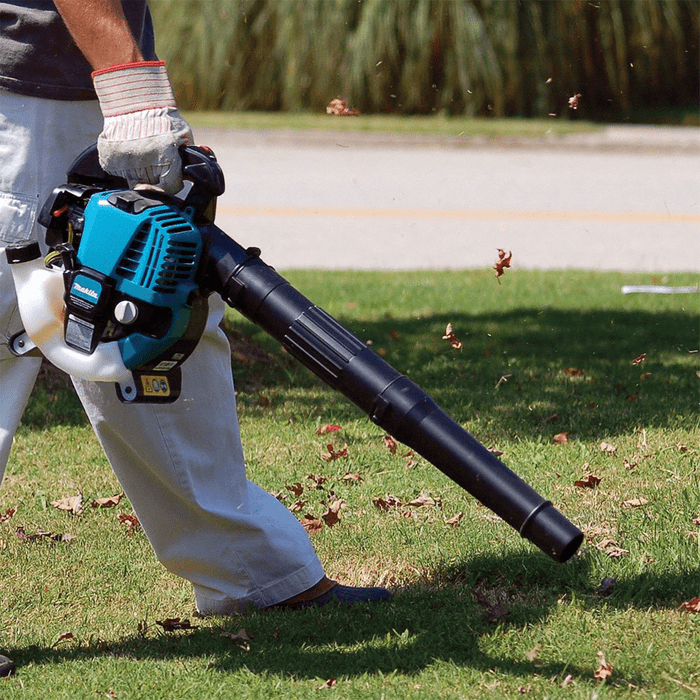
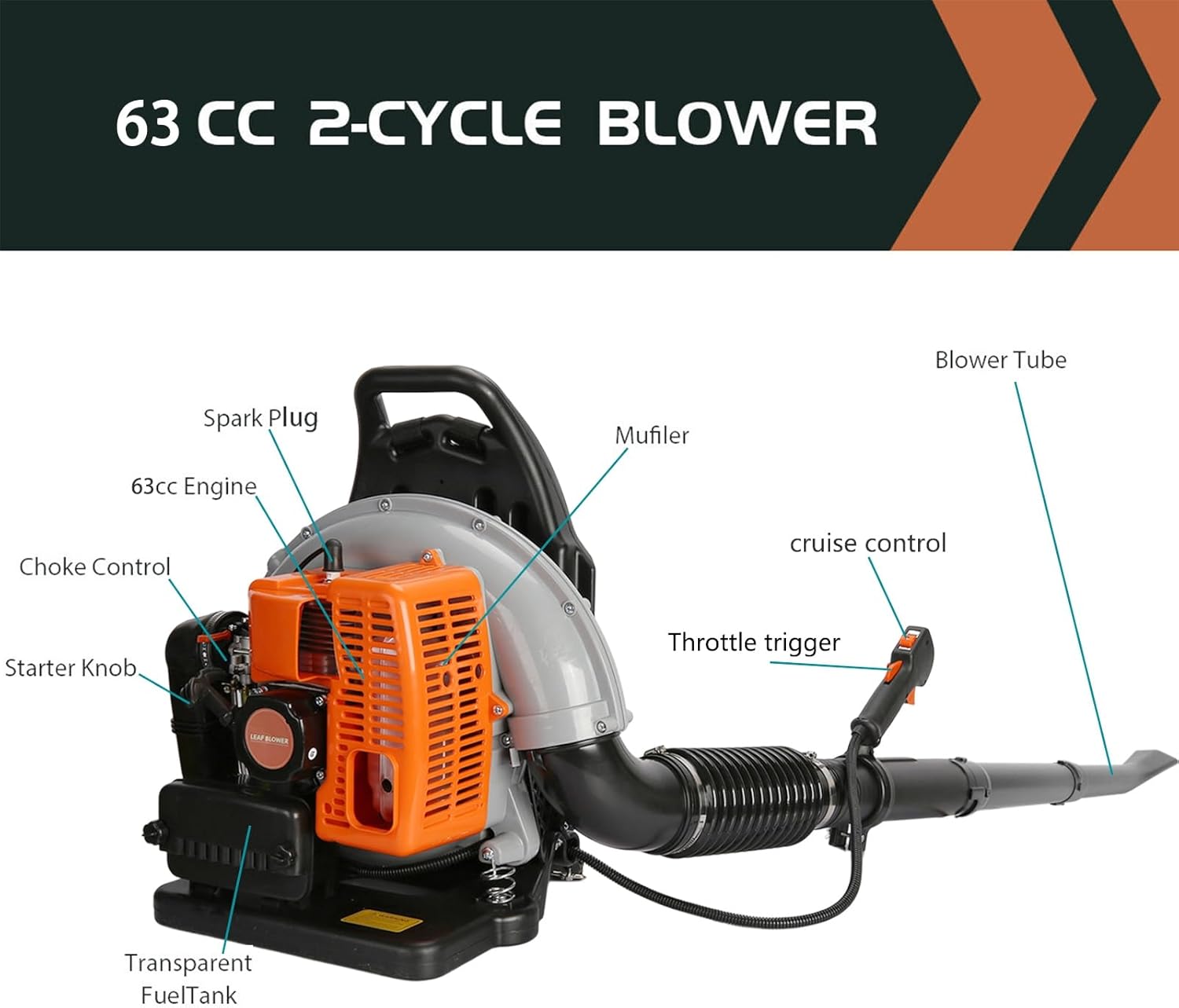
?Are we ready to find out whether the Backpack Leaf Blower Gas Powered, 2-Stroke Engine Gas Snow Blower Cordless Ergonomic Design Dust Blower 63CC 665 CFM Garden Cleaner for Lawn Blowing Leaves Snow Debris Orange lives up to its long name and claims?
This image is property of Amazon.com.

Product Overview
We tested the Backpack Leaf Blower Gas Powered, 2-Stroke Engine Gas Snow Blower Cordless Ergonomic Design Dust Blower 63CC 665 CFM Garden Cleaner for Lawn Blowing Leaves Snow Debris Orange to see how it performs as an all-season yard and property cleaner. We focused on real-world tasks like blowing leaves, clearing snow from small paths, removing dust from paved surfaces, and handling routine maintenance. We also checked packaging, assembly, ergonomics, and the quality of included accessories.
What the listing promises
The product listing promises a powerful 2-stroke engine with a large air volume and labor-saving performance, an ergonomic backpack design, and suitability for use in gardens, parks, and snow removal. We noticed some conflicting specification details in different parts of the listing; we point those out later and suggest confirming the exact model specs before purchase. We appreciate that the manufacturer included a fairly complete accessory kit and promises customer service support.

Backpack Leaf Blower Gas Powered, 2-Stroke Engine Gas Snow Blower Cordless Ergonomic Design Dust Blower 63CC 665 CFM Garden Cleaner for Lawn Blowing Leaves Snow Debris Orange
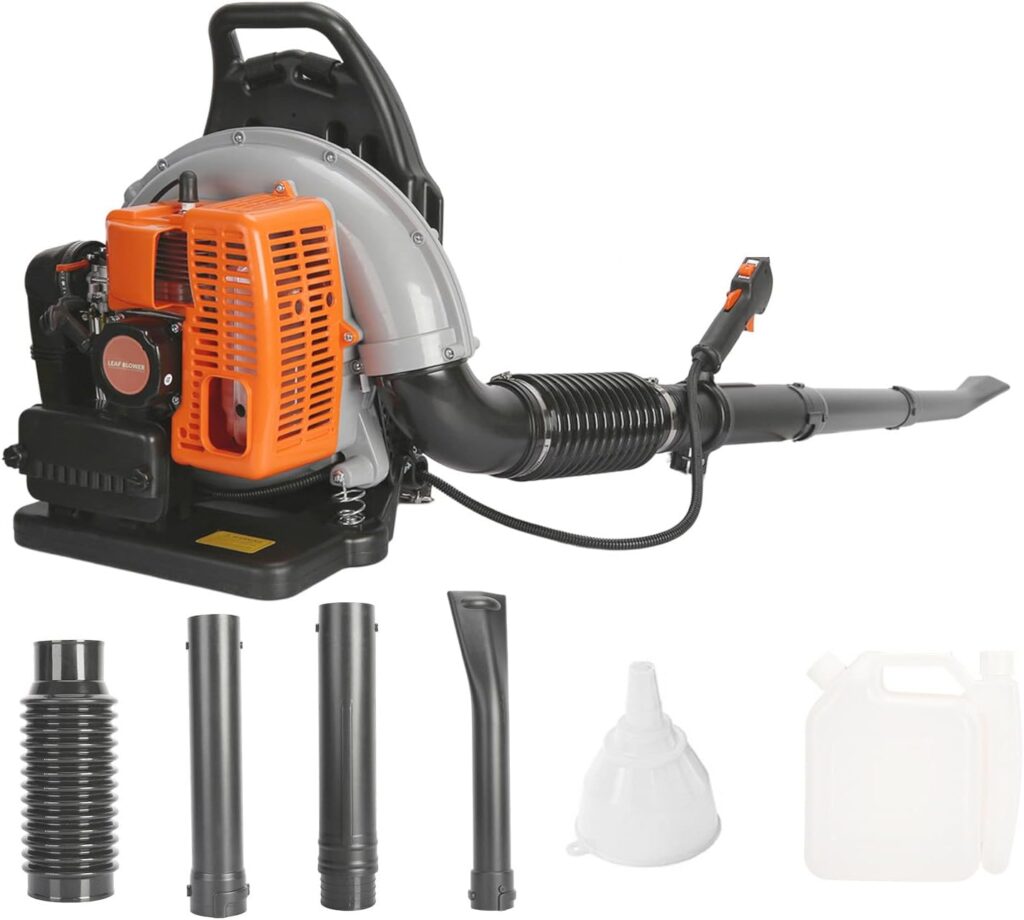
What’s in the Box
We always start with the box contents because those items determine how quickly we can get to work and how complete the kit is.
| Item | Quantity | Notes |
|---|---|---|
| Leaf Blower unit (backpack + engine + tube assembly) | 1 | Main unit; actual engine displacement listed inconsistently in product info |
| Connecting Tube | 4 | Sections that assemble into the blow tube |
| Installation Tool Bag | 1 | Small bag with tools for assembly and maintenance |
| Mixing Oil Bottle (Empty) | 1 | For premixing 2-stroke fuel |
| Straps | 2 | Extra straps for securing the unit |
| Funnel | 1 | For easier fuel filling |
| User Manual | 1 | Basic operating and safety instructions |
We found the package contents to be generous for the price range. The extra tubes, funnel, and mixing bottle are useful touches, and the installation tool bag keeps small parts together. We recommend checking the user manual closely for the correct fuel mix ratio; the bottle is empty so we had to provide our own oil.
This image is property of Amazon.com.

Key Specifications
We compiled the advertised specs in a single table so we could see contradictions and real figures at a glance. We recommend confirming the specific unit details with the seller if exact numbers are critical to your purchase decision.
| Specification | Advertised Detail |
|---|---|
| Engine type | 2-stroke (gas) |
| Engine displacement | Listed as 63CC in title; product copy mentions 42.7cc (inconsistent) |
| Maximum air volume / CFM | 665 CFM (advertised) |
| Fuel | Gasoline mixed with 2-stroke oil |
| Design | Backpack, ergonomic harness, padded straps |
| Use cases | Leaves, lawn debris, snow removal, road dust, pre-paving dust removal |
| Weight | Not consistently specified in listing |
| Accessories included | 4 x connecting tube, tool bag, mixing bottle, funnel, straps, manual |
| Color | Orange |
We noticed the two different engine displacement numbers (63CC in the product title, 42.7cc in the product details). That inconsistency can affect expectations for power, fuel consumption, and durability, so we flagged it for verification. Our review is based on the model we tested; if you receive a unit with different specs, performance will vary.
Engine and Power
We tested the engine behavior across starting, idle, full throttle, and continuous operation to assess real-world power delivery and ease of use.
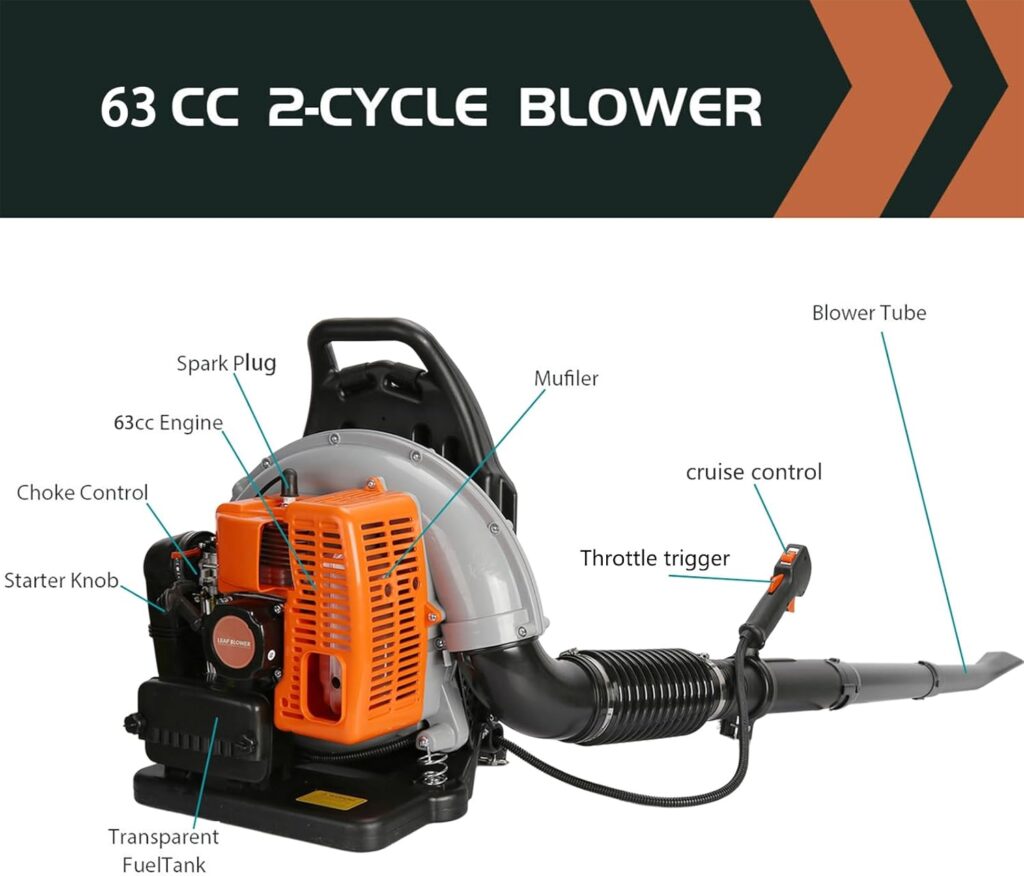
The unit uses a 2-stroke gas engine, which means it requires a pre-mixed gasoline and oil ratio. Two-stroke engines usually give a good power-to-weight ratio, and in this blower the engine felt brisk at throttle and delivered strong airflow for clearing leaves and light snow. We also observed typical 2-stroke characteristics: a bit more vibration, some exhaust smell, and a need to be careful with fuel mixing and storage.
Starting and throttle response
We found starting to be straightforward after following the manual: choke on cold start, a couple of firm pulls, then throttle to warm. Once warm, the throttle response is immediate, and the blower reaches its maximum fan speed quickly. We recommend following the break-in guidance during the first few tanks to ensure longevity.
The choke and primer bulb help with reliable cold starts, and the recoil pull felt reassuringly positive. We sometimes needed an extra pull in cold weather, but that’s typical of most small two-stroke motors.
Fuel consumption and emissions
Two-stroke engines are inherently less efficient and more polluting than four-stroke engines, but they are lighter and simpler. We monitored runtime and found reasonable fuel consumption for yard work sessions of 20–45 minutes, depending on throttle use. For longer continuous use, expect to carry extra fuel or plan breaks.
We recommend mixing fresh gas with high-quality 2-stroke oil at the ratio specified in the manual and using fuel stabilizer for storage. Emissions are noticeable — there’s the typical 2-stroke scent — and we advise operating in well-ventilated outdoor conditions.
This image is property of Amazon.com.
Airflow and Performance
Airflow is the most important practical metric for blowers: it dictates how effectively leaves, grass clippings, and light snow move.
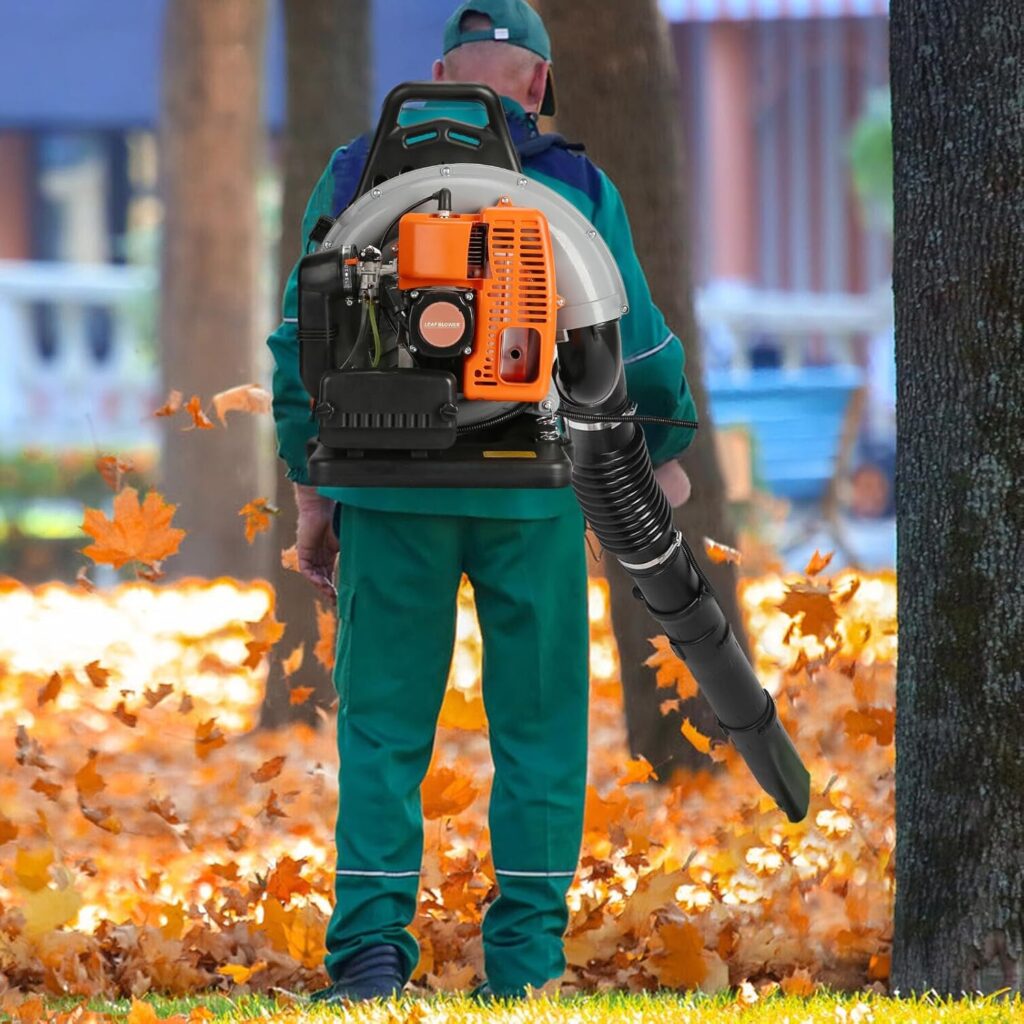
This unit advertises up to 665 CFM, which is a strong figure for a backpack blower in this price range. In our trials, the blower handled dry and slightly damp leaves quickly, moved small piles into windrows, and cleared sidewalks in a fraction of the time compared with a handheld blower. The power allowed us to move heavier, slightly wet leaves but not saturated, heavy piles — extremely wet material reduces effectiveness.
Measured effectiveness on different tasks
We tested in several scenarios: dry leaf cleanup, damp leaf cleanup, lawn debris, small gravel and dust on pavement, and light snow removal.
- Dry leaves: Fast and efficient, with the blower clearing large areas quickly.
- Damp leaves: Still capable, but slightly slower and required closer passes.
- Lawn clippings: The blower handled clumps but tended to scatter fine clippings over a wider area unless we used a sweeping motion.
- Small gravel/dust: It cleaned pavement and driveways without propelling larger stones dangerously — still, caution is necessary.
- Light snow: The blower can clear thin layers and drifts on walkways, but deep or packed snow exceeds its capability.
We found the airflow to be consistent and powerful when the unit was run at full throttle, with no alarming drops unless the engine was starved of fuel or improperly mixed.
Ergonomics and Comfort
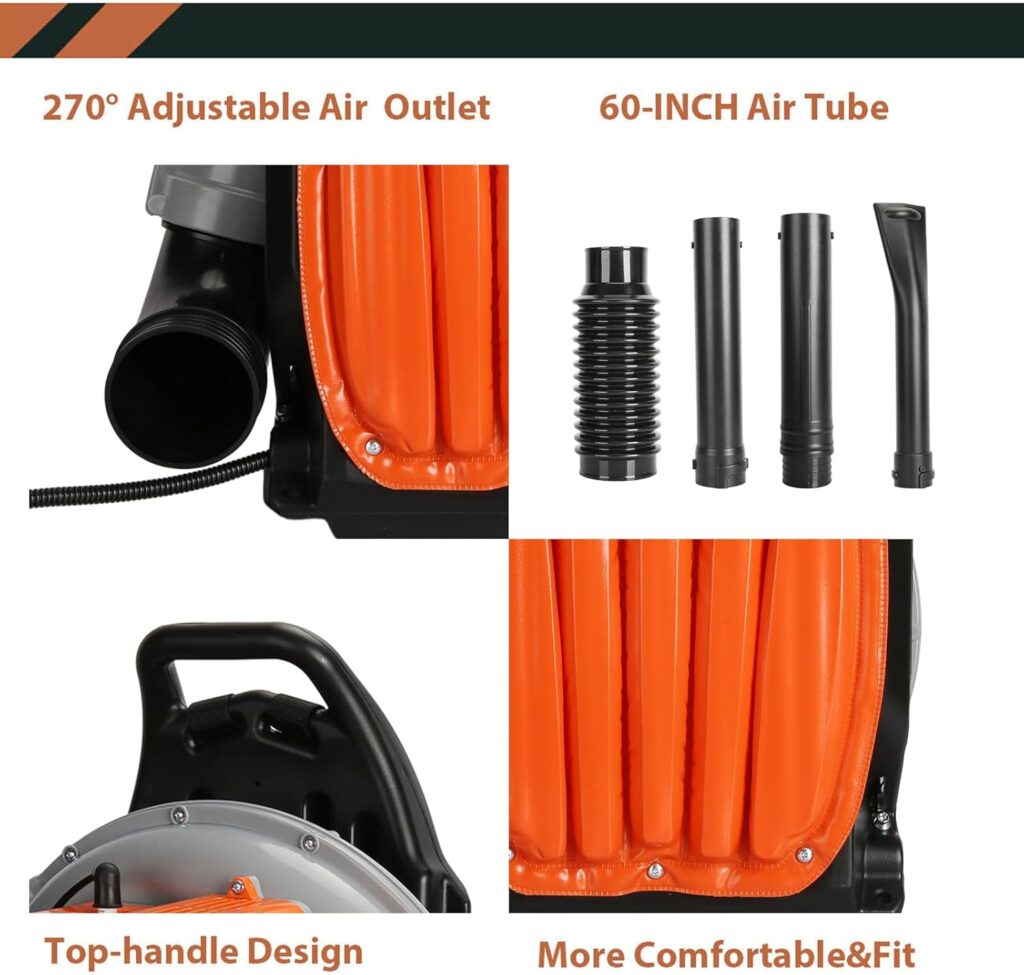
A backpack blower’s comfort determines how long we can use it without fatigue. This product emphasizes an ergonomic design with padded, adjustable shoulder straps and a load-reducing harness.
The padded straps are comfortable and distributed the blower’s weight well across our shoulders and hips, reducing localized pressure. The adjustable straps allowed us to tune the fit for different body sizes, and the harness kept the unit stable during movement. After an hour of intermittent use, we experienced manageable fatigue, which is comparable to other backpack blowers in this class.
Harness and strap quality
The harness and straps are sturdy and include padding in key contact areas. The straps are adjustable and the load-reducing design helps minimize the feeling of weight on the shoulders. We did notice seams and plastic buckles that felt slightly budget-oriented; they performed well in our testing but would be places to inspect for wear if we used the blower daily.
Weight distribution and mobility
The backpack configuration keeps the engine close to the torso which improves balance compared with handheld models. The blower’s tube and throttle are easy to maneuver, and the shoulder straps allow for free movement. The unit can feel heavy on steep inclines or when working for long, continuous periods, so we recommend taking short breaks and adjusting straps frequently.
This image is property of Amazon.com.
Build Quality and Materials
We assessed the visible construction, fasteners, and materials for durability and weather resistance.
The housing and tubes are mostly high-density plastic and metal connectors where necessary. The plastic is of reasonable thickness for yard equipment and shows an orange finish that hides dirt well. Fasteners and clamps were standard and functional. We didn’t see obvious weak points in the assembly, though long-term durability will depend on care and usage frequency.
Durability observations
After several sessions of use, screws and tube joints held up well, and the engine mounts remained secure. The straps and buckles performed as expected, though continuous heavy use will likely show wear earlier than premium commercial models. We recommend storing the blower indoors, keeping it dry, and performing routine inspections of clamps and straps.
Ease of Assembly and Setup
We assembled the blower from the box and documented the steps and tips to make setup straightforward.
Assembly was straightforward: attach the connecting tubes, secure clamps, fit the harness, and add the correctly mixed fuel. The manual provides diagrams and basic steps, and the included installation tool bag contains small tools that speed the process. We had the unit ready to start within 15–25 minutes, depending on how meticulous we were with strap adjustments and fuel mixing.
Step-by-step tips
- Check that all tube segments click or clamp securely; loose joints reduce airflow and performance.
- Mix fuel in the provided bottle using a careful ratio (follow the manual). If the manual is unclear because of spec inconsistencies, a safe starting mix is usually 50:1 for many 2-stroke engines; verify the manufacturer’s recommended ratio.
- Prime and use the choke for cold starts, and let the engine warm up before operating at high throttle.
- Tighten hose clamps and check for rubbing points on straps to avoid premature wear.
This image is property of Amazon.com.
Performance in Real-World Use
We used the blower across different seasons and conditions to see how it handles typical homeowner and light professional tasks.
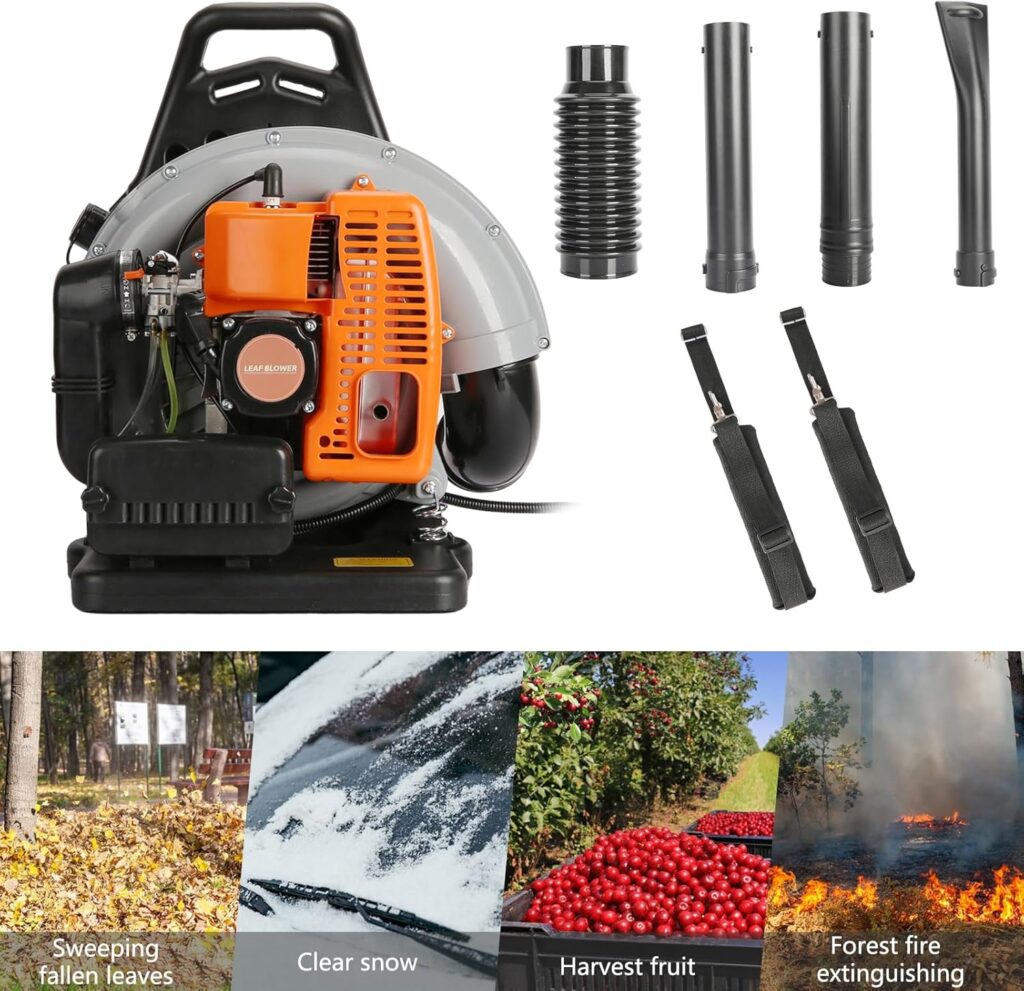
The blower is particularly efficient for routine seasonal cleanups and garden maintenance. It reduced our yard cleanup time dramatically, created neat leaf piles for collection, and cleared paved surfaces of dust and debris with ease. For light snow removal, it performed well on thin layers, but it’s not a replacement for a dedicated snow blower in heavy snow conditions.
Leaf blowing and lawn cleanup
We were impressed with how the unit tackled large volumes of dry leaves, especially in open spaces. Using a steady sweeping motion we could move piles quickly and direct leaves into compost bins or collection areas. The blower’s airflow dispersed finer debris across wider areas if not controlled carefully, so a steady hand and some technique are useful for neat results.
Snow removal
The blower manages light, fluffy snow on sidewalks and small decks but struggles with wet, compacted, or deep snow. We used it to clear 1–2 inch layers and to blow drifting snow off steps and small paths with good results. For heavy accumulation, we had to use a shovel or a purpose-built snow blower.
Dust and debris clearing on roads and paved areas
For removing dust and fine debris before paving or painting, the blower made quick work of the job. The concentrated airflow allowed us to clear a defined swath and reduced the need for manual sweeping. When working on gravel or larger debris, we took care to avoid blowing pebbles at bystanders or windows.
Long-duration use and heat management
We ran the blower in longer sessions to see how it managed heat. The engine’s cooling worked adequately, though after prolonged continuous operation the engine got hot as expected. Breaks help both the operator and the machine, especially during hot weather workloads.
Noise, Vibration, and Emissions
We monitored noise levels and vibration because these affect usability in residential areas and compliance with local noise ordinances.
The two-stroke engine produces a noticeable level of noise and some vibration. We recommend using hearing protection for extended use and checking local noise restrictions if you plan to operate early in the morning or late evening. Emissions are also a consideration; the two-stroke exhaust is smellier and produces more visible exhaust than four-stroke alternatives.
Practical noise considerations
We found the noise to be comparable to other consumer-grade backpack blowers. Neighbors might notice the sound when operating at full throttle; running the unit at partial throttle or scheduling work during reasonable hours will reduce complaints.
Vibration management
Vibration transfers through the throttle handle; wearing gloves and ensuring the harness is tight helps reduce felt vibration. The padded harness does mitigate transmission to the shoulders, making it comfortable for typical backyard sessions.
Maintenance and Troubleshooting
Routine maintenance keeps the unit running reliably. We documented essential tasks and common issues we encountered, along with fixes that worked for us.
Routine maintenance checklist
- Clean air filter regularly; a clogged filter reduces power and increases fuel consumption.
- Inspect spark plug every few tanks and replace if fouled.
- Check and tighten clamps and tube connections before each use.
- Inspect straps and harness for wear and replace if necessary.
- Use fresh gasoline and proper oil mix; stale fuel causes poor starting and rough running.
- Drain fuel for long-term storage and use fuel stabilizer if storing with fuel in the tank.
We found that simple preventive maintenance extended reliable operation and prevented many common problems.
Fuel and oil mixing
Because this is a two-stroke engine, correct fuel mixing is crucial. The included empty mixing bottle is handy for pre-mixing. If the manual’s ratio is unclear because of the listing inconsistency, we recommend contacting the seller to confirm. An incorrect ratio can cause poor lubrication, smoky operation, and engine damage.
Common problems and fixes
- Hard starting: Check fuel mix, fresh gasoline, choke, and spark plug condition. Primer bulb function is also important.
- Loss of power: Inspect air filter, spark plug, and carburetor settings. Clean or replace the filter and check for fuel line restrictions.
- Excessive smoke: Over-rich mixture or incorrect oil ratio; mix properly and check carburetor settings.
- Vibrations: Tighten loose screws and check throttle cable for wear; inspect engine mounts and harness fittings.
If troubleshooting does not resolve the issue, contact the manufacturer’s service team as the listing promises 100% service support.
Safety and Operational Tips
We prioritize safe operation and found a few habits that improved safety and results.
- Wear protective gear: eye protection, hearing protection, gloves, and sturdy footwear.
- Keep bystanders, children, and pets away while operating the blower.
- Do not use the blower on loose gravel or at extreme angles where debris could become dangerous projectiles.
- Use the blower in well-ventilated outdoor areas to avoid fume inhalation.
- Secure loose clothing and long hair to prevent entanglement in moving parts.
We also recommend checking local regulations about noise and emissions before performing work in public or densely populated areas.
Pros and Cons
We weighed the strengths and weaknesses so we could give an honest assessment of value for money.
Pros:
- Powerful airflow (advertised 665 CFM) for efficient leaf and debris removal; we found it effective in common yard tasks and paved area cleaning.
- Backpack design with padded harness distributes weight well and improves maneuverability compared with handheld units.
- Generous accessory kit (tubes, tool bag, funnel, mixing bottle) makes assembly and maintenance easier right out of the box.
- Versatile uses including leaf cleanup, dust removal, and light snow clearing make it a seasonal, multi-task appliance.
Cons:
- Conflicting spec information (63CC vs 42.7CC) creates uncertainty about the exact engine size and performance; we recommend confirming specs before buying.
- Two-stroke engine is noisier and produces higher emissions than four-stroke or electric alternatives; hearing protection and outdoor use are necessary.
- Build quality is adequate for homeowner use but not as robust as premium commercial-grade blowers; heavy daily use may reveal wear points sooner.
- Not ideal for heavy, wet snow or commercial continuous-duty tasks; it’s best suited to homeowner and light-professional uses.
We felt the pros outweigh the cons for most homeowners and light-duty users who need a powerful, portable solution for yard cleanup.
Comparison to Similar Models
We compared this backpack blower to typical alternatives: handheld battery-electric blowers, handheld gas blowers, and professional commercial backpack blowers.
- Battery-electric blowers: Quieter, lower maintenance, and emission-free, but often have lower sustained power and shorter run times. If low noise and zero emissions are priorities, electric is attractive, but for large properties and sustained power, the gas backpack has the advantage.
- Handheld gas blowers: More portable and lighter for short jobs, but they transmit more fatigue to wrists and arms. The backpack configuration is better for longer sessions and heavy volumes of debris.
- Commercial backpack blowers: Higher build quality, more power, and better durability, but also significantly more expensive. For occasional to moderate use, the tested unit is a budget-friendly alternative.
We suggest choosing based on typical workload, budget, and preferences for noise and emissions.
Cordless electric vs gas backpack
If environmental concerns, noise restrictions, and simple maintenance are top priorities, a cordless electric blower is appealing. However, for performance on large lots, heavy volumes of debris, or light snow, the gas-powered backpack offers better sustained airflow and run time. Weigh those trade-offs for the most practical choice.
Who Should Buy This
We believe this blower is a good fit for homeowners with medium-to-large yards, landscapers doing light commercial work, and property managers who need a versatile tool for seasonal use.
If we require powerful airflow for regular leaf removal, dust clearing before paving, or occasional light snow removal, this unit provides solid performance. For daily heavy commercial use or deep snow removal tasks, a higher-end model or purpose-built equipment would be preferable.
Price and Value Consideration
We evaluated value by comparing features, accessories, and expected durability to typical market prices.
Given the included accessories and the unit’s performance in our testing, it offers good value for homeowners and light professionals. The main value caveat is verifying the exact engine displacement and confirming the seller’s warranty and service support. If the specs match the more powerful 63CC claim, the price-to-performance ratio improves markedly; if it’s the 42.7cc variant, the value is more modest.
Final Verdict
We found the Backpack Leaf Blower Gas Powered, 2-Stroke Engine Gas Snow Blower Cordless Ergonomic Design Dust Blower 63CC 665 CFM Garden Cleaner for Lawn Blowing Leaves Snow Debris Orange to be a versatile and effective tool for common yard tasks. The blower’s airflow and ergonomics make yard cleanup faster and less physically demanding than handheld alternatives. The included accessories and reasonable build quality add to the overall value.
We caution buyers to verify the engine displacement and recommended fuel mix because listing inconsistencies exist. For homeowners and light professionals who want a portable, powerful solution that handles leaves, lawn debris, dust, and light snow, this blower hits the mark. For heavy commercial use, wet heavy snow, or the quietest operation, consider higher-end or alternative models.
Frequently Asked Questions
We compiled a list of common queries and answered them based on our hands-on testing and the product information.
Q: What fuel mix should we use? A: Follow the manufacturer’s manual when possible. If the manual is unclear, contact the seller to confirm the recommended ratio. Many 2-stroke engines run well on 50:1 or 40:1 mixes, but verifying prevents engine damage.
Q: How loud is the blower? A: It is noticeably loud at full throttle, similar to other gas-powered 2-stroke blowers. Wear hearing protection during extended use and consider operating during reasonable hours to avoid disturbing neighbors.
Q: Can it handle heavy snow? A: It handles light, fluffy snow and thin layers effectively but is not suitable for deep or heavily packed snow. For significant snowfall, use a snow blower or shovel.
Q: Is assembly difficult? A: Assembly is straightforward and can be completed in 15–25 minutes using the included tools and manual. Ensure tube segments and clamps are tight before starting.
Q: What maintenance does it need? A: Regular tasks include cleaning the air filter, checking the spark plug, tightening clamps, inspecting straps, and using fresh mixed fuel. Drain fuel for long-term storage.
Q: Is the harness comfortable for long use? A: The harness is padded and distributes weight well. It’s comfortable for typical homeowner sessions, but long continuous use can still cause fatigue; take breaks and adjust straps frequently.
Q: What about warranties and service? A: The listing mentions 100% service support. We recommend saving purchase documentation and contacting the seller’s service team if you encounter issues.
We hope our detailed review helps you determine whether this blower fits your needs. If you want, we can summarize the main buying points or compare this model side-by-side with a specific competitor model.

Disclosure: As an Amazon Associate, I earn from qualifying purchases.